
Last updated September 21, 2026
Full 25-point door and opener safety check with every visit - springs, cables, rollers, tracks, and your LiftMaster or Chamberlain opener included
You get a price before we start. It does not change when the truck arrives.

 Before
 After
After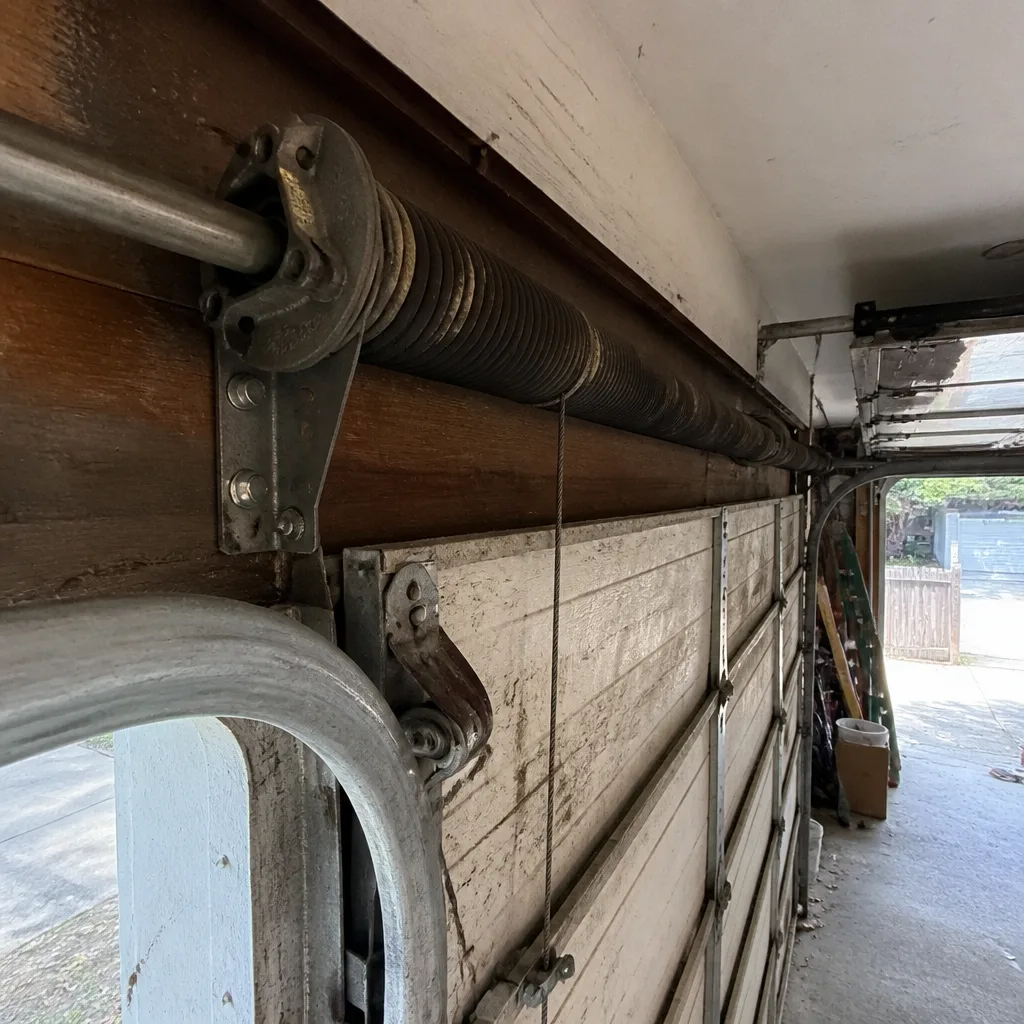 Before
 After
After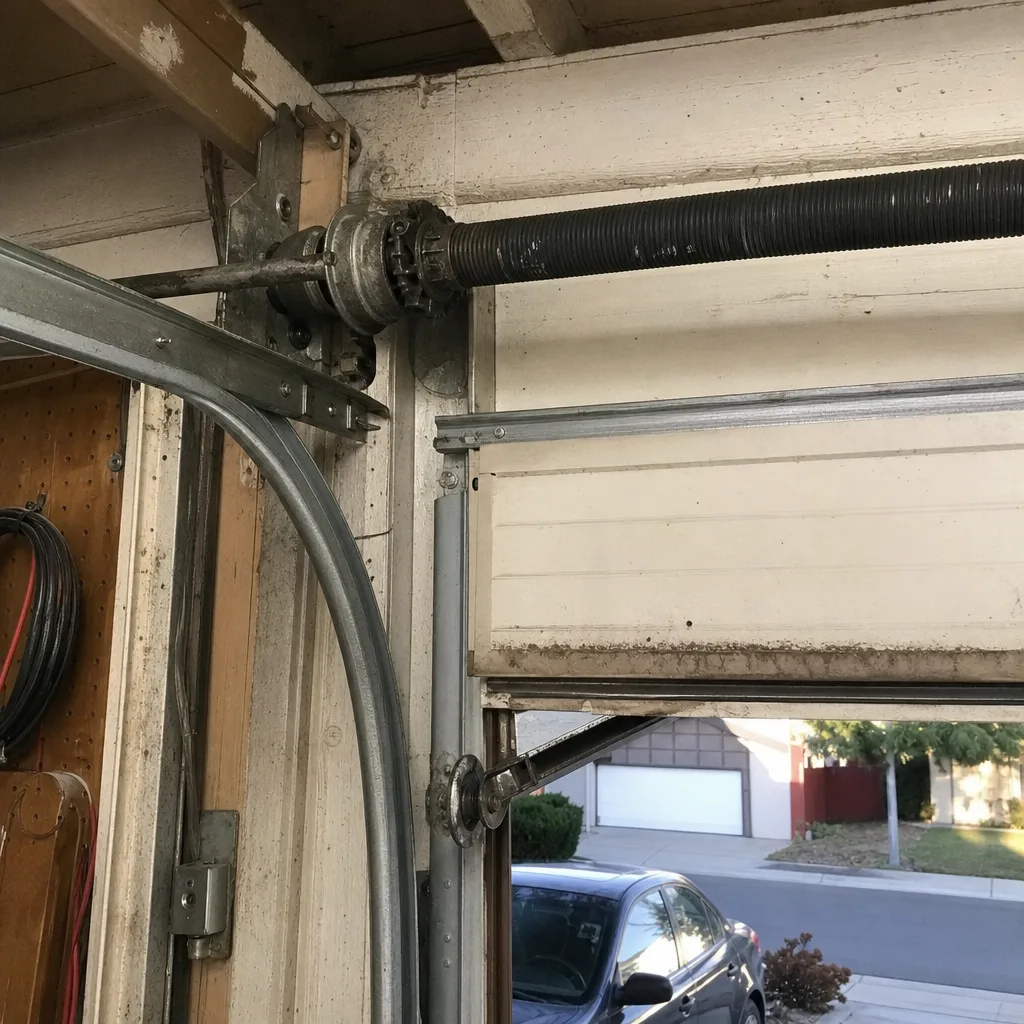 Before
 After
AfterGarage Door Repair Maintenance Checklist for Walnut Creek Homeowners
WD-40 on a torsion spring doesn’t lubricate it. It strips the factory coating and accelerates rust. This is the most repeated garage door maintenance mistake in online guides, and we’ve seen the consequences on hundreds of calls across Walnut Creek, from the older ranch homes near Heather Farm Park to the newer builds in the Buena Vista neighborhood. This checklist is built for homeowners who want to do what they can safely handle, know exactly when a component crosses from “worn” to “failing,” and understand which tasks belong to a Garage Door Repair technician because the stored energy in a wound spring can kill. What follows is a component-by-component map with correct products, pass-fail tolerances, and the specific wear patterns Walnut Creek’s climate produces.
Quick Answer
A proper garage door maintenance checklist for Walnut Creek homeowners includes monthly visual inspections of cables, rollers, and hardware; quarterly lubrication of specific components with white lithium grease (never WD-40); an annual balance test with a two-inch drift tolerance; and professional inspection of torsion springs and cable drums due to lethal stored energy. Most maintenance failures we see in Walnut Creek trace back to incorrect lubricant choice, skipped balance tests, or nylon rollers cracked from summer heat exposure above 95°F.
Table of Contents
- The Component-by-Component Lubrication Map
- Cable Drum Inspection: Fraying Stages and Replacement Thresholds
- Balance Test Procedure with Pass/Fail Criteria
- Walnut Creek-Specific Wear Patterns: Heat, Hills, and Age
- Frequency Schedule: Monthly, Quarterly, Annual, and Technician-Only
- Tools and Supplies You’ll Actually Need
- Common Mistakes to Avoid
- When to Call a Professional
- Frequently Asked Questions
 Before
 After
AfterThe Component-by-Component Lubrication Map
Most maintenance guides say “lubricate moving parts.” This is useless advice. Different components need different products, applied to specific surfaces, in a specific sequence. Get this wrong and you’re not maintaining your door; you’re damaging it.
What to Use and Where
White lithium grease is the correct product for garage door components. It is a heavy-duty lubricant that stays in place, resists water, and doesn’t attract dust. WD-40 is not a lubricant for this application; it is a water displacer and light solvent that evaporates within days, leaving metal unprotected.
Silicone spray has its place on weatherstripping, but nowhere else on the door system. 3-in-1 oil is too light for load-bearing components. Grease with molybdenum disulfide is overkill and attracts grit.
Here is the exact sequence we follow on every Garage Door Repair in Walnut Creek maintenance visit:
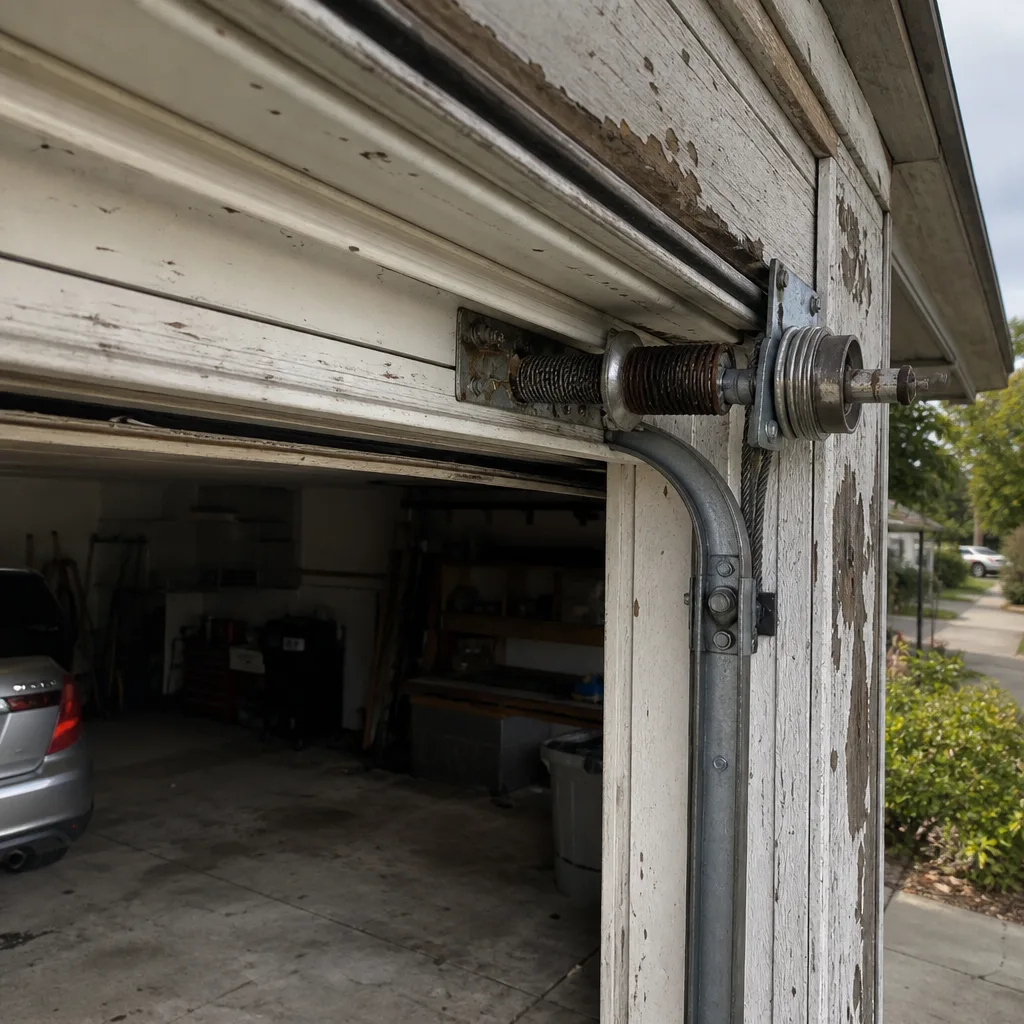
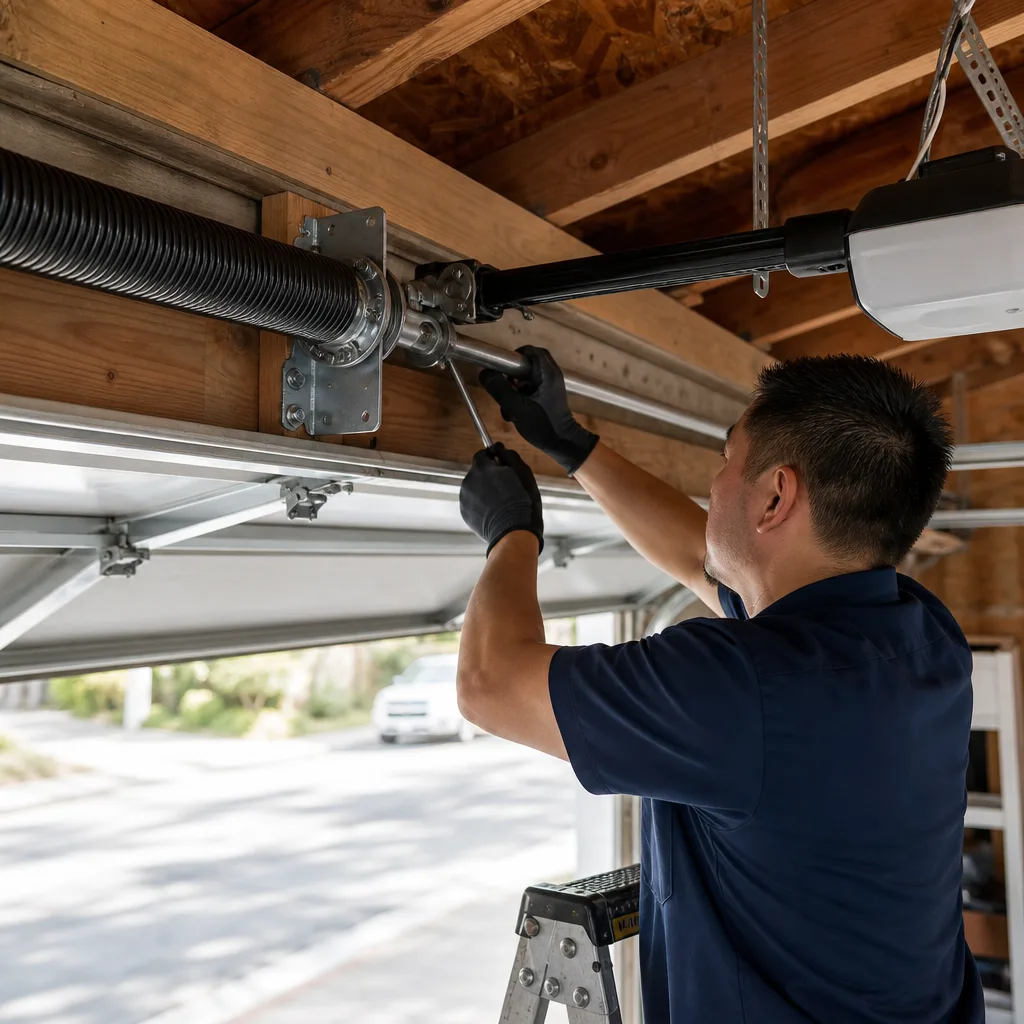
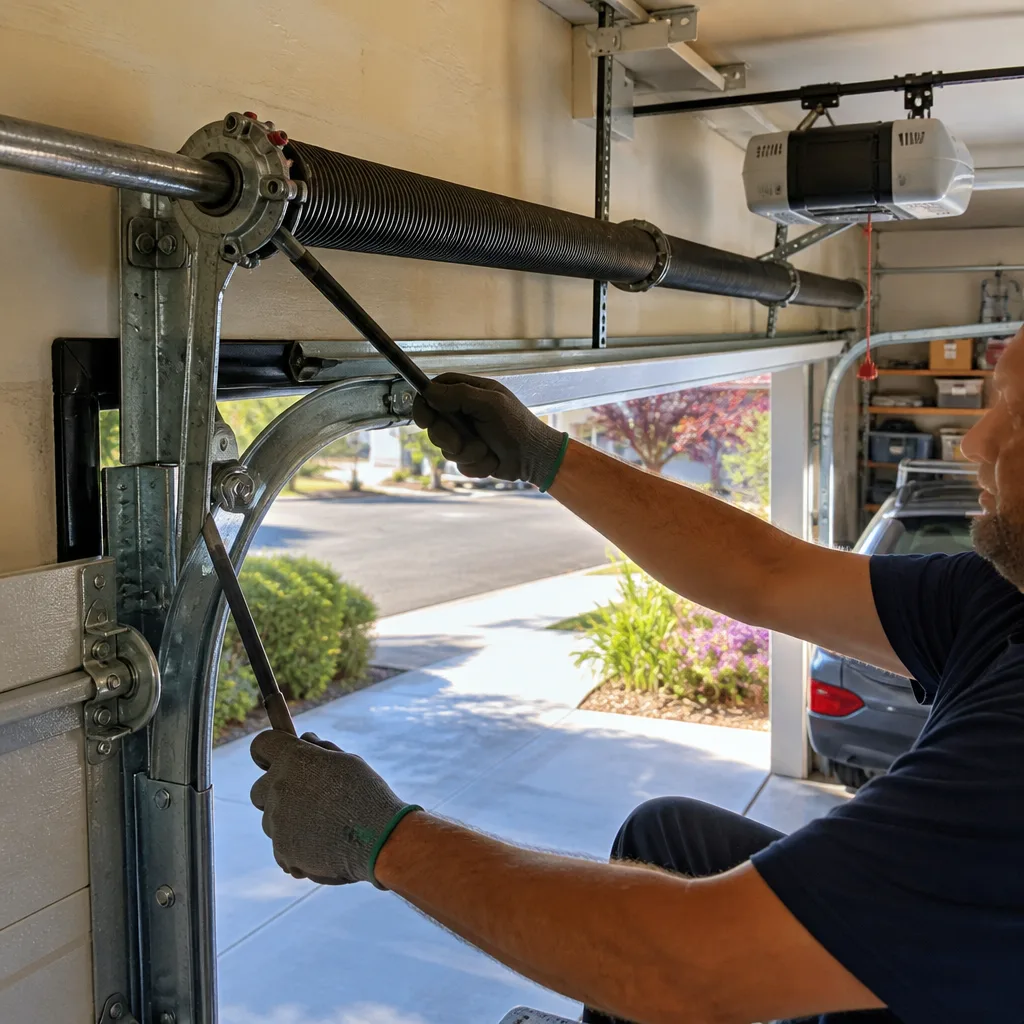
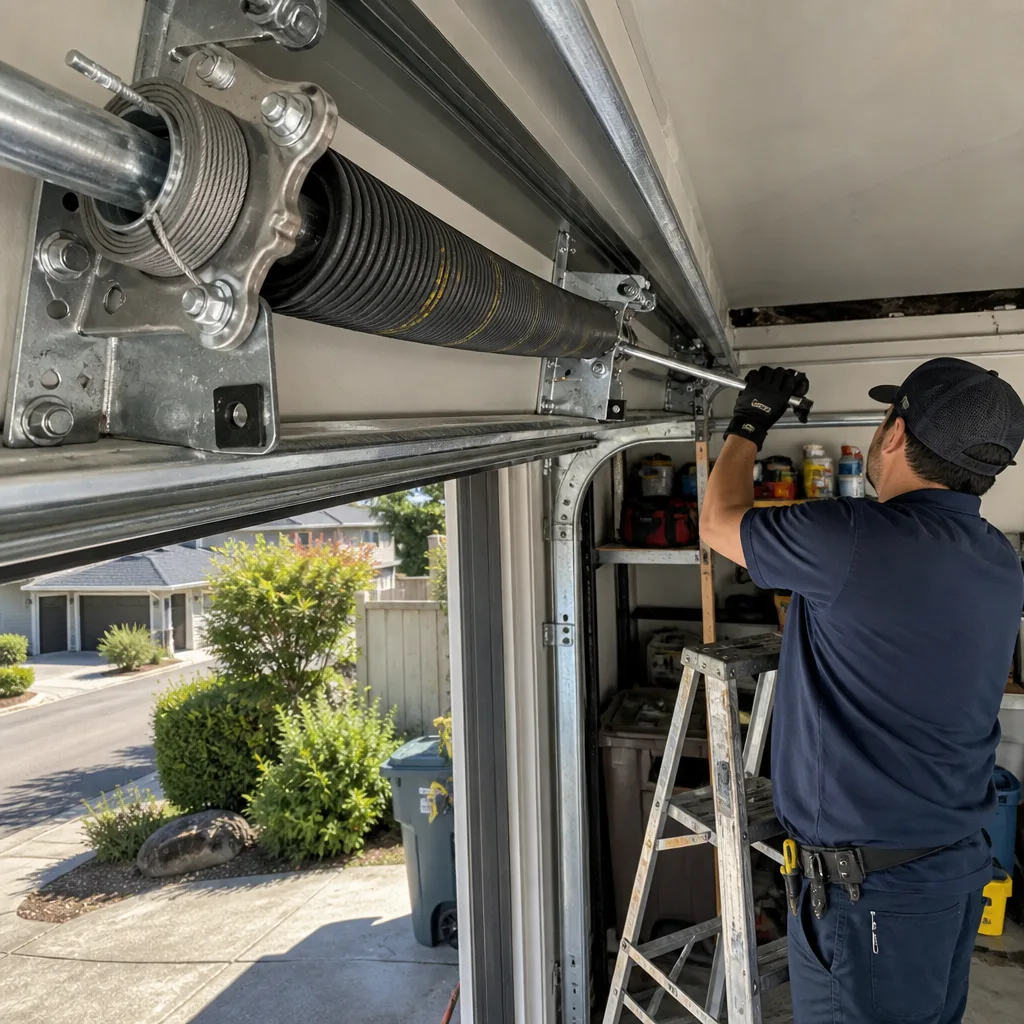
- Torsion spring coils: Apply white lithium grease lightly to the entire coil surface, not just the gaps. The goal is coating, not saturation. Wipe excess with a rag. The lubricant prevents coil-to-coil friction and rust between the spring and the winding cone. In Walnut Creek, where summer humidity drops and winter moisture rises, this rust prevention matters more than in consistently dry climates.
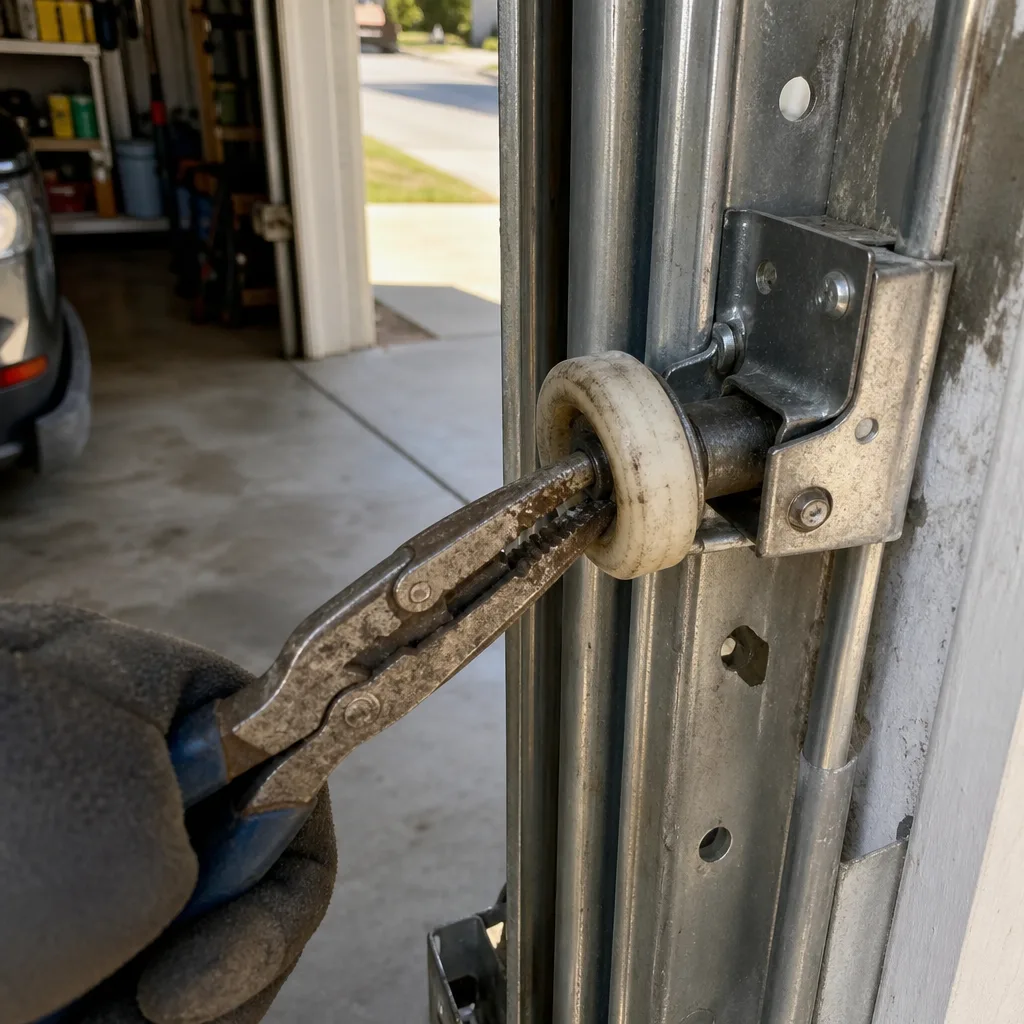
- Roller bearings: Lubricate the bearing inside the roller wheel, not the wheel surface that contacts the track. The bearing is the small cylinder at the roller center. Apply two short bursts of white lithium grease, then roll the door manually to distribute. Nylon rollers have sealed bearings; if the seal is intact, do not puncture it. If the seal is cracked, the roller is failing and needs replacement, not more grease.
- Hinge pivot points: The hinge pin where the two hinge leaves meet takes a single drop of white lithium grease. Work the hinge open and closed to distribute. Do not lubricate the hinge-to-door screws; this attracts dust and can loosen torque over time.
- Lock bar and guide holes: If your door has a manual lock, apply white lithium grease to the bar that slides into the track slot and the guide holes in the track. This prevents seizing, which is common on Walnut Creek homes with coastal moisture exposure.
- Bearing plates: The stationary cone at each end of the torsion spring sits in a bearing plate. A light coating of white lithium grease on the plate surface reduces noise. Do not disassemble the bearing plate.
- Weatherstripping: Silicone spray only, applied to the bottom rubber seal and side seals. This prevents cracking and maintains flexibility. In Walnut Creek, UV exposure from south-facing garages degrades this faster than north-facing installations.
What never gets lubricated: The track interior surface, the opener chain or belt (these have internal lubrication), the cable itself, or the cable drum grooves. Lubricated tracks collect dust and grit, accelerating roller wear. Lubricated cables attract debris and can slip on the drum.
The Wipe-Down Rule
After lubrication, operate the door through two full cycles. Then wipe every surface again. Excess lubricant is worse than none; it traps particulates and forms an abrasive paste. We’ve replaced rollers on three-year-old doors in the Walnut Creek hills because the homeowner used too much grease and the bearings filled with dust from nearby trail access.
Cable Drum Inspection: Fraying Stages and Replacement Thresholds
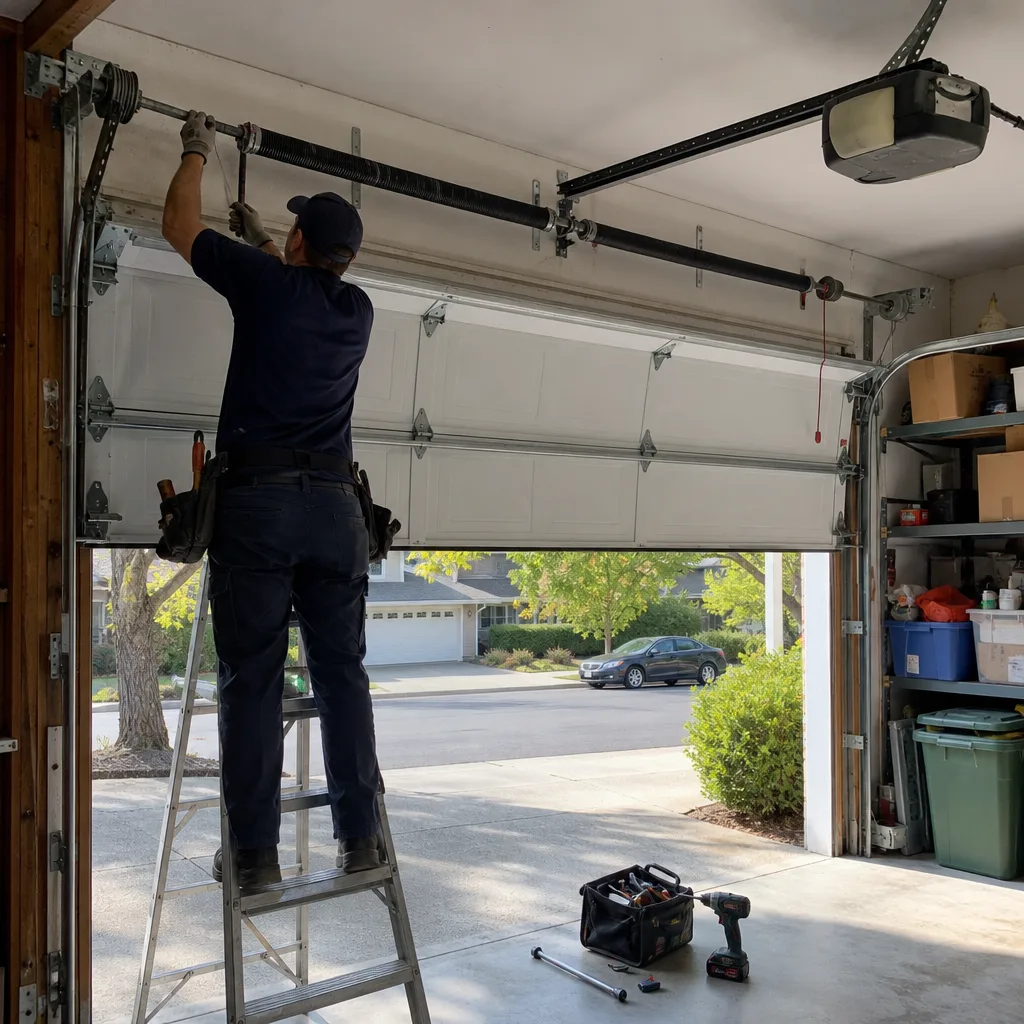
Cable failure is sudden, loud, and dangerous. The good news is that cables telegraph their condition if you know what to look for. The bad news is that most homeowners look at the wrong thing.
What Fraying Actually Looks Like
Lift cables are woven from multiple strands of galvanized steel, typically 7×19 construction: seven bundles of nineteen wires each. Fraying progresses through distinct stages, and each stage has a clear action.
Stage 1 - Surface oxidation: The cable develops a dull, reddish-brown discoloration without broken wires. This is environmental, not structural. Clean with a dry rag and monitor monthly. In Walnut Creek, this appears frequently on doors facing the western sun exposure toward Mount Diablo, where temperature swings accelerate condensation.
Stage 2 - External strand protrusion: Individual wires break at the cable surface and protrude slightly, creating a “fuzzy” appearance. At this stage, count the broken strands in any three-inch section. If you find more than two broken strands, replacement is non-negotiable. The remaining strands are carrying overload.
Stage 3 - Visible core distortion: The cable begins to unwind slightly, and the central core becomes visible or the cable diameter appears uneven. Replace immediately. This cable has lost structural integrity and can fail under load without warning.
Stage 4 - Kinking or birdcaging: A section of cable has bunched or formed a loop. This indicates shock loading, usually from a door hitting an obstruction or a spring breaking unevenly. Replace both cables, not just the damaged one; the paired cable has experienced the same stress.
The Cable Drum Itself
The drum is the grooved aluminum wheel at the top of the door that the cable winds onto. Inspect for:
- Groove wear: shiny spots where the cable has polished the groove surface thin
- Cracks at the hub, where the drum meets the torsion tube
- Chevron-shaped wear patterns indicating the cable has been slipping
- Debris accumulation in grooves, which causes uneven winding
Any crack in a cable drum means replacement. A cracked drum can fracture under load, dropping the door. This is not a homeowner repair; the torsion spring must be unwound to remove the drum.
Strand-Count Threshold Table
| Condition | Action | Timeline |
|---|---|---|
| 0-2 broken strands per 3″ section | Monitor monthly | Ongoing |
| 3-5 broken strands per 3″ section | Schedule replacement | Within 30 days |
| 6+ broken strands, core visible, or kinking | Do not operate door; call technician | Immediate |
Balance Test Procedure with Pass/Fail Criteria
A door that fails the balance test has a spring problem, not an opener problem. Running an opener on an unbalanced door burns out the motor and strips the drive gear. This test takes ninety seconds and requires no tools.
Step-by-Step Balance Test
- Close the door fully.
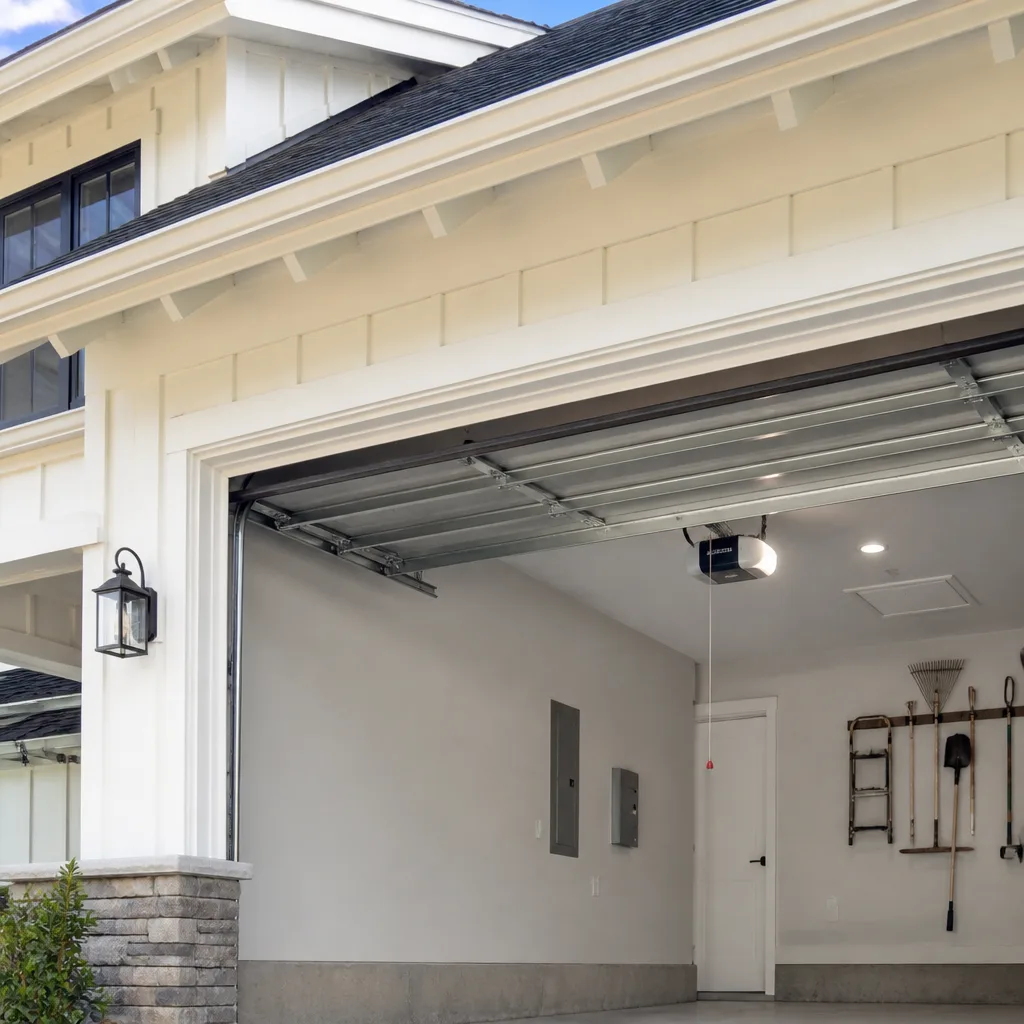
- Pull the emergency release cord, typically a red handle hanging from the opener trolley. This disengages the opener from the door.
- Lift the door manually to the halfway point, approximately waist height. Use both hands on a handle or bottom section; do not grip the edges.
- Release the door smoothly.
Pass/Fail Criteria
Pass: The door remains within two inches of the release point, either direction. It may drift slightly up or down, but not continue moving.
Fail - drifts down: The door falls more than two inches. This indicates weak or broken torsion springs. The opener is working overtime on every close cycle. Continuing to operate the door risks opener failure and potential injury if the door drops unexpectedly.
Fail - drifts up: The door rises more than two inches. This indicates excessive spring tension. The opener strains on open cycles, and the door may jump at the top of travel, damaging the opener limit switch or the door header.
Fail - won’t stay at any position: The door feels heavy throughout travel or wants to run fully up or fully down. This indicates a significant spring imbalance, often from a broken spring on one side of a two-spring system.
In Walnut Creek, we see balance failures most often in spring, when temperature swings stress fatigued springs. The 2015-2020 construction boom in neighborhoods like Saranap and the areas near Walnut Creek BART produced many doors now entering their first spring replacement cycle. A door installed in 2017 with standard-cycle springs (10,000 cycles) is at or near end of life if it sees typical family use; see our Garage Door Warning Signs: A Walnut Creek Homeowner’s Reference Guide for additional red flags.
If your door fails this test, do not attempt spring adjustment. Torsion springs store lethal energy. A standard seven-foot door with two springs holds approximately 200-400 foot-pounds of torque. The winding bars used to adjust tension can slip and cause severe injury or death. This is the reason Garage Door Installation in Walnut Creek and spring service require trained technicians with proper tools and insurance.
Walnut Creek-Specific Wear Patterns: Heat, Hills, and Age
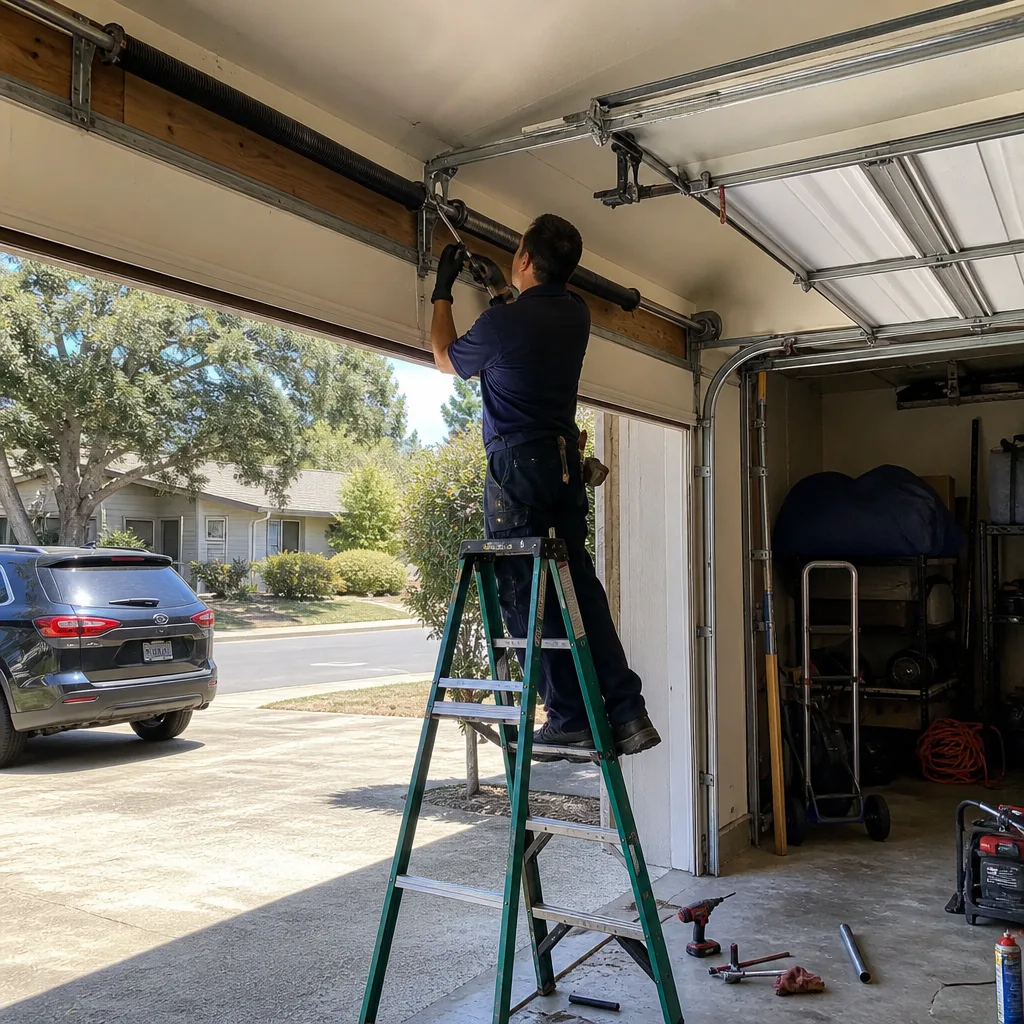
Garage doors in Walnut Creek face conditions that inland guides ignore. Understanding these local patterns helps you inspect with purpose rather than performing generic checks.
Summer Heat and Nylon Roller Integrity
Walnut Creek regularly exceeds 95°F from June through September, with garage interior temperatures reaching 110-125°F on south and west-facing installations. Nylon rollers, common on doors installed after 2010, degrade predictably in this heat.
The failure pattern begins as surface crazing: a network of fine cracks on the roller wheel surface, visible under direct light. This progresses to chunking, where pieces of the wheel break away. The final stage is bearing seizure; the wheel stops rotating and slides in the track, creating a grinding noise and accelerated track wear.
Inspect nylon rollers monthly during summer. Replace when crazing appears, not when chunking begins. Steel rollers with sealed bearings handle heat better but are louder; they are worth considering for west-facing garages in the Walnut Creek hills where afternoon sun is most intense.
Hillside Settling and Track Alignment
Homes on Walnut Creek’s hillsides, particularly in the areas north of Highway 24 and east of Interstate 680, experience gradual foundation settlement. This affects garage door alignment in subtle ways.
Check for vertical track plumb with a level. The track should be perfectly vertical; even a quarter-inch lean at the top creates binding and uneven roller wear. Look for gaps between the track and the jamb bracket that change from top to bottom. Check whether the door seal contacts the floor evenly across the full width; a gap on one side often indicates frame shift.
Track realignment requires loosening jamb brackets, adjusting position, and retorquing to specification. This is not a homeowner task; bracket torque matters, and the door must be supported during adjustment.
Age-Related Patterns in Walnut Creek Housing Stock
Walnut Creek’s housing spans decades, and each era has typical door configurations:
- Pre-1980: Often one-piece tilt-up doors or early sectional doors with extension springs. Extension springs are stretched along the horizontal track and are dangerous when they break; they should be upgraded to torsion spring systems. These doors are common in the original downtown neighborhoods and near Civic Park.
- 1980-2005: Sectional doors with torsion springs, often original equipment now at or past cycle life. Check for original springs with no color code paint visible; unpainted springs are typically original and should be considered for proactive replacement.
- 2005-2020: Builder-grade doors with 10,000-cycle springs and nylon rollers. These are entering prime replacement age. The springs were sized for minimum cost, not longevity.
- 2020-present: Higher-grade equipment in newer developments, but often with smart openers that complicate diagnostics. The logic board (the opener’s computer) is sensitive to power fluctuations common in Walnut Creek’s hillside areas.
Coastal Moisture Influence
While Walnut Creek is inland, marine air pushes through the Caldecott Tunnel and San Ramon Valley on summer evenings. This creates higher overnight humidity than true inland locations like Tracy or Stockton. The result is surface rust on uncoated components, particularly bottom fixtures and cable ends, that pure-desert guides don’t mention. Inspect these monthly during summer fog season.
Frequency Schedule: Monthly, Quarterly, Annual, and Technician-Only
Not every component needs attention at the same interval. This schedule separates what you can do from what requires a professional with proper tools and liability coverage.
Monthly - Visual Inspection (Homeowner, 10 minutes)
- Operate door and listen: grinding, squealing, or irregular rhythm indicates a problem
- Inspect cables for fraying, kinking, or oxidation (use the stage criteria above)
- Check nylon rollers for crazing or chunking
- Verify door reverses when meeting obstruction (place 2×4 flat on floor, door should reverse on contact)
- Check photo-eye alignment: LED indicators on both sensors should be steady, not blinking
- Inspect weatherstripping for cracks or gaps
- Look at bottom fixtures and cable ends for rust
Quarterly - Lubrication and Hardware Check (Homeowner, 30 minutes)
- Lubricate per the component map: torsion spring coils, roller bearings, hinge pivots, lock bar, bearing plates, weatherstripping
- Tighten track bolts and lag screws with socket wrench; do not overtighten
- Check door panel alignment; gaps between panels indicate hinge wear or structural issue
- Test manual release and re-engagement; the trolley should reconnect smoothly when door is at closed position and opener is activated
Annual - Balance Test and Comprehensive Inspection (Homeowner + Professional)
- Perform balance test; record result and date
- Inspect cable drums for groove wear and cracks
- Check spring condition: look for coil gap expansion (a stretched spring has visible gaps between coils, indicating metal fatigue)
- Inspect opener rail for deflection or mount loosening
- Test force settings per manufacturer specification
- Schedule professional inspection for torsion spring torque verification, cable tension equalization, and opener travel limit calibration
Technician-Only - Never Attempt These
- Torsion spring adjustment or replacement: lethal stored energy, requires winding bars and training
- Cable replacement on torsion-spring doors: cables are under tension even with door closed
- Cable drum replacement: requires spring unwinding
- Bottom bracket removal: these brackets are under cable tension and can cause serious injury
- Track realignment on loaded door: door must be supported and springs neutralized
- Opener logic board programming on chain-drive units with integrated travel limits
The Servo Garage Doors Walnut Creek home team documents every professional inspection with a photo record of findings, delivered to you before any quote is prepared. This traces to Clause 4 of The Haven Standard: the customer sees the failed part before anyone quotes a replacement.
Tools and Supplies You’ll Actually Need
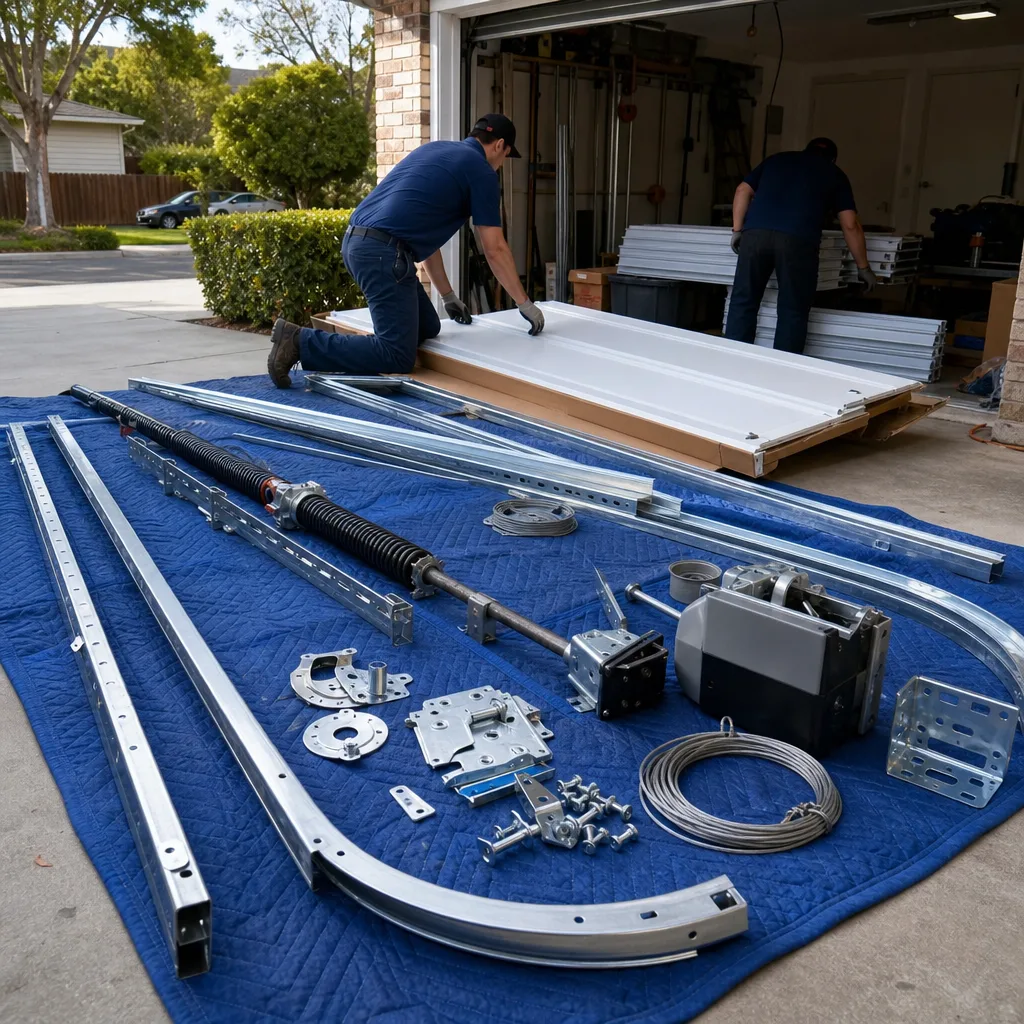
Buy the right products once. The wrong product used repeatedly causes more damage than no maintenance at all.
| Item | Specification | Purpose |
|---|---|---|
| White lithium grease | Aerosol with straw applicator; CRC or equivalent | Spring coils, bearings, hinges, lock bar, bearing plates |
| Silicone spray | 100% silicone, no petroleum distillates | Weatherstripping only |
| Clean rags | Lint-free microfiber | Wipe-down after lubrication |
| Socket set | 7/16″ through 1/2″ standard and deep | Track hardware, opener mounting bolts |
| Level | 24″ torpedo level minimum | Track plumb check |
| Flashlight | Focused beam, 200+ lumens | Cable and drum inspection |
| Sturdy step ladder | ANSI Type I or IA, 6-foot | Safe access to spring and opener; never use office stepstools |
Total investment: approximately $60-80 for products that last two to three years of quarterly maintenance. Compare this to the cost of a service call for a failed component that preventive maintenance would have caught.
Common Mistakes to Avoid
- Using WD-40 as a lubricant. It displaces water and cleans, then evaporates, leaving metal unprotected. We’ve replaced springs in Walnut Creek’s Buena Vista area that rusted through within two years of WD-40 “maintenance.”
- Lubricating the track interior. The track is not a bearing surface; rollers roll, they slide. Lubricated tracks collect dust and form abrasive paste that destroys rollers in months.
- Ignoring a two-inch drift on the balance test. Homeowners adjust the opener force settings instead of fixing the spring. This burns out the opener and creates a safety hazard; the door can fall if the opener fails.
- Replacing only one spring on a two-spring system. Springs are matched pairs. The old spring has different tension and fatigue characteristics. The door operates unevenly and the new spring fails prematurely. We see this on DIY videos constantly; it’s wrong.
- Using non-garage-specific silicone on weatherstripping. Automotive silicone contains petroleum distillates that degrade rubber compounds. Use 100% silicone labeled for door and window seals.
- Skipping monthly inspection because the door “sounds fine.” Cables fray silently until they don’t. Nylon rollers crack internally before they chunk. The balance test reveals spring fatigue before the spring breaks. Inspection finds what operation hides.
- Attempting torsion spring work after watching a video. The videos don’t show the emergency room visits. In our 18,000+ jobs since 2015, every technician who handles springs was trained hands-on for months before working independently. The stored energy is not negotiable.
When to Call a Professional
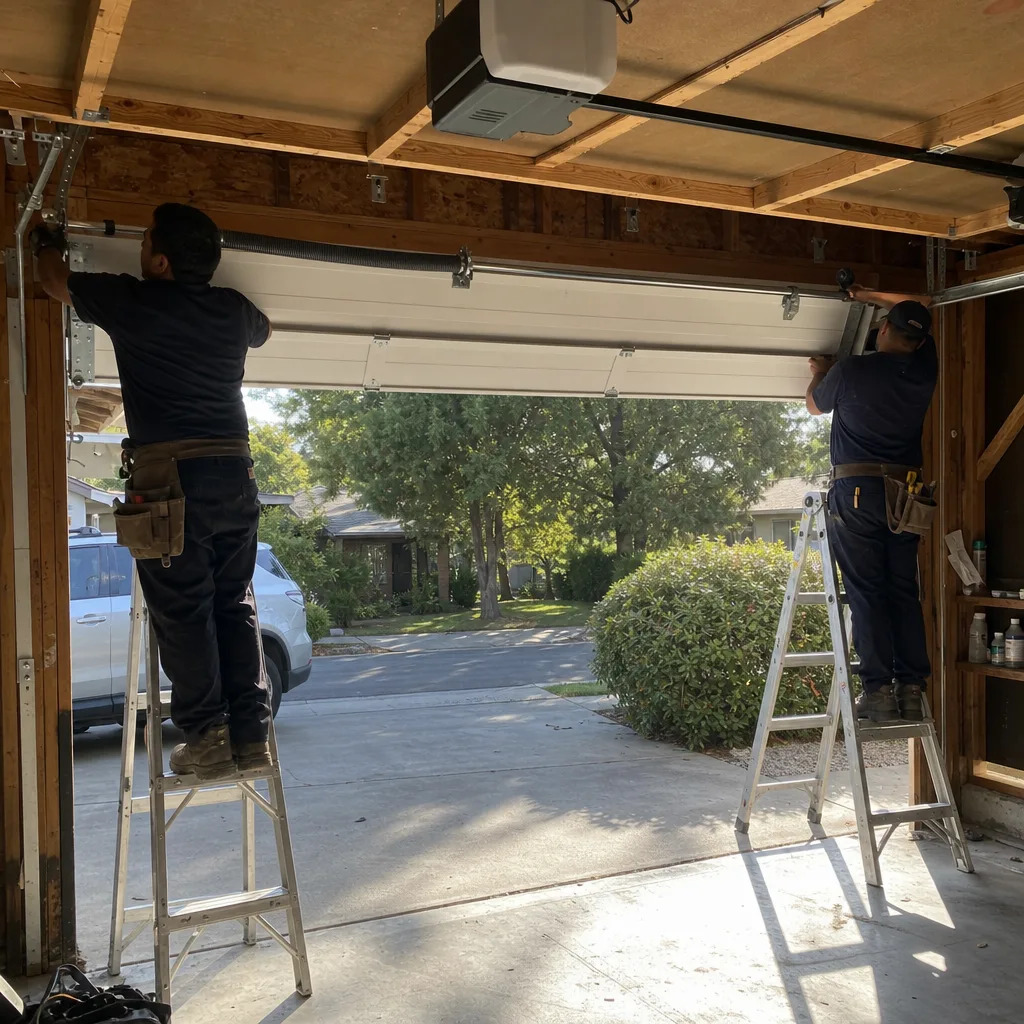
Call a technician when you find frayed cables beyond the two-strand threshold, a door that fails the balance test, cracked cable drums, broken springs, or any component you’re unsure about inspecting safely; our How to Hire a Garage Door Contractor in Walnut Creek: A Step-by-Step Guide explains what to look for in qualified service. The cost of a service call is trivial compared to injury or cascading damage.
Servo Garage Doors Walnut Creek offers free estimates in Walnut Creek. Every visit includes a documented photo record of findings, a flat written price before any work begins per Clause 1 of The Haven Standard, and background-checked, uniformed technicians. Our live phone coverage answers 24 hours a day, including holidays; emergency calls get a named technician and an on-the-way text, not a callback window. Call (510) 390-9102 to schedule.
Frequently Asked Questions
Professional maintenance inspection and tune-up in Walnut Creek typically ranges from $89 to $149, depending on door size, spring configuration, and whether opener travel limits need recalibration. This includes torsion spring torque verification, cable tension equalization, safety reversal test, and a documented photo record of all findings. The price is quoted and agreed before any work starts, per Clause 1 of The Haven Standard. Call (510) 390-9102 for an exact quote; estimates are free.
Homeowners can safely lubricate hinges, roller bearings, the lock bar, and weatherstripping following the component map in this guide. Torsion spring lubrication is visually simple but requires working near a wound spring; if you’re uncomfortable, include it in a professional visit. Never attempt to lubricate components while the opener is connected; pull the emergency release and close the door first. Call (510) 390-9102 if you want a technician to handle the full lubrication sequence while you observe.
Standard 10,000-cycle torsion springs last approximately 7-10 years with typical residential use in Walnut Creek. The heat cycling from summer garage temperatures above 110°F accelerates metal fatigue slightly compared to milder climates. High-cycle springs (25,000-50,000 cycles) last proportionally longer. Replace springs proactively when the balance test shows drift beyond two inches, when coil gaps expand, or when visible rust appears on the coil surface. Waiting for breakage risks door drop and opener damage.
A single loud bang typically indicates a broken torsion spring. The sound is the spring releasing stored energy. Do not operate the door; the opener is now lifting unassisted and will fail soon. Check for a visible gap in the spring coil above the door. This requires immediate professional service; the door is unsafe to operate and the remaining spring (on two-spring systems) is carrying double load. Call (510) 390-9102 for same-day emergency service in Walnut Creek.
Wayne Dalton’s TorqueMaster spring system conceals the torsion spring inside a tube, making visual inspection impossible without disassembly; maintenance relies on listening for coil rub and monitoring balance test results. Amarr uses standard exposed torsion springs on most models, allowing direct visual inspection. Both use similar hinge and roller configurations. Servo services all major brands including Wayne Dalton and Amarr, and our technicians carry common parts for both. The maintenance schedule is identical; the inspection method differs for spring assessment.
No. Servo’s written price and written scope, delivered before any work starts, is fixed per Clause 1 of The Haven Standard. The only exception is if you request additional work after the initial scope is agreed. If we find unexpected issues during inspection, we document them with photos, explain the options, and quote separately. You approve each scope independently. There is no “while we’re here” pressure; the documentation speaks first.
Yes. Servo technicians arrive with inventory for common repairs: torsion springs in standard wire sizes and lengths, rollers, cables, hinges, bottom fixtures, and opener components for LiftMaster, Chamberlain, Genie, Craftsman, and Raynor systems. Specialty colors, custom wood door hardware, or obsolete Craftsman logic boards may require ordering. For Garage Door Opener Repair & Installation in Walnut Creek, we stock current-model logic boards, trolley carriages, and safety sensors. If a part must be ordered, we provide the written price upfront and schedule return installation; you pay nothing until the repair is complete.
The Bottom Line
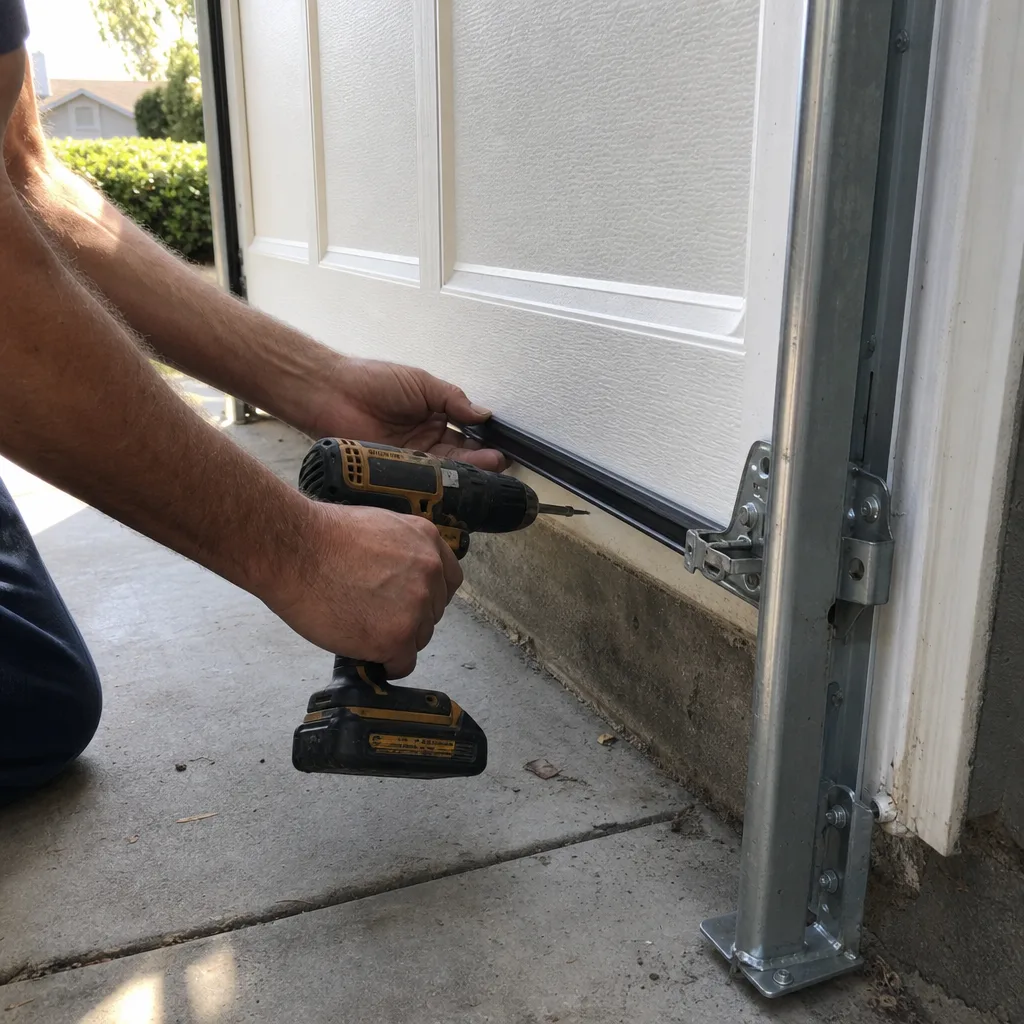
Effective garage door maintenance in Walnut Creek comes down to correct products applied to specific components, a ninety-second balance test that catches spring problems before they cascade, and knowing which tasks require a trained technician because the energy in a wound spring is lethal. The most expensive maintenance is the maintenance you didn’t do: a $12 can of white lithium grease prevents a $340 roller replacement; a free balance test prevents a burned-out opener and a door drop. Inspect monthly, lubricate quarterly, test annually, and call a professional when the measurements cross from “worn” to “failing.” The documentation, the photo record, and the written price before work starts are what separate maintenance from guesswork.
Written by Marcus Deller, Owner at Servo Garage Doors Walnut Creek, serving Walnut Creek since 2015.