
Last updated September 21, 2026
Full 25-point door and opener safety check with every visit - springs, cables, rollers, tracks, and your LiftMaster or Chamberlain opener included
You get a price before we start. It does not change when the truck arrives.
 Before
 After
After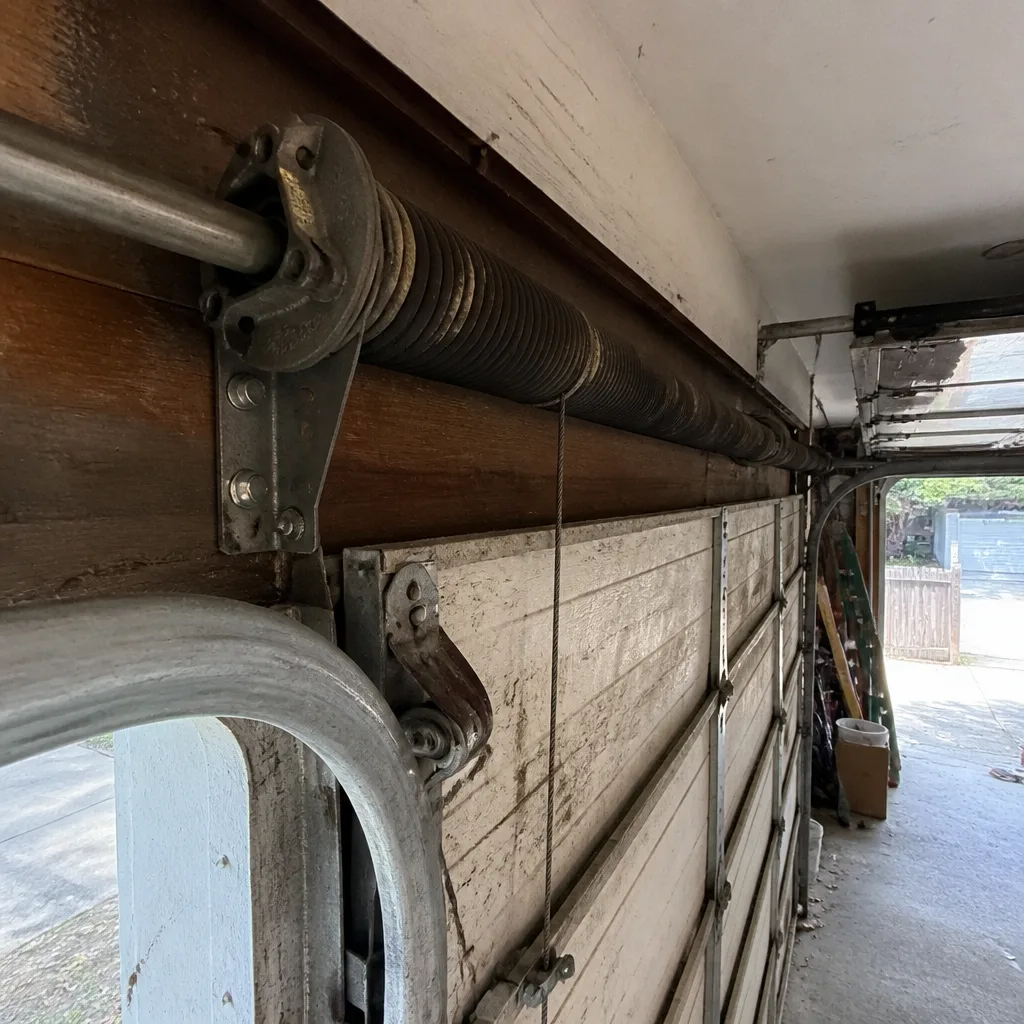 Before
 After
After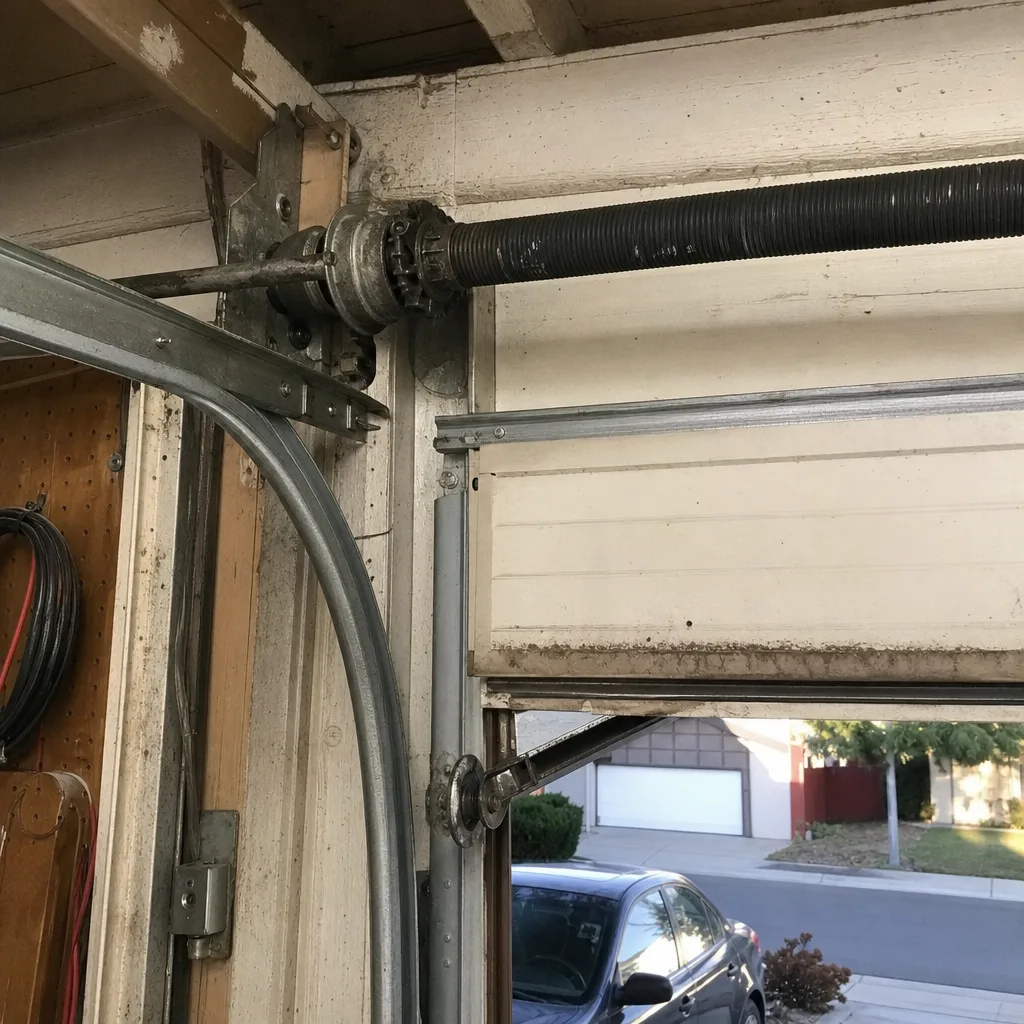 Before
 After
AfterGarage Door Warning Signs: A Walnut Creek Homeowner’s Reference Guide
Most warning sign guides for garage doors fail at the one thing they promise: telling you when to act. They list fifteen symptoms in random order and leave you with a vague sense of dread and a phone number. Here’s the problem: a door that reverses before touching the floor is a 10-minute sensor adjustment, while a door that drops faster than normal when disconnected from the opener is a broken torsion spring that can cause serious injury. Same page, opposite urgency, and the difference matters in Walnut Creek’s hillside neighborhoods where many homes have 16-foot wide, solid-wood doors that weigh 250 pounds or more. This guide separates warning signs by mechanical severity, explains the physics behind each, and shows you how to document what you see so any technician arrives with the right part, not a sales pitch. For a broader overview, see The Complete Guide to Garage Door in Walnut Creek.
Quick Answer
A garage door that drops when disconnected from the opener, shows separated cable strands, or has a roller outside the track requires stopping use immediately. Grinding rollers, slow reversal response, or uneven gaps at the top corners need scheduling within a week. Seasonal sticking, minor seal wear, or opener light delays should be photographed and monitored. The key is matching the symptom to the mechanical failure mode, not the noise level.
Table of Contents
- Stop Use Immediately: The Three Critical Failures
- Schedule Within a Week: Degrading Components
- Monitor and Log: Track Without Acting
- How to Document a Warning Sign Before Calling
- Warning Signs Often Used as Upsell Triggers
- Walnut Creek-Specific Factors That Accelerate Wear
- Common Mistakes to Avoid
- When to Call a Professional
- Frequently Asked Questions
 Before
 After
AfterStop Use Immediately: The Three Critical Failures
These three conditions create immediate injury or property damage risk. The door should not be operated manually or automatically until repaired.
Broken Torsion Spring: The Door Drops Under Its Own Weight
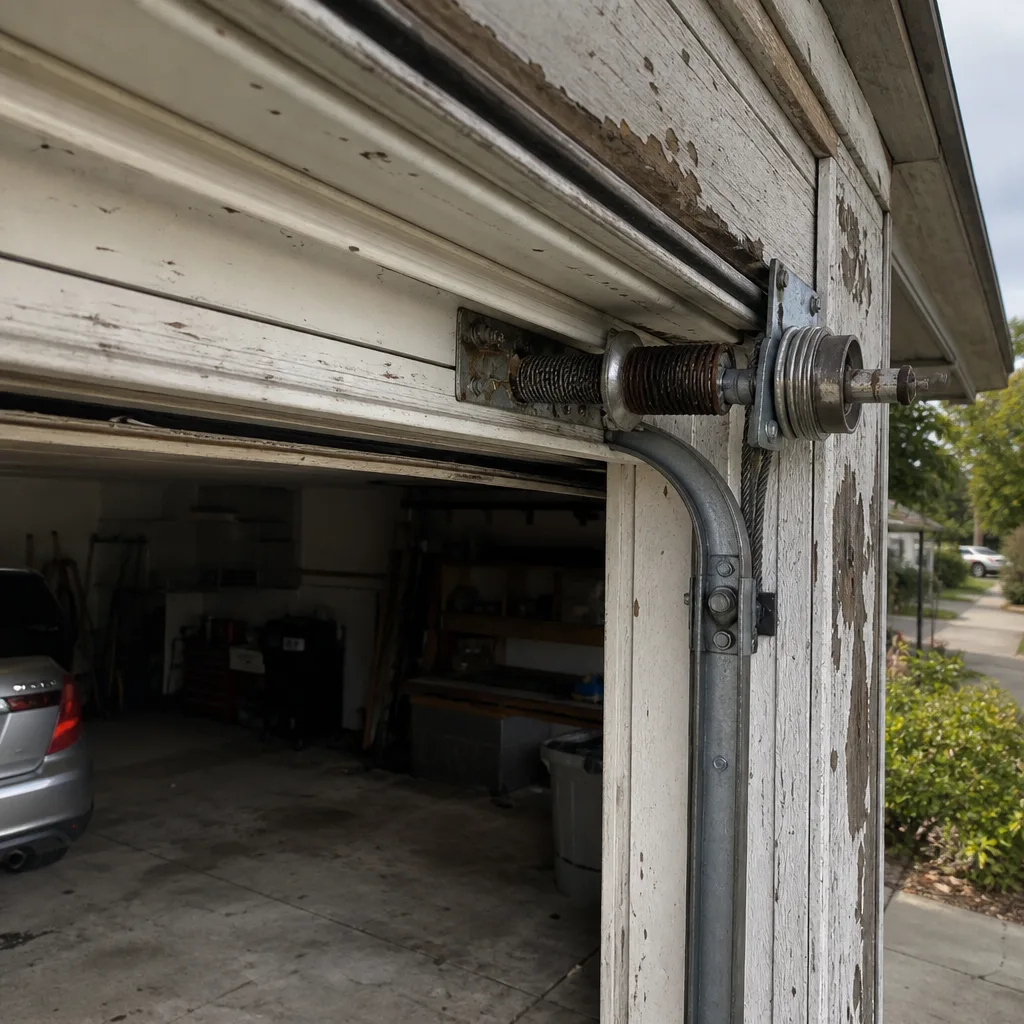
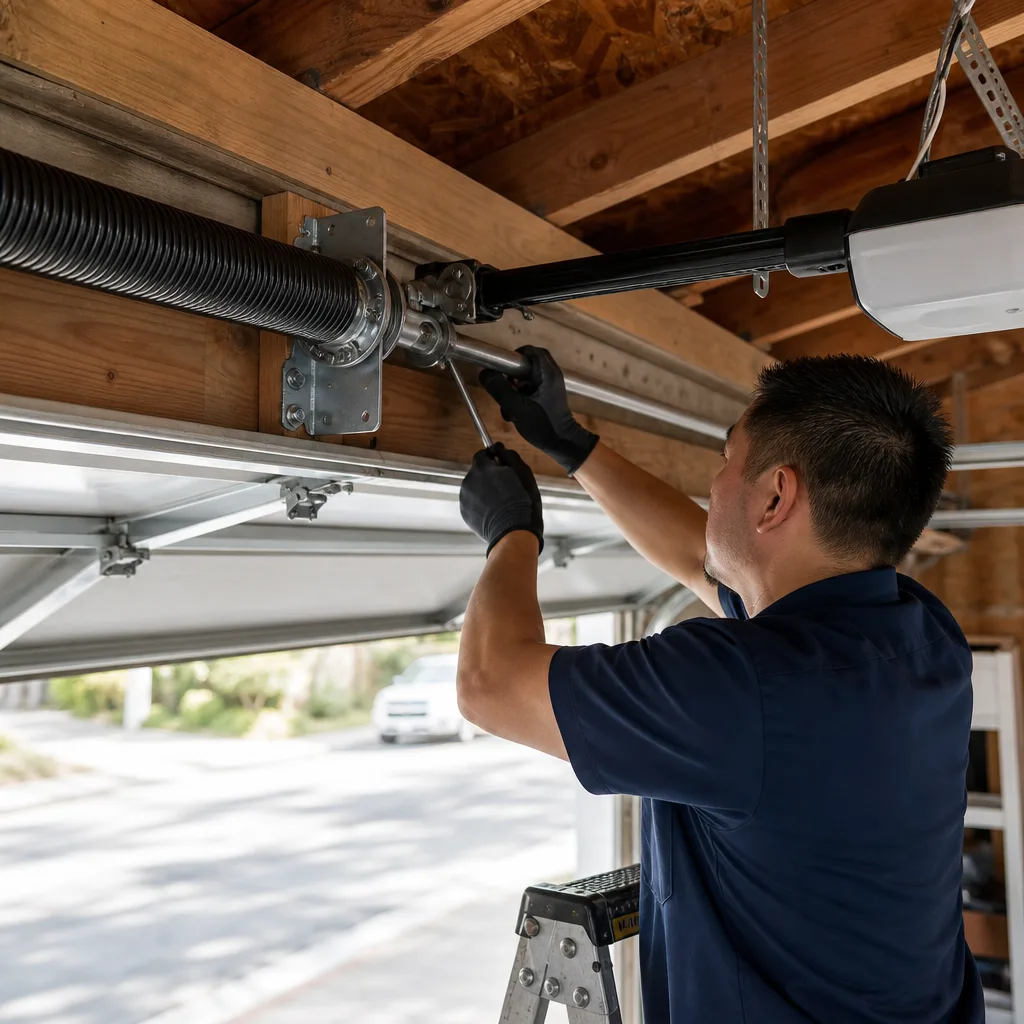
Torsion springs sit horizontally above the door on a steel shaft and counterbalance the door’s weight. When one breaks, typically with a loud bang that homeowners in Servo Garage Doors Walnut Creek home territory describe as “like a gunshot,” the door loses roughly half its counterbalance. A 200-pound door now effectively weighs 100 pounds on one side and 200 on the other.
To test: pull the red emergency release cord to disconnect the opener, then try to lift the door manually. A properly balanced door stays at any position you leave it. A door with a broken spring slams down or feels impossibly heavy. Do not attempt to operate it. The opener will strain, the cables may unspool, and the door can free-fall.
In Walnut Creek’s older neighborhoods like Larkey Park and Parkmead, we see more spring failures on original 1980s installations because those doors used single-spring systems rated for 10,000 cycles. Modern standards call for dual-spring setups rated for 20,000-30,000 cycles. A two-car household averaging four cycles per day hits 10,000 in under seven years.
Frayed Lift Cable: Visible Strand Separation at the Drum
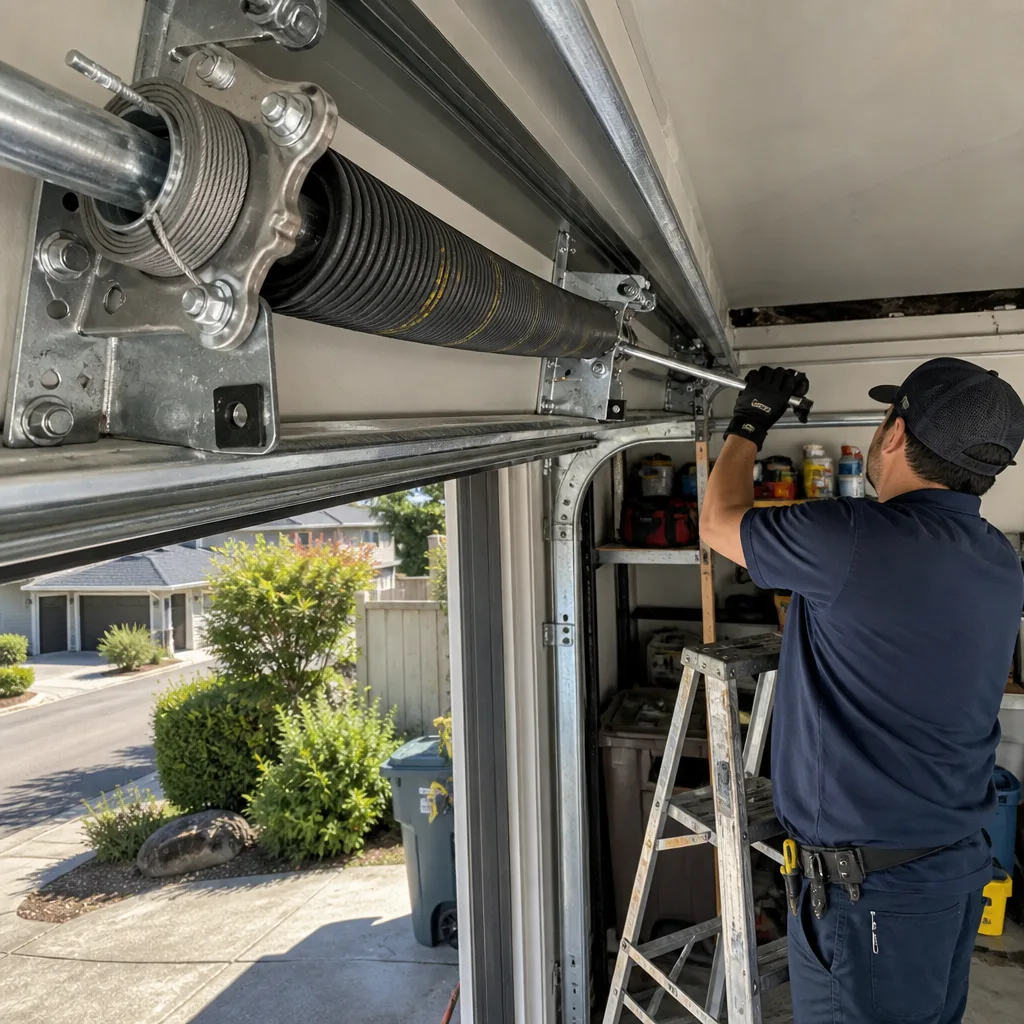
Lift cables run from the bottom bracket on each side, up to the cable drum at the end of the torsion shaft. They wrap and unwrap as the door moves. When strands separate, the cable’s rated capacity drops nonlinearly: a 1/8-inch, 7×19 cable with 10% visible fraying has lost roughly 30% of its breaking strength.
Look for: birdcaging (strands bulging outward), rust staining at the drum wrap point, or any gap where you can see the core. The critical zone is the first three wraps on the drum, where bending stress concentrates. A failed cable on one side sends the door into a tilt, jamming it in the track or dropping the free corner.
Safety note: do not touch cables under tension. The torsion spring stores enough energy to sever fingers. This is not a component to inspect closely; if you see fraying from a safe distance, that’s sufficient evidence.
Bent Track with Roller Displacement
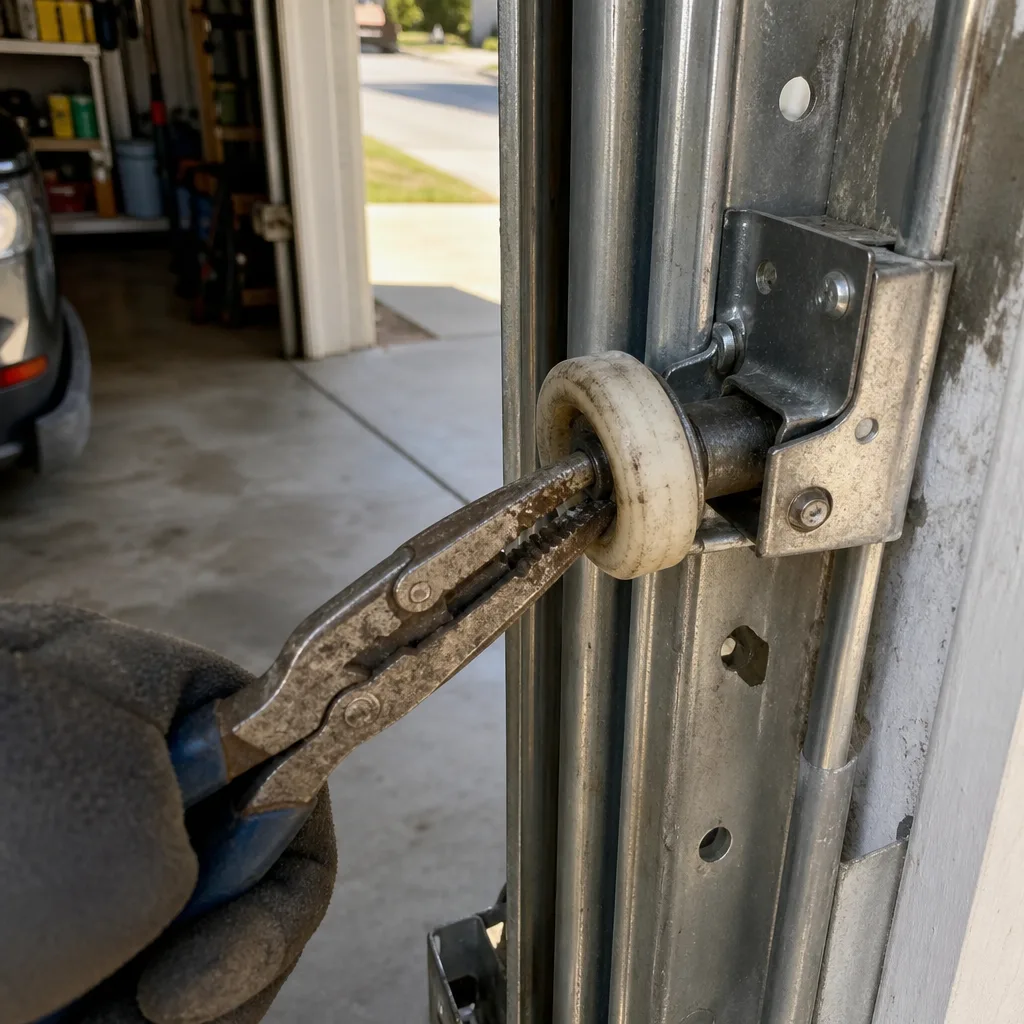
The vertical and horizontal tracks guide rollers that carry the door. When impact (typically a vehicle bumper or fallen ladder) bends the track inward, the roller can climb the track wall and pop out of the channel. A door with even one roller outside the track is unstable; opening it risks derailment and collapse.
Check: stand inside the garage with the door closed. The gap between roller stem and track edge should be consistent top to bottom. If one roller sits visibly closer to the track edge or the track itself shows a dent or bow, stop use. In Walnut Creek’s tighter hillside garages, where clearance is often minimal, a derailed door can strike a vehicle before the homeowner notices.
Track repair requires releasing spring tension to remove the door, then either cold-straightening the track (rarely successful long-term) or replacing the affected section. This is not a same-day DIY project.
Schedule Within a Week: Degrading Components
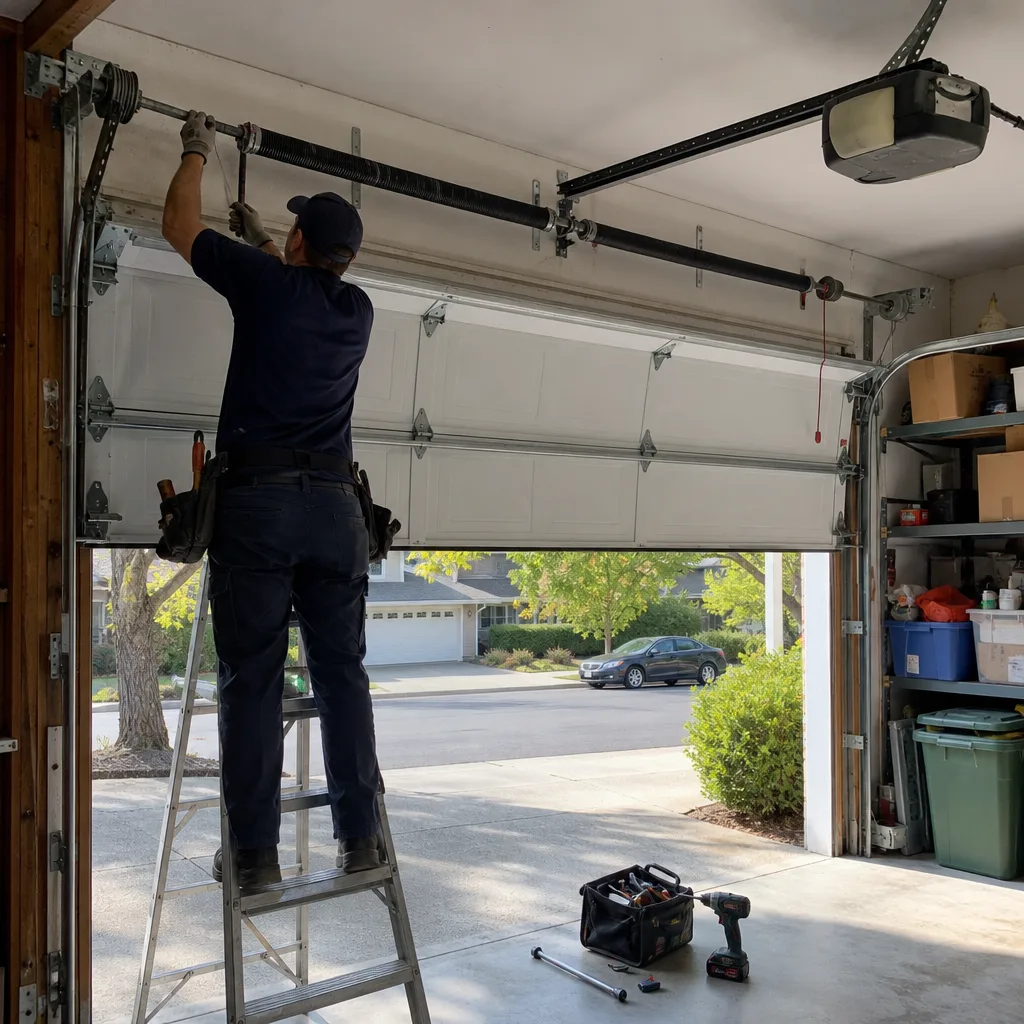
These conditions indicate measurable wear that will progress to failure, but do not create immediate hazard if the door is operated normally. Schedule service within 5-7 days.
Grinding Roller Noise: Worn Bearing, Not Yet Failed
Steel rollers with unsealed bearings accumulate grit and lose lubrication over time. The grinding you hear is metal-on-metal contact inside the roller wheel. The roller still turns, but with increased friction that loads the opener motor and the door panels.
Distinguish this from the brief rattle of a loose hinge bolt. Grinding is continuous through the door’s travel, usually loudest at the transition from vertical to horizontal track. In Walnut Creek’s dry summers, dust infiltration accelerates bearing wear; in winter, moisture intrusion causes corrosion.
Replacement with sealed-bearing nylon rollers (rated for 100,000+ cycles) typically eliminates the noise and reduces opener load. Cost in the Walnut Creek market runs $12-$18 per roller, with most residential doors using ten to twelve rollers total. We carry standard sizes on our trucks and can complete this during a standard service call.
Slow Reversal Response: Limit Switch Drift
When you press the remote, the door should begin moving within one second. A delay of two to three seconds, or a stutter-start, often indicates limit switch drift in the opener logic board. The opener “hunts” for the programmed open and close positions because the limit switches (mechanical or electronic position sensors) have shifted from their set points.
This differs from a door that reverses during travel, which is usually a safety sensor issue. Slow response is an opener control problem. Left unaddressed, the opener may over-travel, stressing the door arms or stripping the trolley carriage gears.
On LiftMaster and Chamberlain chain-drive units common in Walnut Creek’s 2005-2015 construction, limit adjustment requires accessing the logic board and using a flathead screwdriver on the potentiometer screws. Newer belt-drive units use programmed electronic limits. Either way, the adjustment is precise: 1/8 turn too far and the door slams or leaves a gap. We document the before and after limit positions in our photo record so the homeowner sees the measurable change.
Uneven Gap at Top Corners: Spring Tension Imbalance
With the door closed, the seal should sit flat against the floor with equal contact pressure across the full width. If one top corner shows a wider gap than the other, or the bottom seal compresses more on one side, the torsion springs have unequal tension.
This develops gradually as springs age at slightly different rates, or immediately if one spring was replaced without matching the other. The imbalance twists the door sections, stresses the hinges, and loads the opener unevenly. In Walnut Creek’s climate, where temperature swings of 30°F between morning fog and afternoon sun are common, thermal expansion exaggerates the gap seasonally.
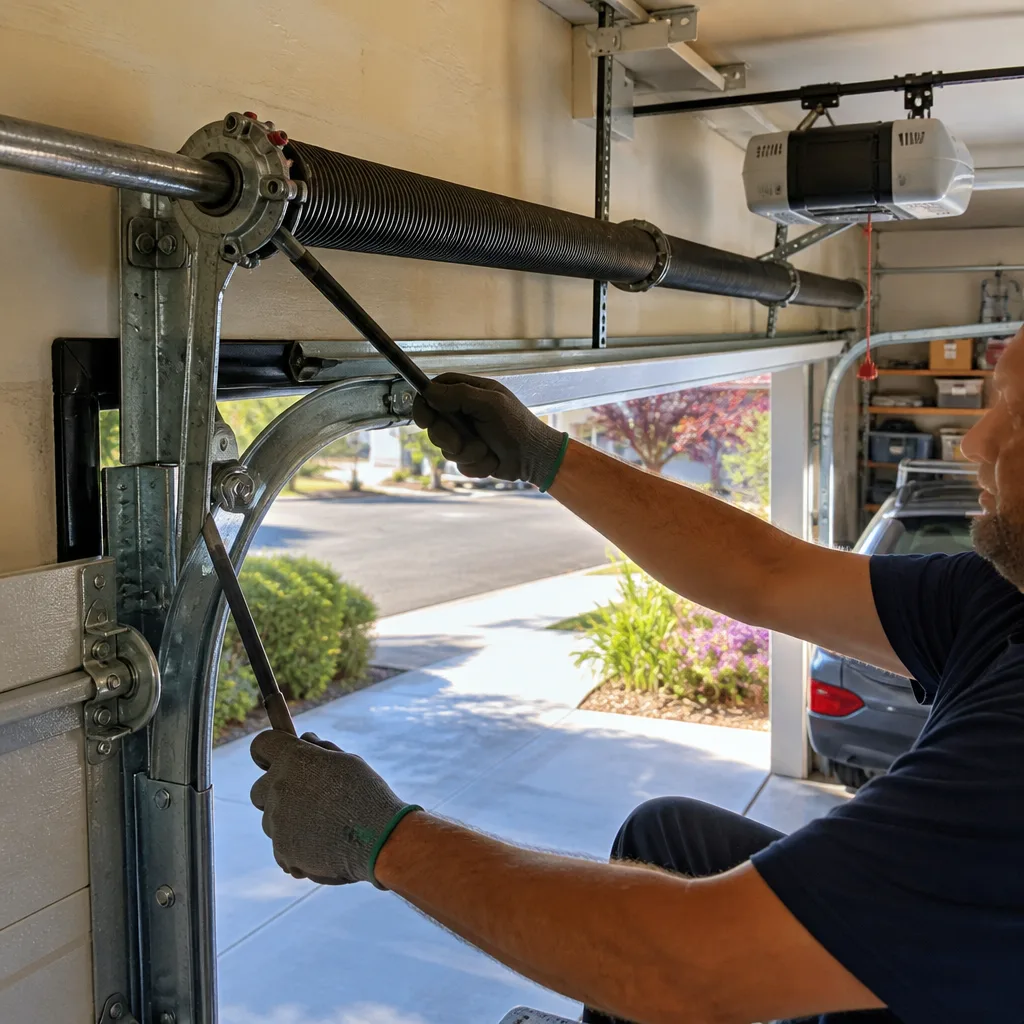
Correcting this requires winding or unwinding the appropriate spring to achieve level balance. Spring winding bars are solid steel, inserted into the cogs of the winding cone. This is not a wrench job. The stored energy in a wound torsion spring can generate lethal force if the winding bar slips.
Monitor and Log: Track Without Acting
Some symptoms indicate gradual change that should be documented but do not yet warrant repair expense. The discipline is photographing the condition and dating it, then rechecking in 90 days.
Seasonal Sticking on Wood Panels
Solid wood doors, still common in Walnut Creek’s 1960s-1980s neighborhoods like Rancho del Pavo and Walnut Heights, absorb atmospheric moisture and expand. A door that sticks slightly in January and operates freely in June is responding to relative humidity, not failing. Log the sticking point (which panel, which position in travel) and the outdoor humidity. If the pattern reverses with dry weather, no action needed. If sticking persists into June, the door may need section sanding or hardware realignment.
Minor Bottom Seal Compression Loss
The rubber or vinyl seal at the door’s bottom edge compresses permanently over years of closure against concrete. A seal that no longer fully fills a 1/4-inch gap may admit dust and minor drafts but does not compromise security or door function. Photograph the gap with a ruler in frame. If the gap grows to 1/2 inch or the seal shows cracking/tearing, replacement is appropriate. Standard T-style and bulb seals cost $8-$15 per foot in the Walnut Creek market; most residential doors need 16-18 feet.
Opener Light Delay
Most openers illuminate the garage for 4.5 minutes after operation. A delay of several seconds before the light activates, or intermittent failure to activate, usually indicates a failing logic board relay or a loose bulb socket. Since this affects convenience, not safety or door function, log the frequency. If it progresses to complete failure, the logic board or light socket is replaced. On Craftsman and Raynor units from the 2010s, this is a known wear pattern; we carry replacement logic boards for common models.
How to Document a Warning Sign Before Calling
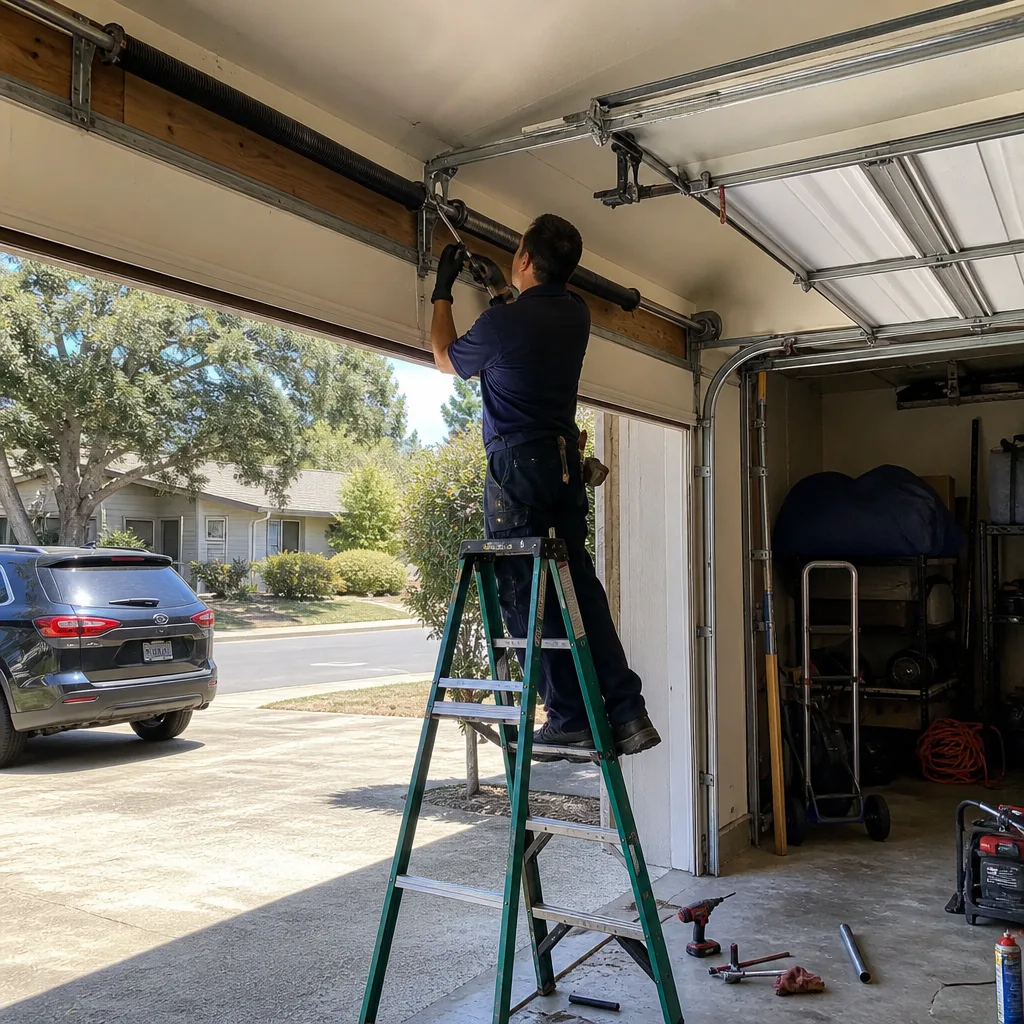
The quality of your documentation determines whether the technician arrives with the correct part or a diagnostic fee and a sales script. Here’s the protocol we recommend to Walnut Creek homeowners, derived from Clause 4 of The Haven Standard.
- Photograph the component, not the symptom. A photo of “the door making noise” is useless. A photo of the specific roller, the cable wrap at the drum, or the gap between track and roller is actionable. Include a ruler or coin for scale.
- Record the door’s specifications. Width, height, and material (steel, wood, aluminum, fiberglass). This determines spring wire size, track radius, and panel gauge. The specification sticker is usually on the interior face of the top section or the track vertical.
- Note the opener model and manufacture date. The logic board, gear assembly, and safety sensor systems vary by production year even within the same brand. The date code is on the motor housing or the hanging label.
- Document the failure mode with timing. “Grinding started three days ago, worse on descent” is more useful than “it’s noisy.” “Door reversed twice this morning at 7 AM, not since” helps isolate sensor sunlight interference, common in east-facing Walnut Creek garages.
- Include the environmental context. Temperature, recent weather, and whether the symptom is consistent or intermittent. Thermal expansion affects metal clearances; moisture affects sensor alignment.
When you call Garage Door Repair in Walnut Creek, send these five items. Our technicians review the documentation before dispatch and confirm the parts loaded on the truck. This is how Clause 4 works in practice: the photograph precedes the quote, and the quote precedes the work.
Warning Signs Often Used as Upsell Triggers
Certain conditions are routinely exaggerated into urgent, expensive repairs by contractors who lead with fear. Knowing the mechanical reality protects you from inflated quotes.
“Your Springs Are Worn and About to Break”
Torsion springs do not “wear” visibly. A spring is either intact or broken. The relevant measure is cycle count, not appearance. Some contractors photograph surface rust or paint chipping and declare imminent failure. Surface oxidation on a galvanized spring is cosmetic. Ask for the cycle rating of the installed spring and your estimated annual usage. A 10,000-cycle spring in a four-cycle-per-day household has roughly seven years of service life. If the spring is within that range and intact, replacement is preventive, not urgent.
“Your Opener Is Too Old and Unsafe”
Pre-1993 openers lack modern safety sensors and should be replaced. But a 2005 Craftsman or LiftMaster chain-drive unit with functioning sensors, force settings, and auto-reverse is not inherently unsafe. The relevant test: place a 2×4 flat on the floor where the door closes. The door should reverse within two seconds of contact. If it passes, the safety system works. Replacement is a choice, not a mandate.
“Your Track Is Bent and the Door Could Fall”
Minor track dents from roller contact over years are normal and do not affect guidance. The critical question is whether rollers remain captive in the track channel. A track with cosmetic dimpling but proper roller engagement is not a failure. Insist on seeing the roller displacement, not the dent photograph.
The defense against upsells is the same as Clause 4’s founding rule: the technician photographs the failed component and shows you before quoting replacement. If a contractor cannot produce a clear image of the specific failure with the door in context, the “urgent” repair deserves skepticism.
Walnut Creek-Specific Factors That Accelerate Wear
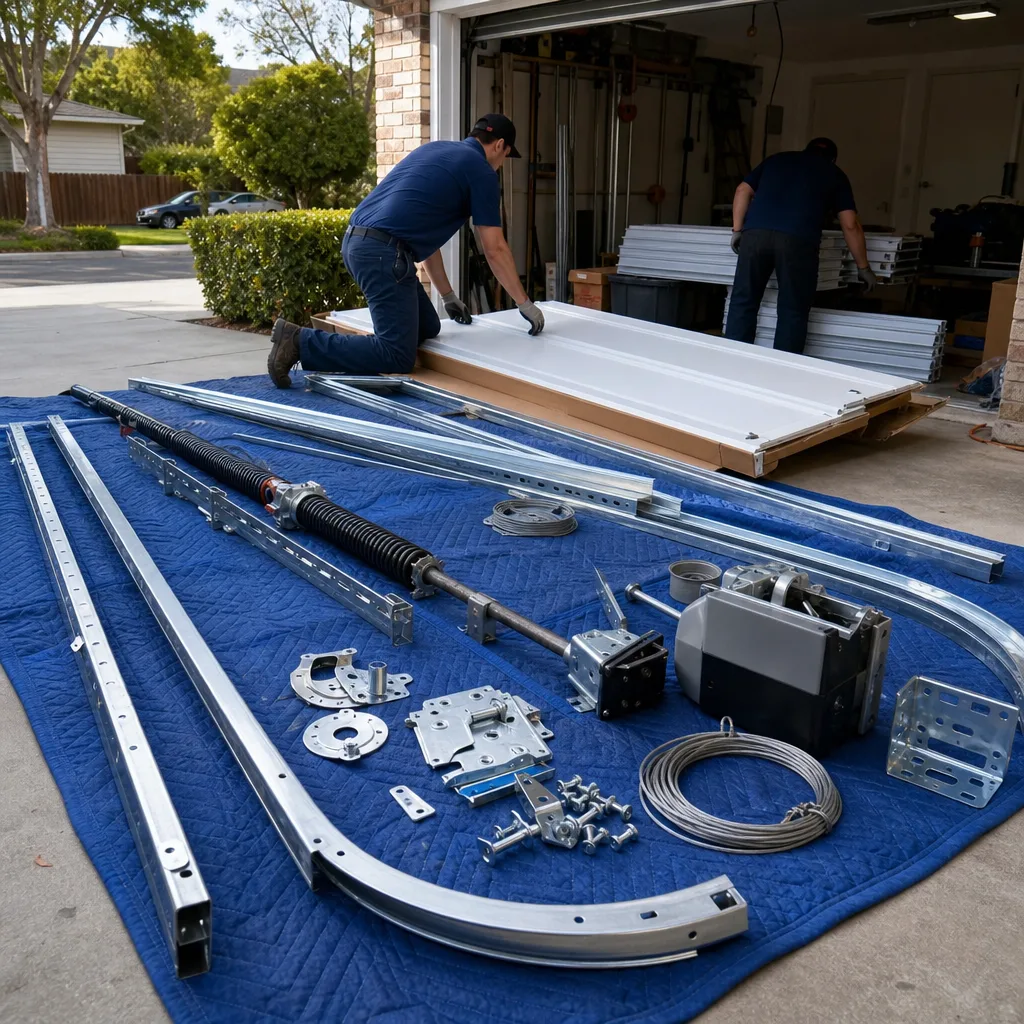
Local conditions in Walnut Creek and surrounding Contra Costa County create distinct wear patterns that generic guides miss.
Hillside settling and frame distortion. Homes in the Diablo foothills, particularly in neighborhoods like Upper Happy Valley and Tice Valley, experience gradual foundation movement. A garage door frame that was square in 2010 may be 1/2 inch out of plumb by 2025. The door binds, the weatherstrip tears, and homeowners blame the door when the frame has shifted. We measure frame squareness as part of every service call and document the deviation. If the frame is out more than 3/8 inch, track adjustment or frame shimming is needed before door hardware will operate correctly.
Coastal moisture intrusion on north-facing doors. Walnut Creek’s summer pattern brings marine layer through the Caldecott Tunnel, settling in north-facing garages below 800 feet elevation. Wood doors absorb moisture and swell; steel doors develop surface rust at panel seams. We see more bottom-section rot on north-facing installations in the 94595 and 94596 ZIP codes than in drier areas above Rudgear Road.
Earthquake hardware requirements. California Building Code requires garage door bracing and track anchoring to resist seismic loads. Older installations, particularly pre-1994, often lack adequate jamb brackets and lag screw embedment. During Garage Door Installation in Walnut Creek, we verify embedment depth and bracket gauge; on repair calls, we note when seismic hardware is absent and document it for the homeowner’s decision.
HOA aesthetic requirements. Several Walnut Creek communities, including Rossmoor and certain condominium associations along Ygnacio Valley Road, mandate specific door styles, colors, or window configurations. A warning sign in these contexts may not be repairable with standard parts if the original installation used custom panels. We maintain relationships with Clopay and Amarr distributors for non-standard panel orders, with typical lead times of 2-3 weeks.
Common Mistakes to Avoid
- WD-40 on rollers or tracks. WD-40 is a solvent and light penetrant, not a lubricant. It displaces existing grease and attracts dust. Use white lithium grease or silicone spray on metal-to-metal contact points, applied sparingly.
- Ignoring a single loud pop. That sound was almost certainly a torsion spring breaking. Homeowners who continue operating the door on the remaining spring overload the opener and risk cable unspooling. Stop use and call for service.
- Adjusting safety sensors without checking alignment first. Sensors flash when misaligned; many homeowners adjust the wing nuts repeatedly without verifying that both housings face each other squarely. A string line between the sensor faces reveals true alignment in 30 seconds.
- Replacing only one spring on a dual-spring door. The new spring has higher tension than the aged spring, creating imbalance. We replace torsion springs in matched pairs, with tension equalized to within 5%.
- Assuming all grinding is rollers. A stripped trolley carriage on the opener (the component that travels the rail and pushes/pulls the door arm) produces similar grinding. Check whether the noise originates from the door or the opener rail before calling.
- Not testing the manual release. Many Walnut Creek homeowners have never pulled the red emergency cord. In a power outage or opener failure, they cannot open the door. Test monthly; the door should lift smoothly and stay at any position.
- Accepting verbal quotes for spring work. Spring replacement requires knowing wire diameter, inside diameter, and length to the nearest 1/4 inch. A verbal “around three hundred” without measurement is not a quote. Per Clause 1 of The Haven Standard, we provide a flat, written price after measurement and before work starts.
When to Call a Professional
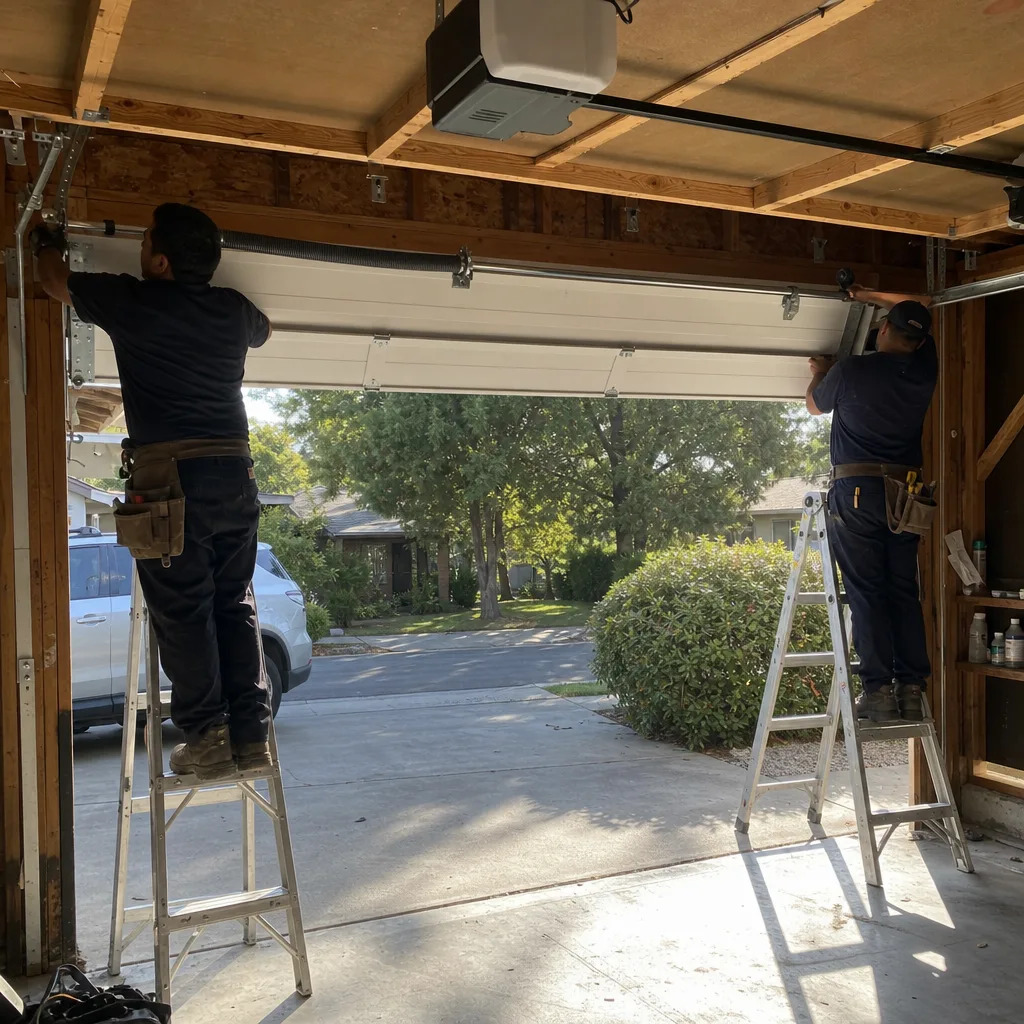
Call when a symptom falls in the stop-use-immediately category: door drop on disconnect, visible cable fraying, or roller displacement from track. Not sure how to evaluate a contractor? Read How to Hire a Garage Door Contractor in Walnut Creek: A Step-by-Step Guide. Call within a week for grinding, slow response, or uneven closure. Call for documentation review if a previous contractor recommended urgent work but showed no component photograph.
Garage Door Opener Repair & Installation in Walnut Creek covers logic board, limit switch, and sensor issues. For complete door systems, spring and cable work, or frame realignment, our technicians arrive with background-checked credentials, uniform identification, and the license number visible. Every visit includes the documented photo record: what we found, what we did, and the written scope with flat price agreed before work started.
Servo Garage Doors Walnut Creek offers free estimates in Walnut Creek. Explore more guides & resources on our blog. Call (510) 390-9102. If you have a written estimate from another company, our Free Second Opinion applies: bring the paperwork, no coupon required, and we’ll review the scope against what we find.
Frequently Asked Questions
Torsion spring replacement in the Walnut Creek market typically runs $180-$340 for a standard two-car steel door, depending on wire size and whether the cable set requires replacement. We measure the broken spring, quote a flat written price, and start work only after you approve the scope. Call (510) 390-9102 for an exact quote - estimates are free.
No. A broken torsion spring means the door’s weight is unbalanced, typically 150-250 pounds effective load. Attempting to lift it risks back injury, door panel damage, or cable snap. The door should be clamped in the closed position and not operated until the spring is replaced by a technician with winding bars and proper training.
This is almost always a close-force limit set too sensitively or a safety sensor beam interrupted by dirt, misalignment, or direct sunlight. It’s a 10-minute adjustment or cleaning, not an opener replacement. The close-force potentiometer on the logic board controls how much resistance triggers reversal; sensors prevent closure if the infrared beam breaks.
Annual professional inspection is appropriate for most Walnut Creek homes, with bi-annual checks for doors facing direct sun exposure or north-facing installations with moisture exposure. Homeowners should test manual release and auto-reverse monthly, and lubricate rollers and hinges every six months with white lithium grease.
No. Per Clause 1 of The Haven Standard, the flat written price and scope are delivered before any work starts. The only exception is if concealed damage is found after disassembly - for example, a cracked end bearing plate hidden behind the spring - and even then, we photograph the finding, explain the additional scope, and obtain written approval before proceeding.
Yes. Our Walnut Creek service trucks stock standard torsion springs for wire sizes 0.207 through 0.283 inch, common cable lengths, sealed-bearing nylon rollers, logic boards for LiftMaster, Chamberlain, Genie, and Craftsman units, and safety sensor sets. Custom wood door hardware or non-standard track may require a return visit with ordered parts.
The Bottom Line
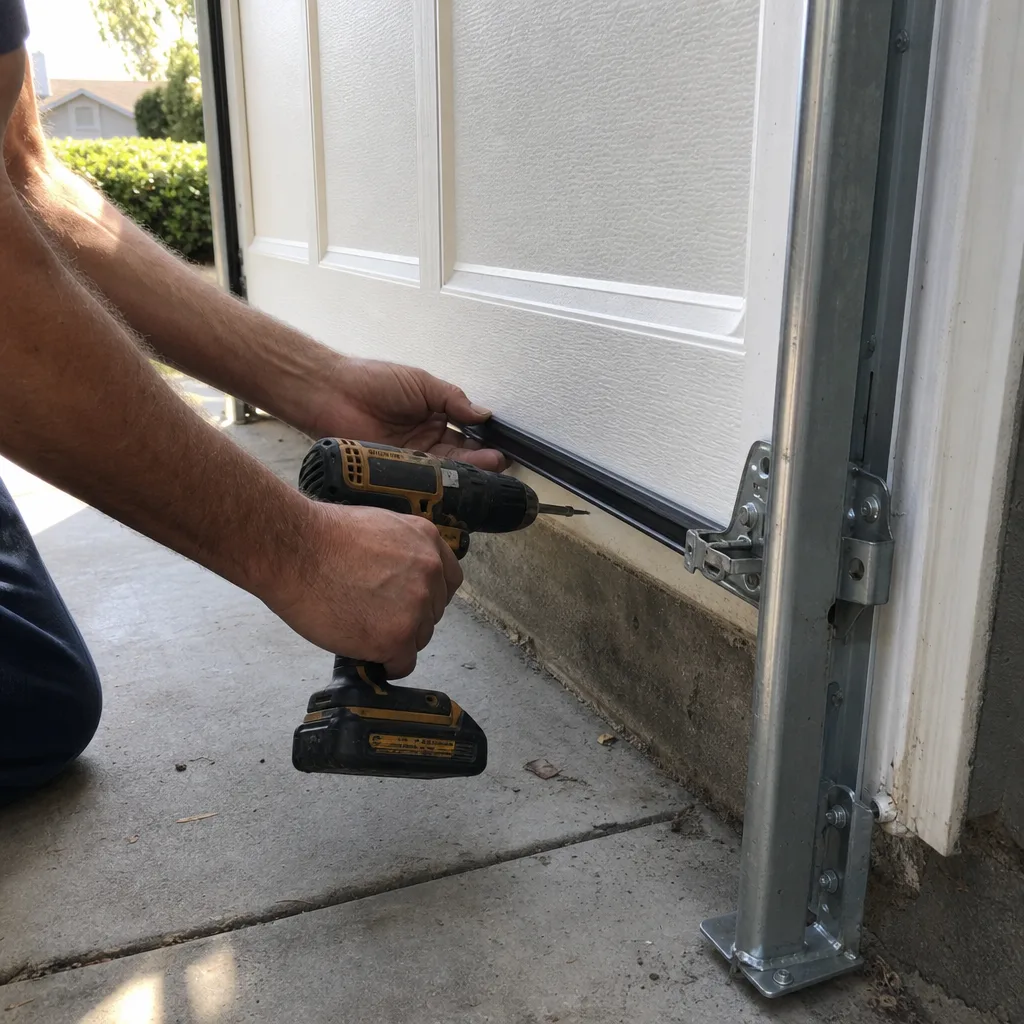
Garage door warning signs sort into three mechanical categories, not one undifferentiated panic. Stop-use conditions involve stored energy or structural instability: broken springs, frayed cables, displaced rollers. Schedule-within-a-week conditions involve progressive wear: grinding bearings, drifted limits, tension imbalance. Monitor-and-log conditions involve gradual environmental change: seasonal swelling, seal compression, convenience features. The homeowner who documents the specific component, measures the deviation, and distinguishes symptom from cause gets accurate service without the sales pressure. In Walnut Creek’s varied housing stock, from 1960s ranchers to hillside custom builds, the door’s age, orientation, and foundation conditions matter as much as the noise it makes.
Written by Marcus Deller, Owner at Servo Garage Doors Walnut Creek, serving Walnut Creek since 2015.