
Last updated September 21, 2026
Full 25-point door and opener safety check with every visit - springs, cables, rollers, tracks, and your LiftMaster or Chamberlain opener included
You get a price before we start. It does not change when the truck arrives.
 Before
 After
After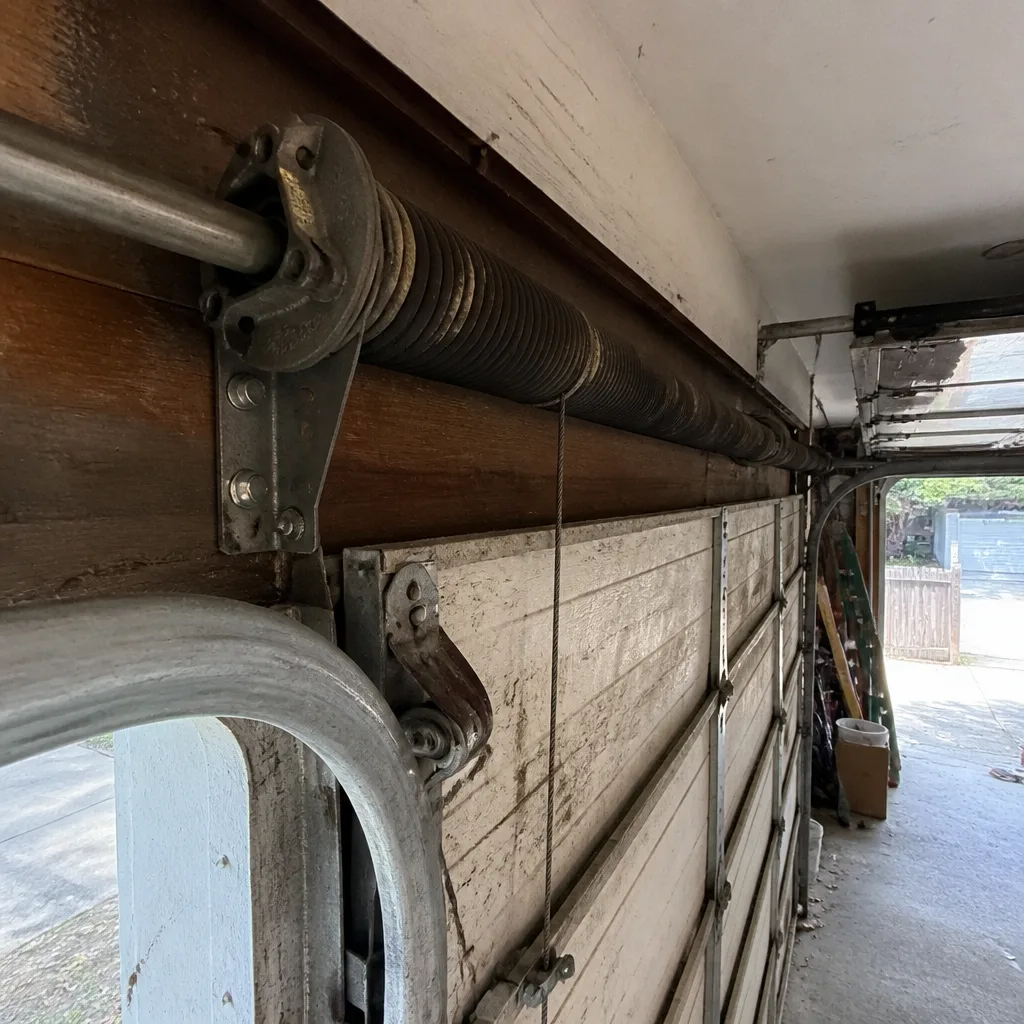 Before
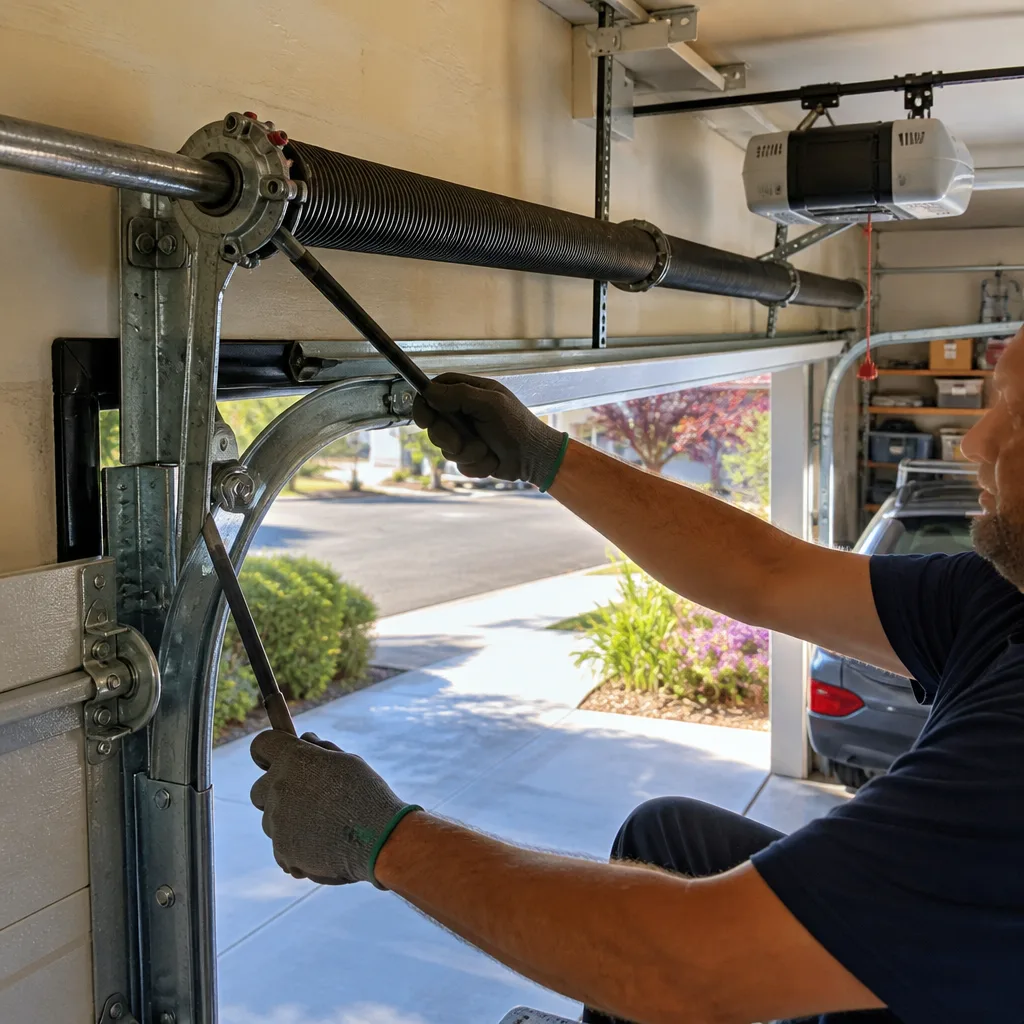 After
After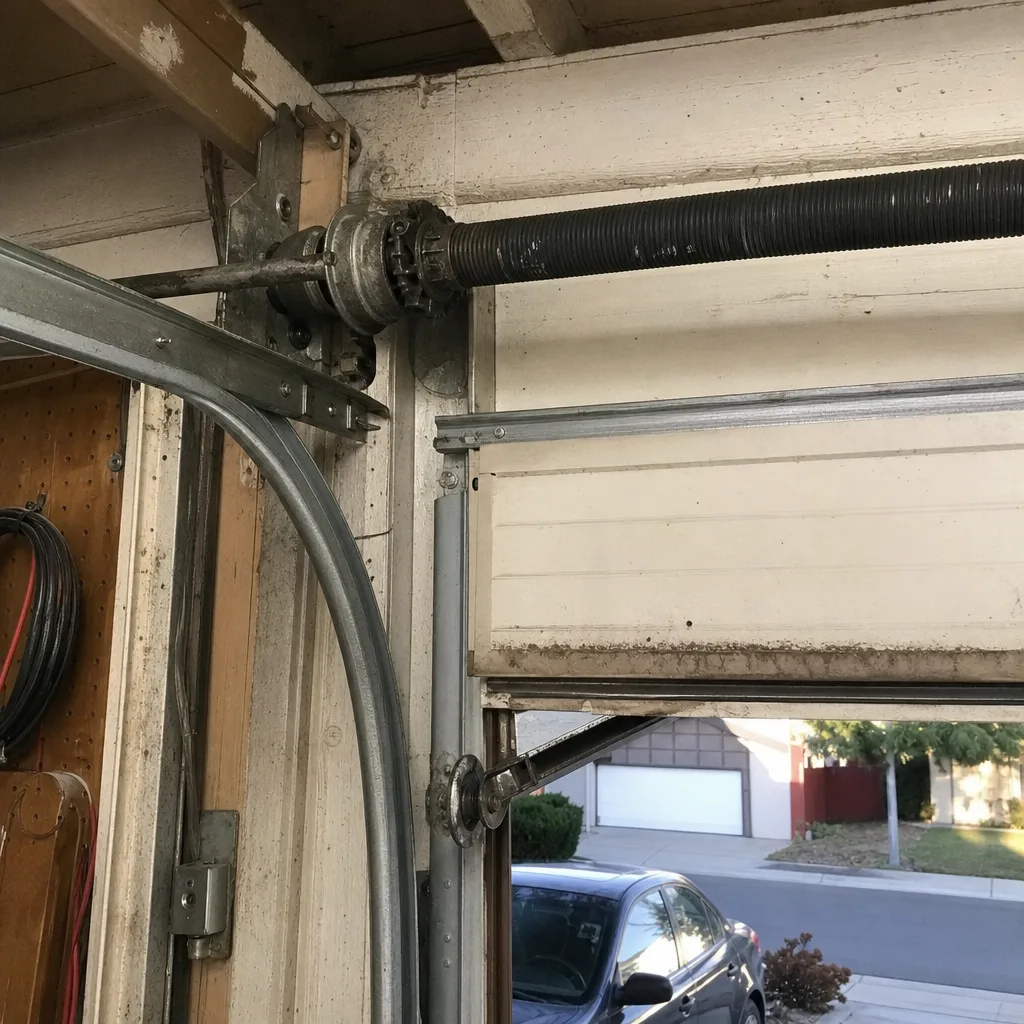 Before
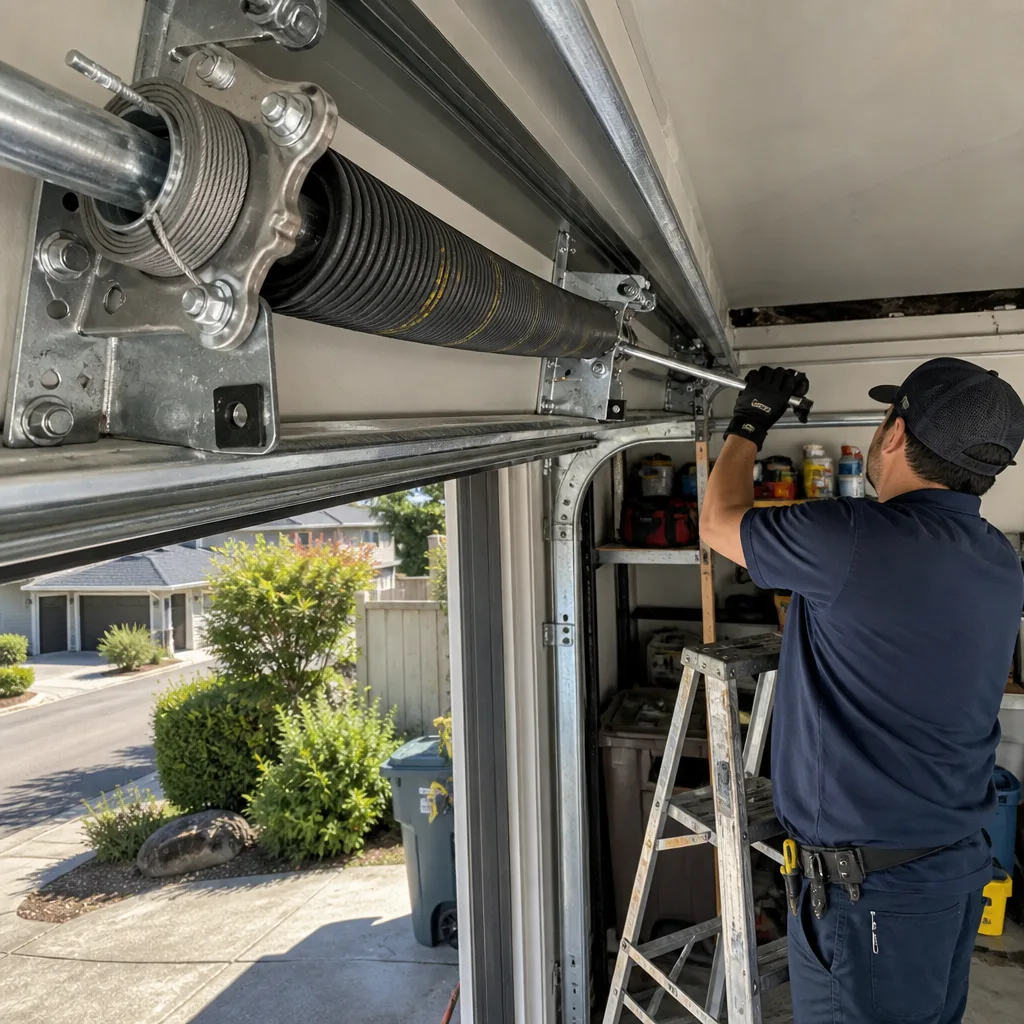 After
AfterSeasonal Garage Door Care for Walnut Creek: Year-Round Homeowner’s Guide
Most seasonal garage door guides are written for homeowners in Minneapolis or Buffalo. Walnut Creek doesn’t freeze solid in winter, so it’s easy to assume your door doesn’t need seasonal attention. That assumption costs people money. The Diablo wind events that push through the Carquinez Strait each fall generate enough lateral pressure on an unbraced single-panel door to pull the track anchor bolts - a failure mode that almost never appears in generic guides. In this guide, we’ll walk through what Walnut Creek’s actual climate does to your garage door system, season by season, and show you which tasks you can handle with a socket set and which ones need a technician with a torque wrench and a camera. For The Complete Guide to Garage Door in Walnut Creek, see our dedicated resource.
Quick Answer
Garage door maintenance in Walnut Creek should follow four distinct seasonal protocols: summer heat protection for nylon rollers and steel panel expansion, fall Diablo wind preparation for track anchors and weatherstripping, winter rain-season protection against bottom seal water intrusion and hardware corrosion, and spring rebalancing after temperature swings. Most homeowners can handle lubrication, visual inspection, and weatherstripping checks; track anchor torque verification, spring tension adjustment, and opener force-limit testing require a trained technician.
Table of Contents
- Summer Protocol: Heat, Expansion, and Nylon Roller Degradation (June-September)
- Fall Protocol: Diablo Winds and Track Anchor Stress (October-November)
- Winter/Rain Protocol: Moisture, Corrosion, and Bottom Seal Integrity (December-February)
- Spring Reset: Rebalancing After Temperature Swings (March-May)
- DIY vs. Technician: The One Task Per Season That Requires a Pro
- Common Mistakes to Avoid
- When to Call a Professional
- Frequently Asked Questions
 Before
 After
AfterSummer Protocol: Heat, Expansion, and Nylon Roller Degradation (June-September)
Walnut Creek sits in a heat basin. Summer afternoons regularly hit the mid-90s, and garage interiors can reach 110°F or higher. That heat does specific, predictable damage to garage door systems that cold-climate guides never mention.
Thermal Expansion in Steel Panels
Steel garage door panels expand roughly 0.06 inches per 10 feet of width for every 10°F of temperature rise. On a 16-foot door, a 40°F swing from morning to peak afternoon heat creates nearly a quarter-inch of total expansion. That movement stresses the hinge points and can widen the gaps between panels enough to let dust and pollen into the garage. In our experience working across Walnut Creek, from the older ranch homes near Larkey Park to the newer construction in Arbolado, we see this most in dark-colored doors that absorb more solar radiation.
What to check: With the door closed, examine the panel joints in early morning and again at 3 p.m. If the gap variation exceeds 1/8 inch, the hinges may need shim adjustment. This is visual-only for homeowners - actual hinge adjustment requires releasing cable tension first.
Nylon Roller Inspection Before Peak Heat
Nylon rollers, common on doors from Amarr and Wayne Dalton, soften as temperatures climb. A roller that spins freely at 70°F can bind at 100°F, transferring stress to the opener’s trolley carriage and the door’s horizontal tracks. We’ve replaced more opener logic boards in August than any other month, and a significant share trace back to heat-stiffened rollers forcing the motor to work harder.
Here’s the homeowner check:
- Disconnect the opener using the red release cord.
- Lift the door manually to about waist height.
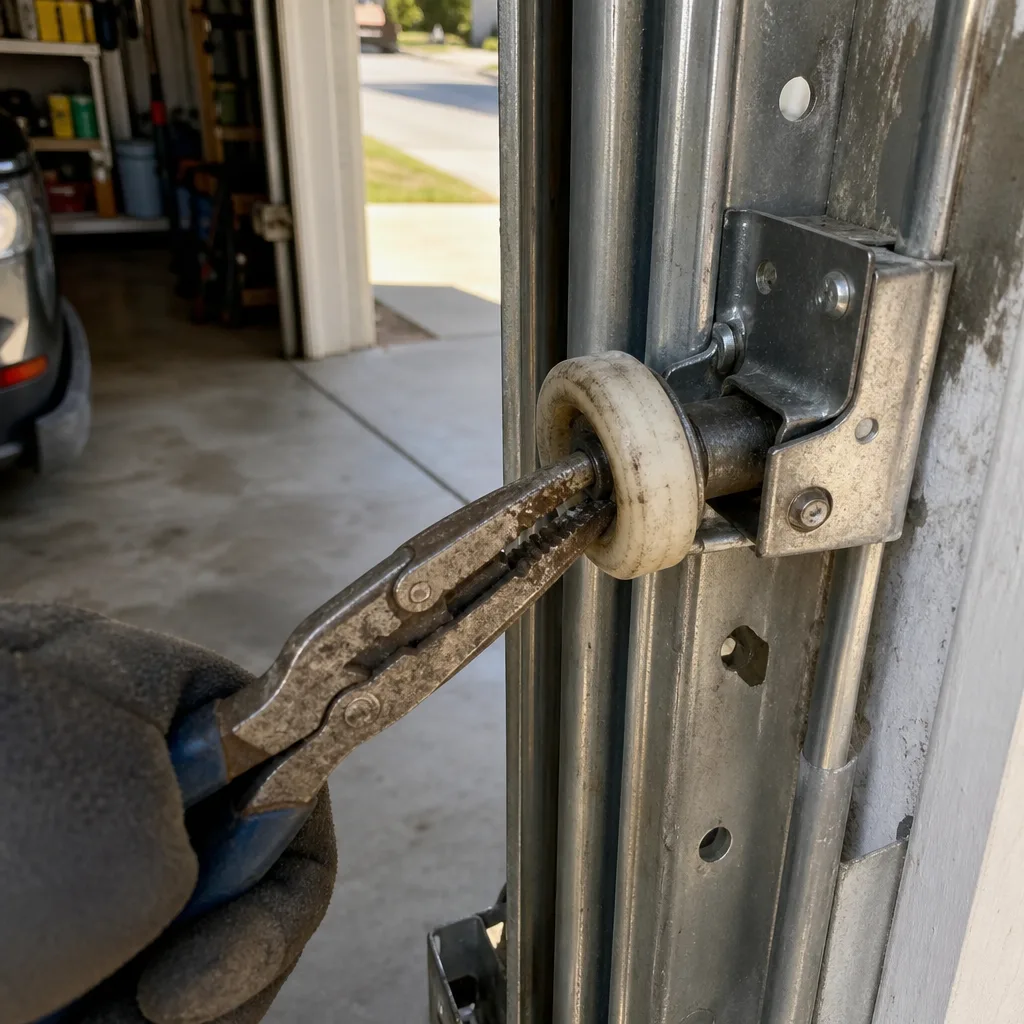
- Each roller should spin with light finger pressure. If any feels gritty, sticks, or wobbles on its stem, mark it for replacement.
- Check the stem itself for rust streaks - a sign the bearing seal has failed.
Replacement is straightforward with a socket set: remove the roller bracket bolt, angle the roller out of the track, and install the new one. Use 13-ball steel rollers for Walnut Creek garages if you’re replacing; they handle heat better than standard 10-ball nylon. If you’re unsure of the roller size, bring one to our shop or text us a photo - we’ll identify it without a service call.
Opener Force Limit Re-Testing After Hot Spells
Every garage door opener has a force-limit setting, measured in pounds of resistance before the motor reverses. Heat-expanded panels and softened rollers increase the actual force required to move the door. If the opener’s limit hasn’t been checked since spring, it may be set too low for summer conditions, causing nuisance reversals, or too high for safe operation.
Testing the force limit is not a DIY task. The procedure requires a calibrated scale and knowledge of the manufacturer’s specified range - typically 15-25 pounds for residential doors. A misadjusted force limit is how fingers get crushed and pets get injured. This is a 20-minute service visit, and under Clause 1 of The Haven Standard, you’ll get the written price before we touch the opener.
Summer Maintenance Checklist
- Visual panel gap check, morning vs. afternoon
- Nylon roller spin test on all 10-12 rollers
- Track debris removal with a dry cloth - no lubricant on the track itself
- Photo eye alignment verification: LED colors should match the manufacturer’s chart
- Schedule opener force-limit test with a technician
Fall Protocol: Diablo Winds and Track Anchor Stress (October-November)
The Diablo winds are Walnut Creek’s most underappreciated garage door hazard. These dry, high-velocity winds funnel through the Carquinez Strait and accelerate as they descend into the valley. Gusts of 40-60 mph are common; sustained winds over 30 mph can last for days. A garage door presents the largest single opening in most homes, and the pressure differential across that surface is substantial.
The Track Anchor Bolt Problem
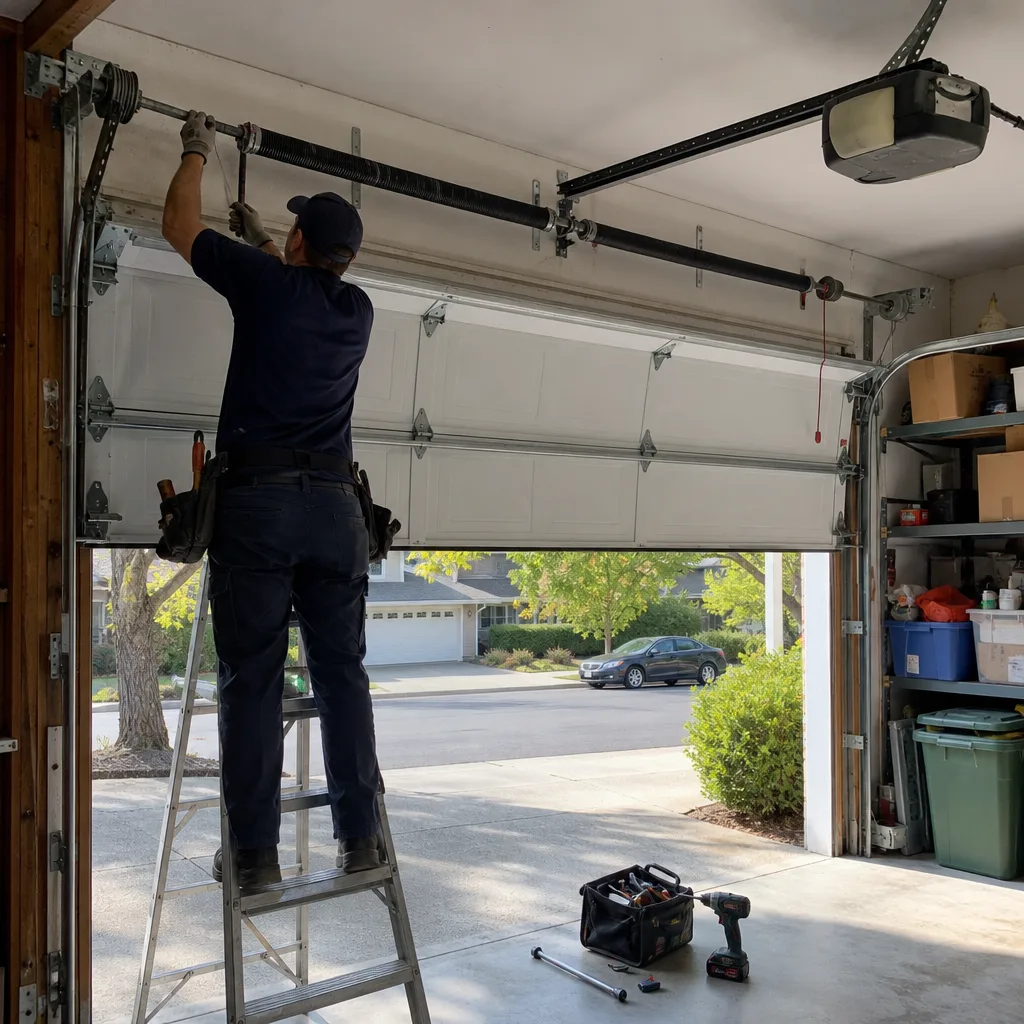
Track anchors - the lag bolts that secure the vertical track to the door jamb - are installed to handle the vertical load of the door’s weight, not significant lateral pressure. When Diablo winds push against the door face, that force transmits through the rollers into the track, then to the anchors. We’ve found loose or pulled anchors in homes from Pleasant Hill Road to the slopes of Mount Diablo every November.
The critical inspection points:
- Examine each vertical track anchor bolt (typically 4-6 per side) for loosening, wallboard cracking around the head, or pull-out of more than 1/16 inch.
- Check that the track itself hasn’t bowed inward - a sign repeated wind loading has stressed the steel.
- Verify the horizontal track back-hang supports are plumb; wind vibration can loosen the fasteners that hold these to the ceiling joists.
Torque verification on track anchors requires a technician. The specification is typically 45-55 ft-lbs for 3/8-inch lag bolts in solid wood framing, but many Walnut Creek homes built 1960-1990 have door jambs with degraded wood fiber from decades of moisture cycling. A torque wrench will reveal stripped threads before they fail. We document anchor condition with photos, per Clause 4 of The Haven Standard, so you see what we found before any repair is quoted.
Weatherstripping and Bottom Seal
Fall is also when you want your perimeter seal in top condition, before the rains arrive. The flexible PVC or rubber weatherstrip along the door sides and top hardens with UV exposure. In Walnut Creek’s sun, we’ve seen three-year-old weatherstripping crack like old rubber bands.
Check the bottom seal by closing the door on a piece of paper at multiple points across the width. If the paper pulls out easily, the seal isn’t compressing properly. Leaves and debris from fall shedding compound this problem by lodging in the seal channel.
Fall Maintenance Checklist
- Track anchor bolt visual inspection - look, don’t torque
- Track bow and back-hang plumb check
- Weatherstripping flexibility test: bend a corner, look for cracks
- Bottom seal paper test across full door width
- Schedule track anchor torque verification if home is 20+ years old or prior wind damage is suspected
Winter/Rain Protocol: Moisture, Corrosion, and Bottom Seal Integrity (December-February)
Walnut Creek averages about 20 inches of annual rainfall, concentrated December through February. That isn’t torrential by national standards, but it’s enough to exploit every maintenance gap in a garage door system. The specific failure pattern here is water concentration against the bottom seal, driven by the gentle but persistent slope of most Walnut Creek driveways toward the garage.
Bottom Seal and Threshold Gap
The bottom seal sits in an aluminum or vinyl retainer channel at the bottom of the door. When new, it compresses against the concrete slab to form a water barrier. Over time, the seal material compresses permanently, the retainer channel corrodes or cracks, and the concrete itself may settle slightly, opening a gap.
A gap of even 1/4 inch allows water to sheet under the door during heavy rain, especially when leaves block the exterior drainage path. We’ve documented water damage to stored items, drywall, and even foundation sill plates in Walnut Creek homes where the bottom seal had degraded unnoticed.
The homeowner check: Close the door during daylight and look for light from outside. Any visible line is a potential water path. For a more precise check, slide a flashlight under the door from outside - the beam pattern will reveal gaps clearly.
Bottom seal replacement is a manageable DIY task on most steel doors. The retainer channel unbolts or slides out, the seal inserts, and the channel reinstalls. On wood doors, especially Craftsman-style panels common in the Walnut Creek Hills area, the bottom seal may be nailed or stapled, and replacement requires more care to avoid splitting the rail.
Hardware Corrosion on Untreated Components
Walnut Creek’s winter humidity, combined with temperature swings that cause condensation on cold steel, accelerates corrosion on hardware that isn’t galvanized or stainless. The most vulnerable points:
- Bottom roller brackets, which sit closest to floor moisture and road salt
- Cable drums at the top of the vertical track, where temperature differentials cause repeated condensation
- Torsion spring mounting cones, especially on older systems without corrosion-resistant coating
Surface rust on brackets is cosmetic; pitting or flaking is structural. A pitted cable drum can fray cables unpredictably. This is where the documented photo record matters - our technicians photograph drum condition during every service, so you can compare year over year rather than relying on memory.
Wood Panel Swelling
Wood garage doors, still found in many Walnut Creek Hills and Saranap homes, absorb moisture from winter humidity. Swollen panels bind in the tracks, stress the opener, and can permanently warp if the moisture cycle repeats over multiple seasons. A properly applied exterior-grade urethane finish, maintained every 2-3 years, prevents this. If your wood door hasn’t been refinished in five years, the panels are likely taking on moisture.
Winter Maintenance Checklist
- Light test for bottom seal gaps
- Clear exterior drainage path of leaves and debris
- Inspect bottom roller brackets and cable drums for corrosion
- Check wood door finish for thinning or peeling
- Operate door manually after rain events to detect binding from swollen panels
Spring Reset: Rebalancing After Temperature Swings (March-May)
Spring in Walnut Creek brings the widest temperature swings of the year - 40°F mornings to 75°F afternoons are common. Those swings stress the garage door system in ways that are invisible until they cause a failure.
Post-Rain Lubrication Sequence
Winter moisture washes lubricant from moving parts. By March, most Walnut Creek garage doors are running dry on their critical friction points. The correct lubrication sequence matters - wrong product or wrong location causes more problems than it solves.
What to use: White lithium grease in a spray can for hinges, rollers, and bearing plates. Silicone spray for the weatherstripping to prevent sticking and cracking. Never use WD-40 as a lubricant - it’s a solvent that strips existing grease and attracts dust.
The sequence:
- Disconnect opener and lock door in open position with vice grips on the track (below the bottom roller, never above).
- Wipe all old grease and debris from hinges and roller stems with a dry cloth.
- Apply thin film of white lithium to hinge pivot points and roller bearings - not the roller wheel itself, which should roll, not slide.
- Lubricate torsion spring with light coating - the spring coils rub during operation.
- Silicone spray on weatherstripping contact surfaces.
- Remove vice grips, reconnect opener, cycle door twice to distribute.
The lock-with-vice-grips step is non-negotiable. A door with weak or broken springs can close violently when you release tension. If you’re not comfortable with this procedure, it’s a standard part of our spring service.
Cable Inspection After Humidity Cycling
Cables - the aircraft-grade steel ropes that lift the door - are often overlooked until one frays and snaps. Walnut Creek’s humidity cycling causes microscopic corrosion at the cable’s internal strands, invisible from the outside until failure.
Homeowner inspection: Look for kinking, bird-caging (strand separation), or rust staining where the cable wraps around the drum. Any of these means replacement. Cable replacement is not DIY - the torsion spring stores lethal energy, and cable winding requires specific tension knowledge.
Rebalancing Check
A properly balanced door stays at any position when disconnected from the opener and lifted to mid-height. If it drifts up or down, the spring tension is off. Spring tension changes with temperature - cold springs are stiffer, warm springs softer - and after a winter of temperature swings, the balance point often shifts.
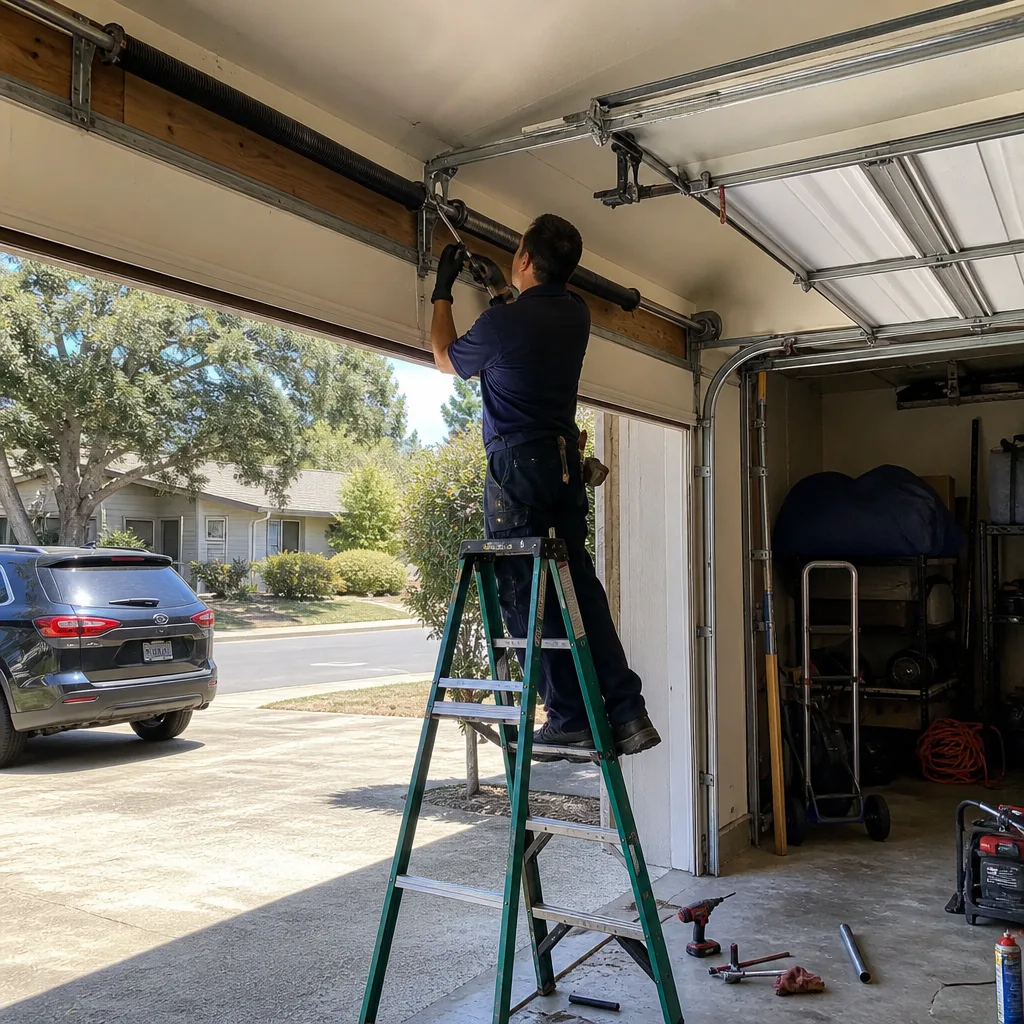
Test: Disconnect opener, lift door to waist height, release. It should hold within 6 inches. If not, spring adjustment is needed. This requires winding bars inserted into the torsion spring cone - a procedure that causes serious injury every year when attempted with makeshift tools. Our technicians carry calibrated torque equipment and will quote the adjustment in writing before touching the spring, per Clause 1.
Spring Maintenance Checklist
- Lubrication sequence as described above
- Cable visual inspection for fraying, kinking, or rust staining
- Balance test at mid-height
- Opener travel limit verification - limits can drift with temperature
- Schedule spring tension adjustment if balance test fails
DIY vs. Technician: The One Task Per Season That Requires a Pro
We’ve been clear about safety throughout this guide. Here’s the consolidated view of what belongs to each category.
| Season | Homeowner Tasks | Technician-Required Task |
|---|---|---|
| Summer | Roller spin test, panel gap check, photo eye cleaning, track debris removal | Opener force-limit calibration with certified scale |
| Fall | Weatherstripping flexibility test, bottom seal paper test, visual anchor inspection | Track anchor bolt torque verification with calibrated wrench |
| Winter | Bottom seal light test, drainage path clearing, hardware corrosion visual check | Torsion spring and cable drum corrosion assessment under load |
| Spring | Lubrication sequence, cable visual inspection, balance test | Spring tension adjustment with winding bars and torque measurement |
The pattern is consistent: anything involving stored mechanical energy (springs, cables under tension), calibrated safety settings (force limits, torque specifications), or structural fasteners whose failure could drop a door belongs to a technician with proper tools and insurance. Everything else - observation, cleaning, basic lubrication - is within reach of a homeowner with a socket set, a can of white lithium grease, and attention to detail.
When we do perform the technician-level tasks, Clause 4 of The Haven Standard requires we photograph what we found before quoting replacement. You receive that photo record as part of the service documentation. It’s why we don’t say “trust us” - we show you.
Common Mistakes to Avoid
- Using WD-40 on garage door parts. It’s a solvent and light penetrant, not a lubricant. It strips existing grease, attracts dust, and leaves metal unprotected. We’ve replaced hinges that seized solid after years of WD-40 “maintenance.”
- Ignoring the bottom seal until water enters. By the time you notice water, the concrete edge may be eroded or the door bottom rail corroded. The seal is a $15-40 part; water damage is hundreds or thousands.
- Attempting spring adjustment with screwdrivers or pliers. Winding bars are solid steel, inserted fully into the torsion cone. Using anything else risks the tool slipping and the spring releasing uncontrolled energy. We see this injury in Walnut Creek emergency rooms every few years.
- Skipping fall track inspection after mild wind years. Diablo winds are intermittent. Two calm years create false confidence. The third year pulls the anchors that were loosening all along.
- Assuming a quiet door is a healthy door. Nylon rollers can degrade silently until they crack. A door that “always worked fine” fails suddenly when multiple marginal components reach end of life together.
- Applying grease to the track. The track should be clean and dry. Grease on the track collects dust, forms abrasive paste, and accelerates roller wear. Lubricate the roller bearing, not the track.
- Neglecting the photo eye alignment after bumping it with storage items. Misaligned photo eyes cause nuisance reversals that wear the opener and frustrate homeowners into bypassing a critical safety feature.
When to Call a Professional
Call a technician when you encounter stored energy, calibrated safety systems, or structural uncertainty. Specifically: torsion spring tension adjustment, cable replacement or drum service, opener force-limit testing, track anchor torque verification, and any door that doesn’t pass the manual balance test or binds during operation.
Servo Garage Doors Walnut Creek offers free estimates in Walnut Creek - call (510) 390-9102. Our technician will arrive with a camera, a torque wrench, and a written price before any work starts. Emergency calls are answered by a live person, 24/7, with a named technician and an on-the-way text. If you have a written estimate from another company, we’ll provide a free second opinion - bring the paperwork, no coupon required.
We service all major brands including Garage Door Repair in Walnut Creek for Amarr, Wayne Dalton, Craftsman, and Raynor systems, among others. Every visit closes with a documented photo record of findings and completed work, tracing back to the founding rule Servo was built on in 2015.
Frequently Asked Questions
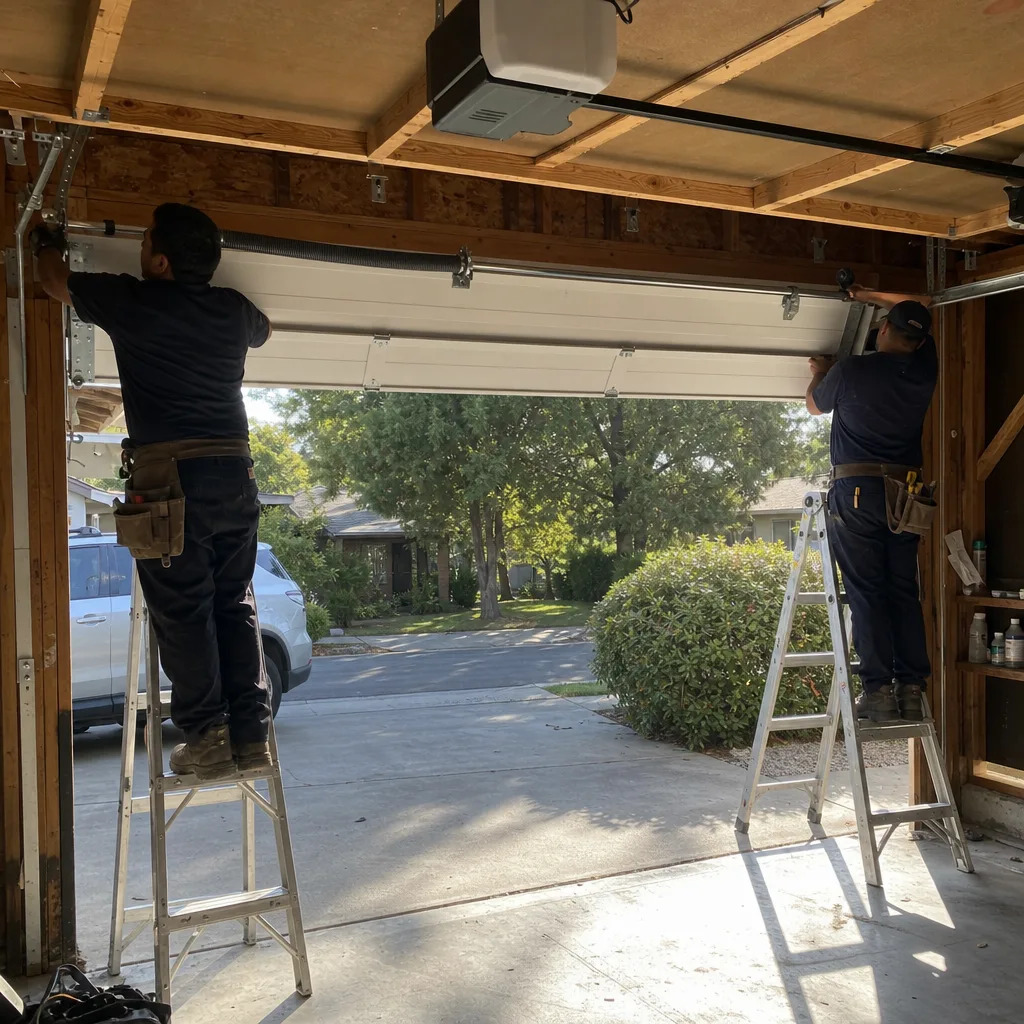
Run through the seasonal checklist at the start of each season - four times per year, taking about 30 minutes for the homeowner-level tasks. Visit our more guides & resources page for additional maintenance tips. Schedule professional inspection every 12-18 months for the technician-level items, or immediately if you notice binding, unusual noise, or after any Diablo wind event over 50 mph. Call (510) 390-9102 to schedule - estimates are free.
Yes. Sustained winds of 30-40 mph with gusts to 60+ create pressure differentials that stress track anchors, bow tracks, and can force doors out of alignment. We’ve repaired wind-damaged doors in Walnut Creek after every major Diablo event, particularly in exposed homes near the Carquinez Strait approach and on ridge lines in the Walnut Creek Hills. Fall track anchor inspection prevents most of this damage.
Homeowner DIY maintenance costs $15-25 for a can of white lithium grease and silicone spray, plus your time. Professional seasonal inspection and tune-up typically runs $129-189, covering force-limit test, spring tension verification, track anchor torque check, and full lubrication. See our Garage Door Cost Breakdown: The Walnut Creek Homeowner’s Reference for 2026 for detailed pricing on specific repairs. Specific repairs are quoted in writing before work begins, per Clause 1 of The Haven Standard. Call (510) 390-9102 for an exact quote - estimates are free.
Heat-expanded steel panels and softened nylon rollers increase friction and binding points. The opener motor works harder, amplifying normal mechanical noise. Check roller condition first - stiff or gritty rollers are the most common summer noise source. If rollers spin freely and noise persists, the opener’s force setting may be mismatched to seasonal load, requiring professional calibration.
Light lubrication of the torsion spring coils with white lithium grease is safe if the door is locked open with vice grips on the track below the bottom roller. Never touch the spring mounting cones or attempt to add or release tension. If you’re not comfortable with the locking procedure, skip this step and schedule service - spring-related injuries are severe and avoidable.
A maintenance visit includes: 21-point mechanical inspection, opener force-limit and travel-limit testing with calibrated equipment, spring tension and door balance verification, track anchor torque check, roller and hinge condition assessment, cable and drum inspection, weatherstripping and bottom seal evaluation, full lubrication of all specified points, photo eye alignment and safety reversal test, and a documented photo record of all findings delivered to you. The written scope and flat price are provided before any work begins, per Clause 1. Garage Door Installation in Walnut Creek and Garage Door Opener Repair & Installation in Walnut Creek are also available if inspection reveals need for replacement.
The Bottom Line
Walnut Creek’s garage doors face a distinct wear cycle: summer heat degrading nylon and expanding steel, fall Diablo winds testing track anchors, winter moisture exploiting seal gaps and corroding hardware, and spring temperature swings throwing off balance. Generic maintenance advice misses these patterns. The homeowners who avoid emergency repairs are the ones who match their maintenance to the actual climate - inspecting rollers before August heat, checking track anchors before November winds, testing bottom seals before December rains, and verifying spring balance after March temperature swings. Most of this is observation and basic care. The critical safety and calibration tasks belong to a technician with proper tools and a documentation system. That’s the division this guide follows, and it’s the division we follow on every service call.
Servo Garage Doors Walnut Creek home
Written by Marcus Deller, Owner at Servo Garage Doors Walnut Creek, serving Walnut Creek since 2015.