
Last updated September 21, 2026
Full 25-point door and opener safety check with every visit - springs, cables, rollers, tracks, and your LiftMaster or Chamberlain opener included
You get a price before we start. It does not change when the truck arrives.
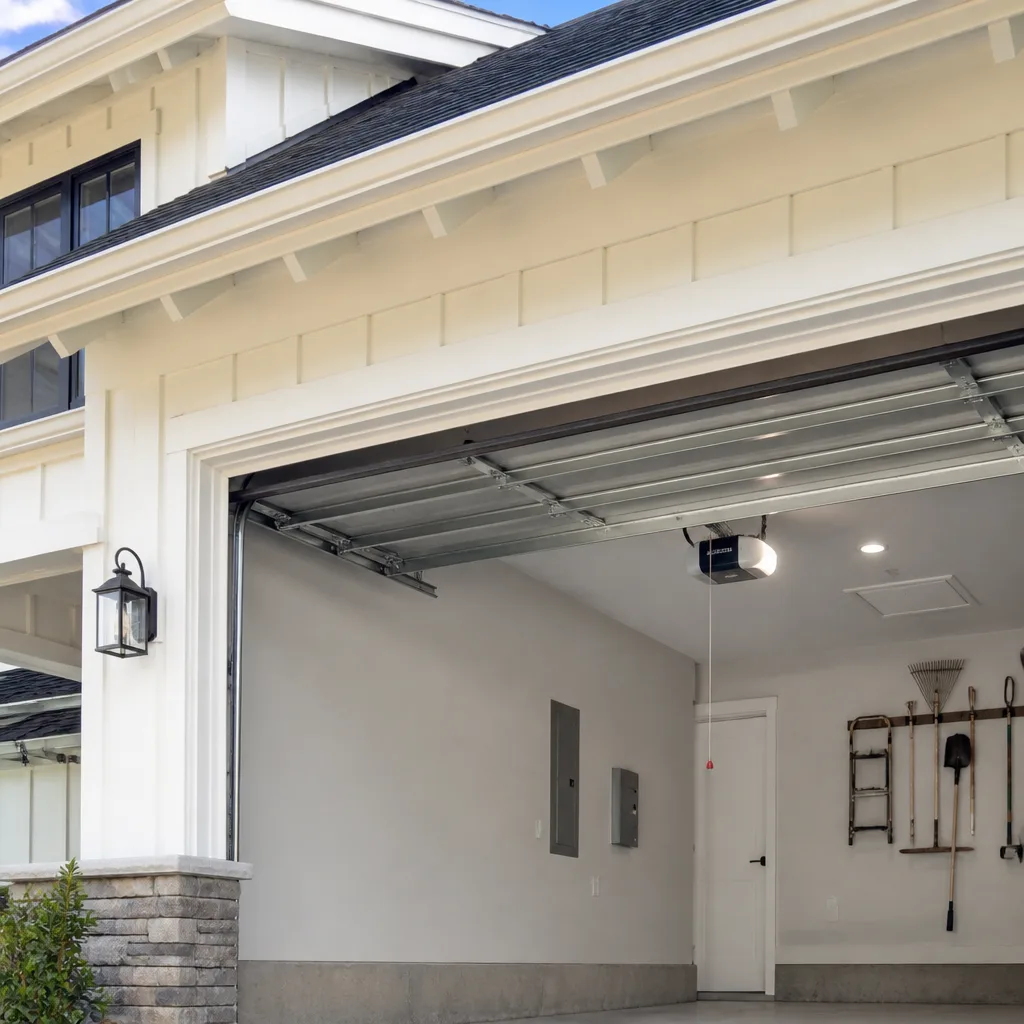
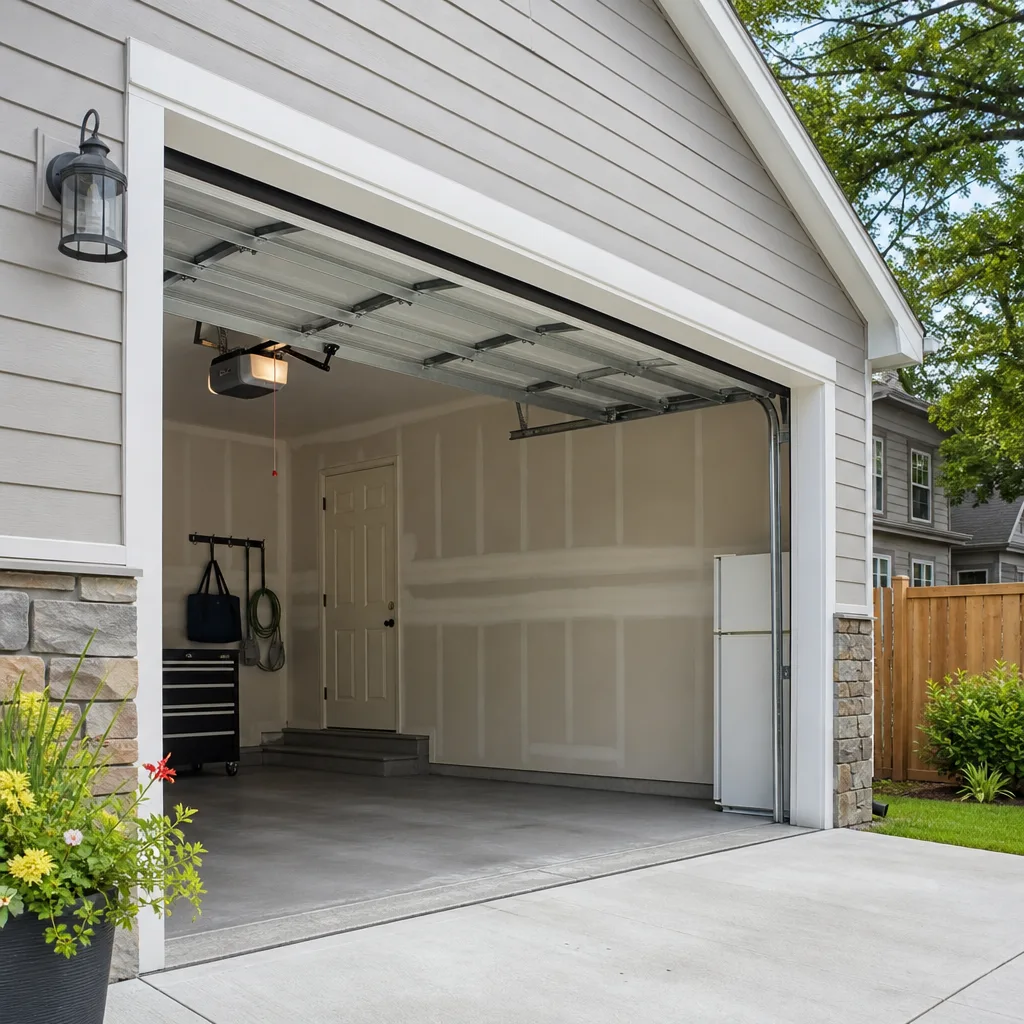
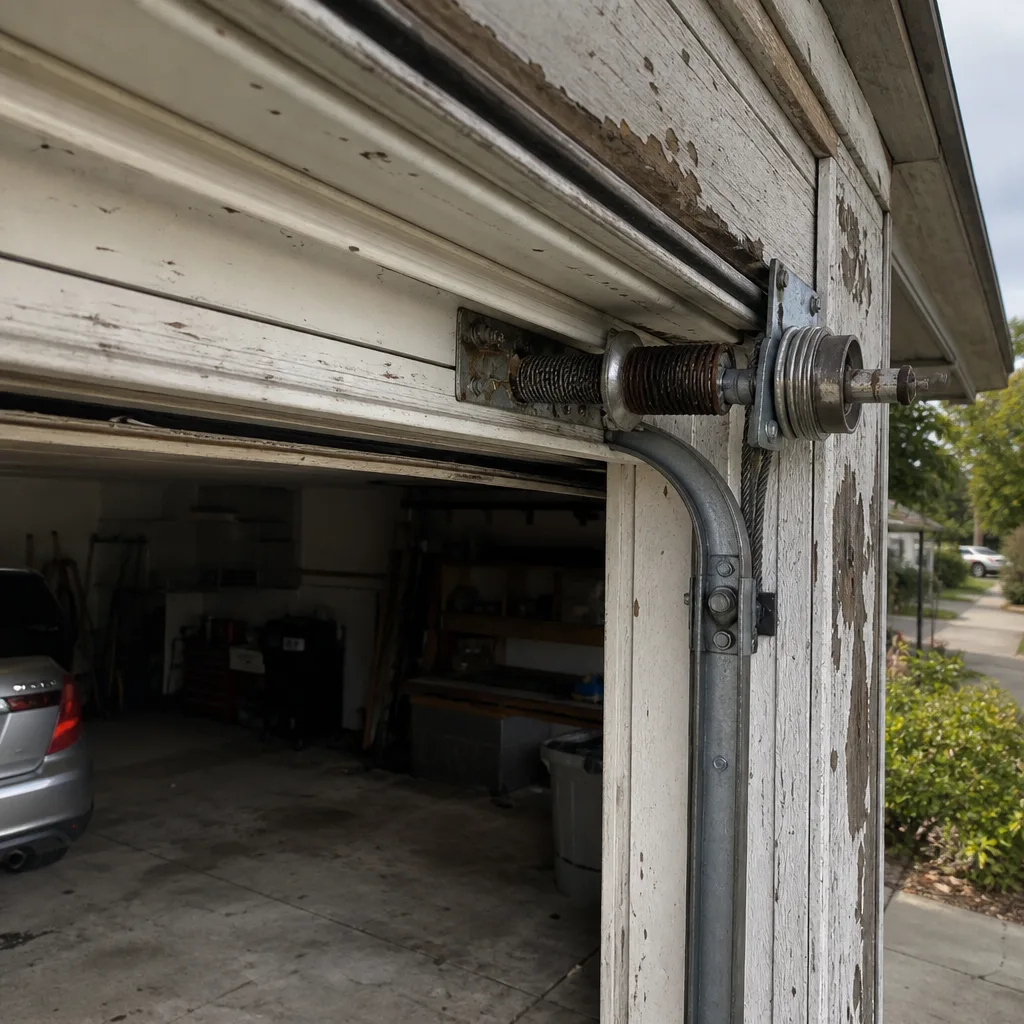 Before
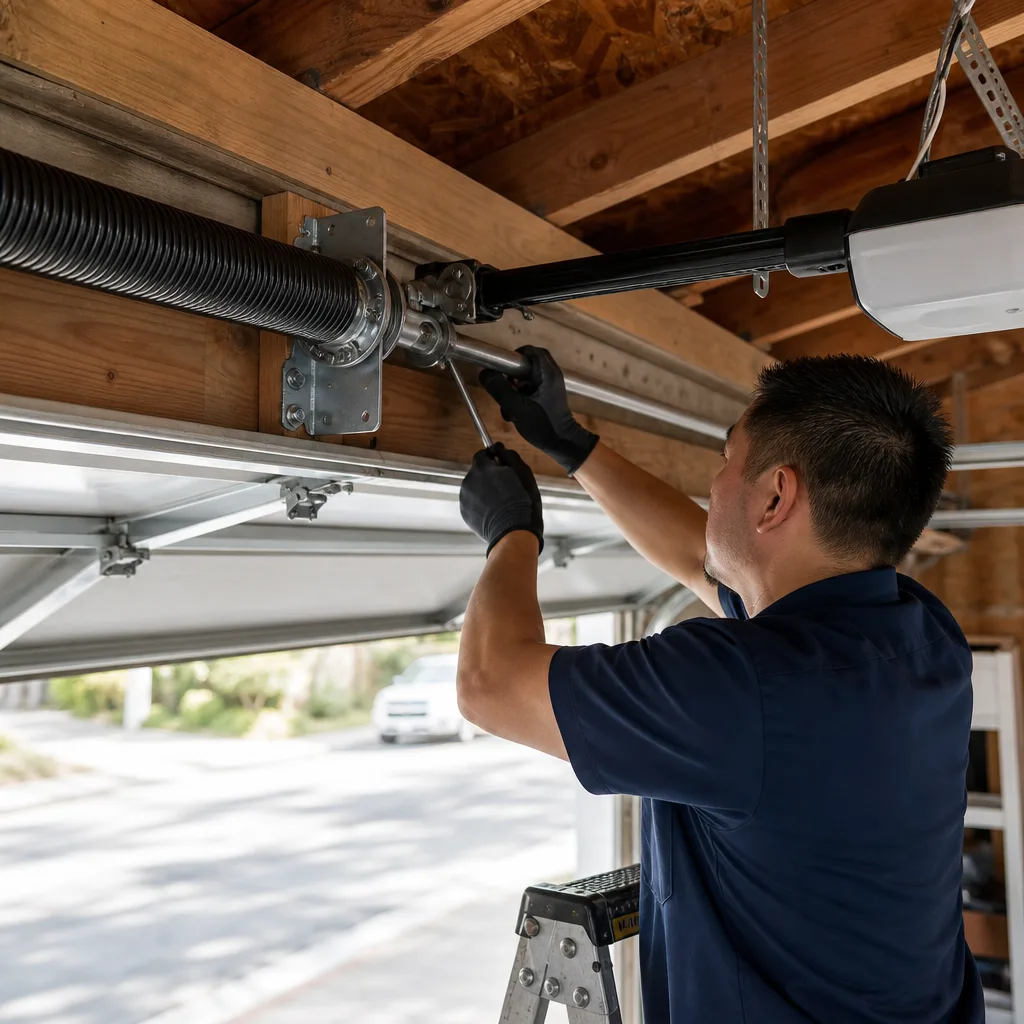 After
After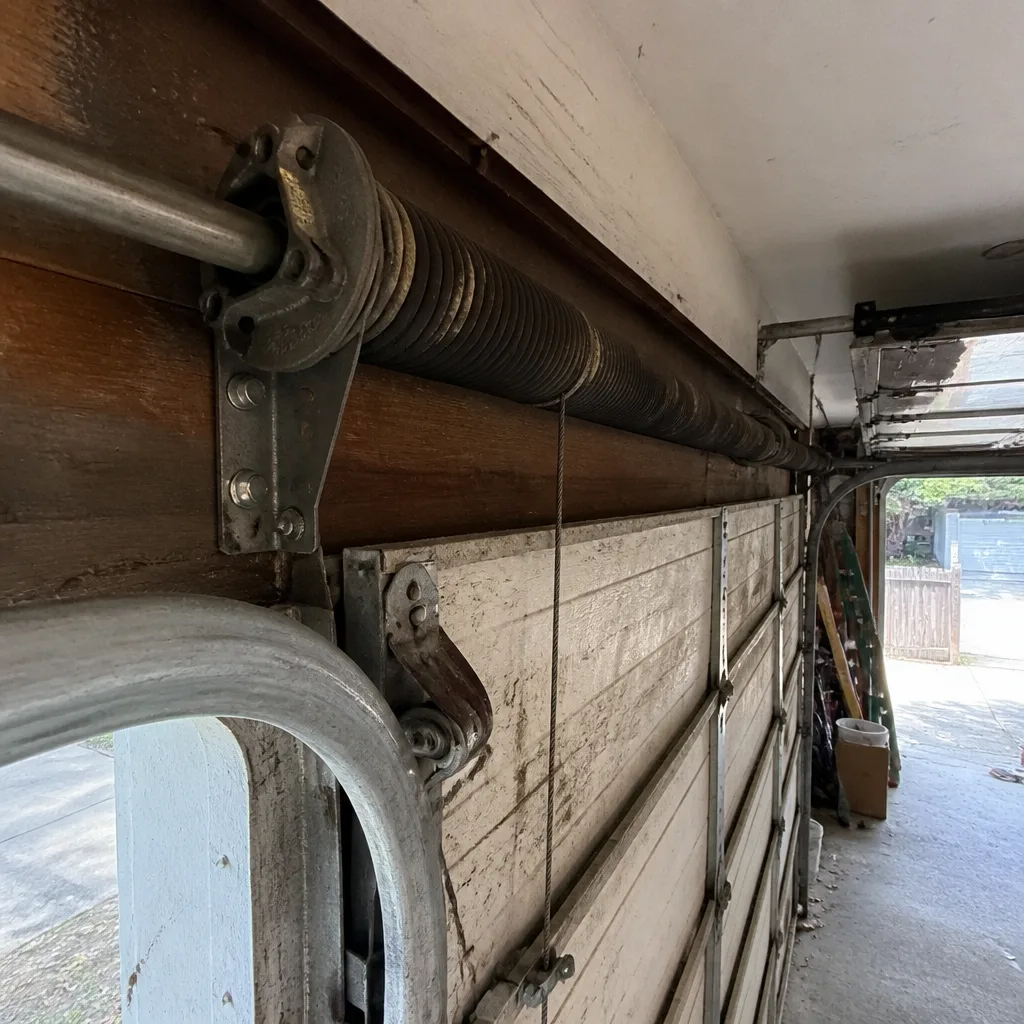 Before
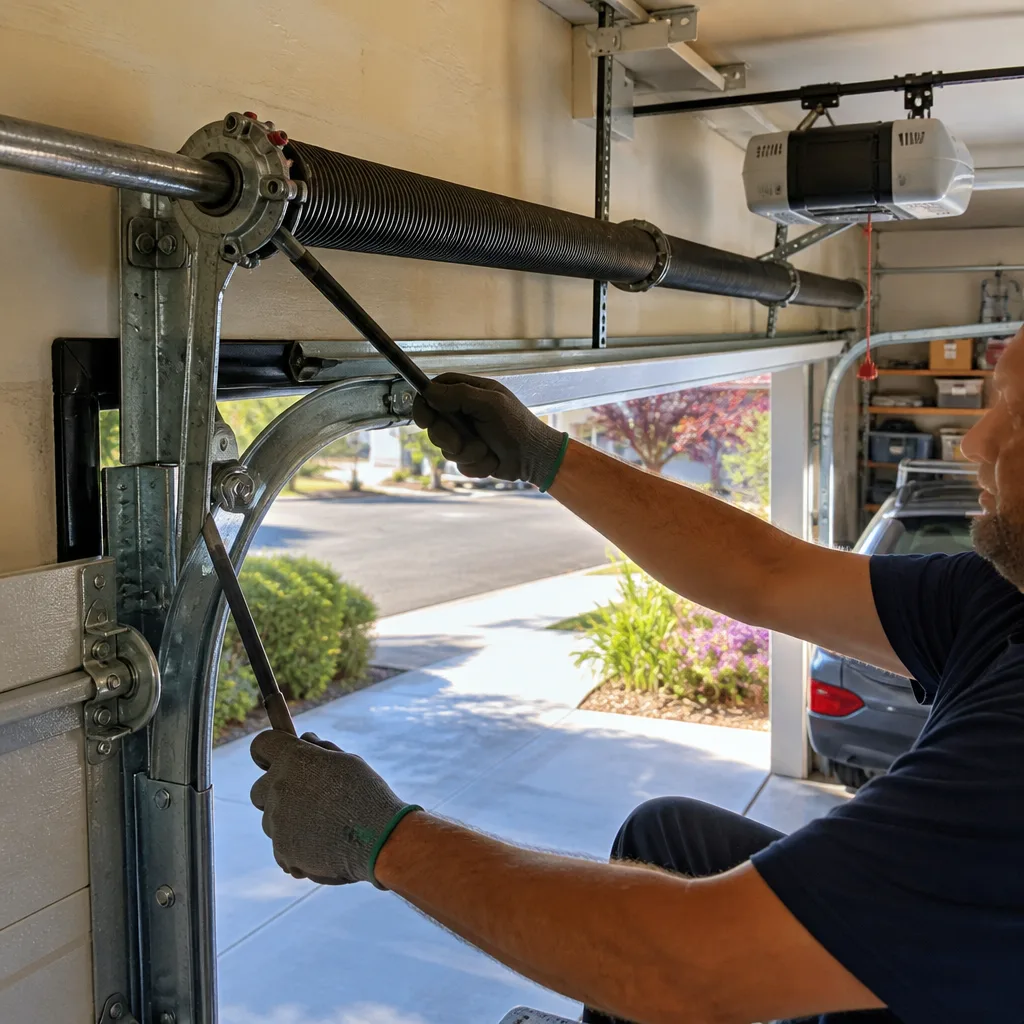 After
After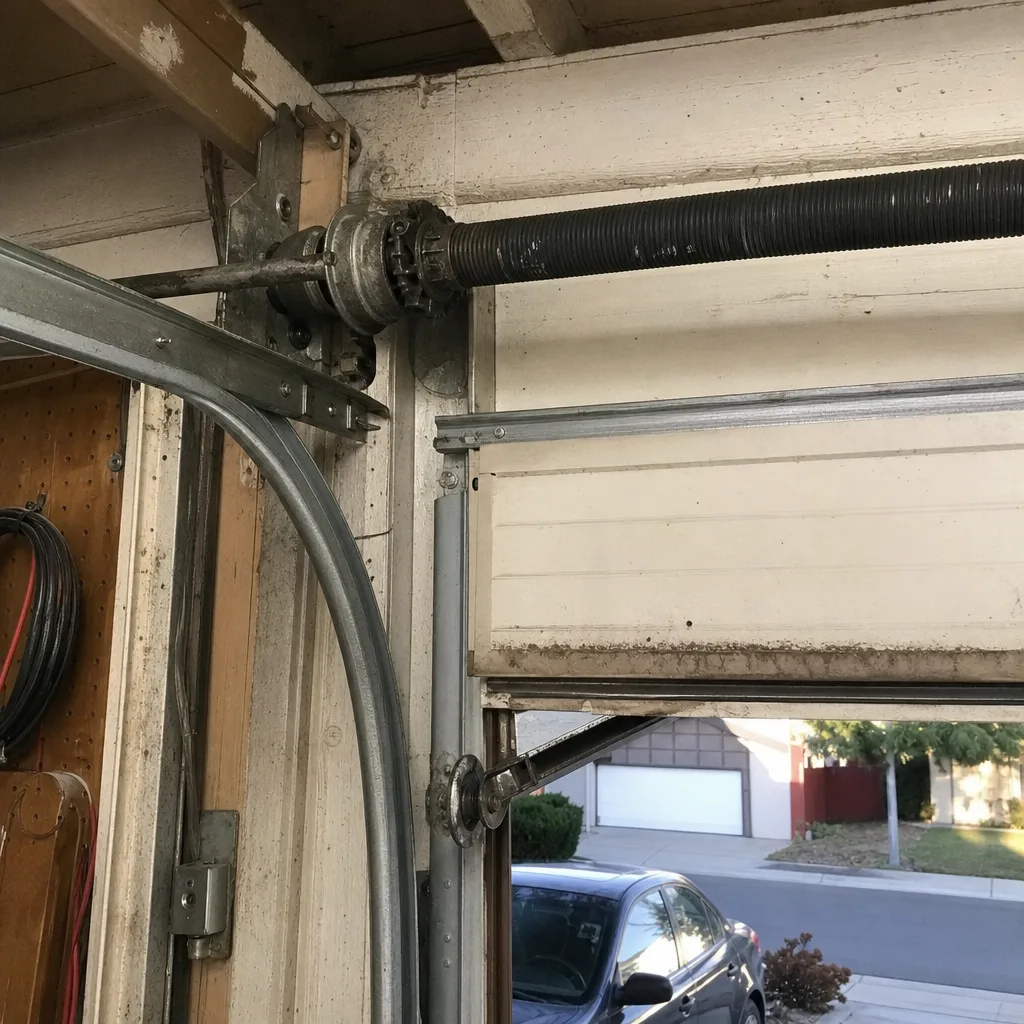 Before
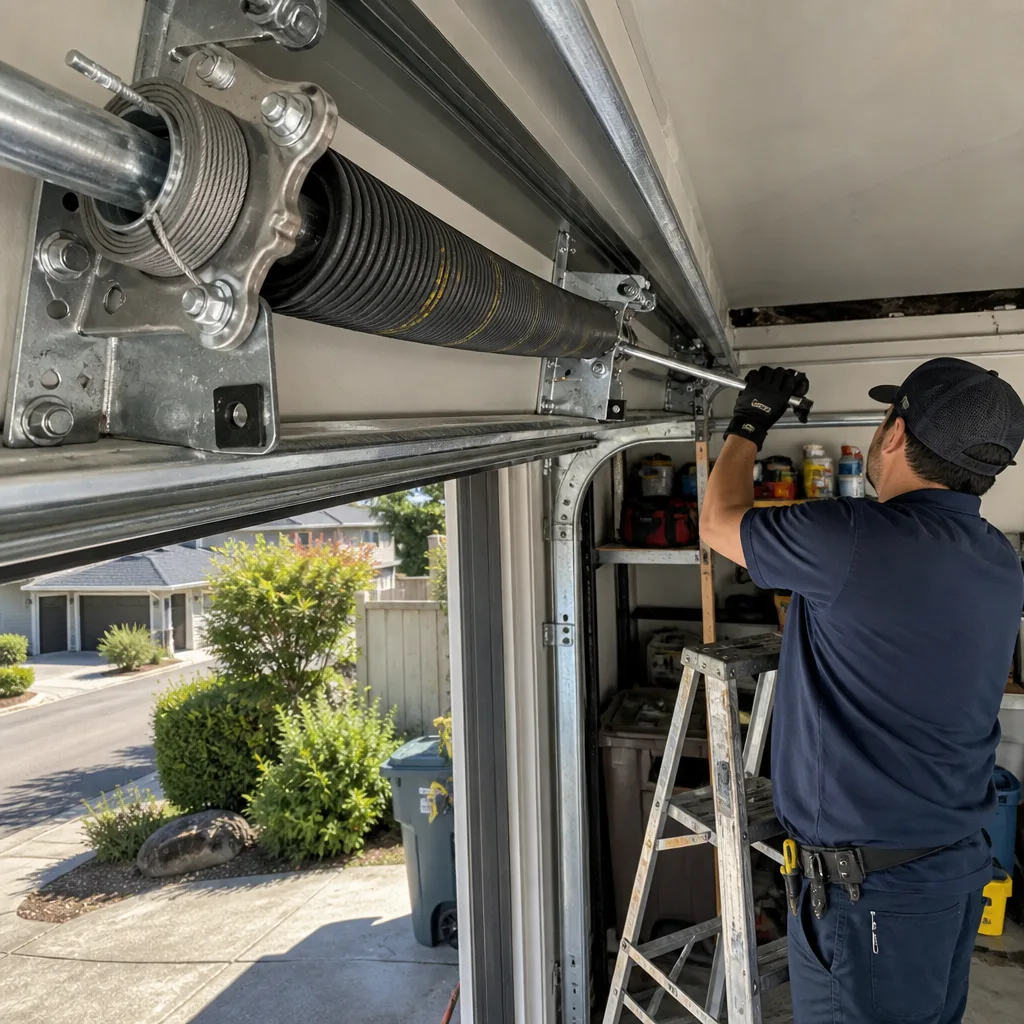 After
AfterDIY vs Professional Garage Door: The Walnut Creek Homeowner’s Decision Guide
A fully wound torsion spring stores roughly the same kinetic energy as a car moving at 25 mph. The Consumer Product Safety Commission records roughly 15,000 garage door injuries annually, and the majority involve springs or cables under tension. In Walnut Creek, where many homes built between 1965 and 1995 still carry original hardware, we see the aftermath of DIY attempts gone wrong more often than we’d like. This guide draws a clear line: some garage door work is reasonable homeowner maintenance, and some crosses into stored-energy territory where a mistake doesn’t mean a redo, it means a trip to the emergency room. For related guidance, see our Garage Door Repair Maintenance Checklist for Walnut Creek Homeowners. You’ll learn exactly which tasks fall on which side of that line, what tools and parts are actually available to Walnut Creek homeowners, and how to split a job intelligently if you want to save money without taking risks you can’t calculate.
Quick Answer
Most Walnut Creek homeowners can safely handle weather seal replacement, photo-eye cleaning and alignment, and roller swaps on a door with the spring disconnected. Anything involving torsion spring winding, cable drum adjustment, or track realignment under tension should be done by a trained technician. The dividing line is stored mechanical energy, not skill level.
Table of Contents
- The Stored-Energy Line: Where DIY Stops
- Reasonable DIY Tasks with Real Difficulty Ratings
- Tools, Parts, and Sourcing Reality in Walnut Creek
- The True Cost Comparison: DIY vs. Professional
- The Hybrid Approach: Splitting the Job Intelligently
- Walnut Creek-Specific Factors: Climate, Codes, and Common Door Types
- Common Mistakes to Avoid
- When to Call a Professional
- Frequently Asked Questions
- The Bottom Line
 Before
 After
AfterThe Stored-Energy Line: Where DIY Stops
The garage door industry has a specific vocabulary for what makes certain repairs dangerous, and it’s worth learning because it replaces vague fear with precise knowledge. Stored mechanical energy is energy held in a deformed or tensioned component that releases suddenly when that component fails or is released incorrectly. On a standard sectional garage door, the torsion spring above the header is the primary storage device. When the door is closed, the spring is fully wound. When you open the door, that unwinding energy assists the opener or your arm. Get the math wrong during a replacement, and the winding bar can slip, the spring can unwind violently, or the door can drop.
Here are the tasks that cross into stored-energy territory and should not be attempted by homeowners:
- Torsion spring winding or unwinding. This requires winding bars inserted into the cogs of the winding cone while tension is adjusted. The bars must be the correct diameter (typically 1/2-inch solid steel) and inserted fully. A partial insertion or a slip converts hundreds of foot-pounds of torque into a projectile. We’ve responded to calls in the Garage Door Repair in Walnut Creek area where homeowners used screwdriver substitutes and suffered facial fractures.
- Cable drum adjustment with the spring under tension. The cables that run from the bottom bracket to the drum at each end of the torsion tube are under load even when the door appears stationary. Loosening a set screw on the drum without first securing the door and releasing spring tension can cause the cable to whip or the door to fall.
- Track realignment with the spring engaged. If a vertical or horizontal track is bent, the door may bind. Attempting to loosen track bolts and shift the track while the spring is still wound changes the load geometry unpredictably. The door can jump the track or the spring can transfer load to a weakened point.
- Bottom bracket removal with cable tension present. The bottom bracket holds the cable and the roller. Even with the door open (which reduces some spring tension), the cable remains under load from the door’s weight. Removing the bracket without first detensioning the system is a common cause of hand and finger injuries.
The mechanical reason these are hazards, not inconveniences, is that the human reaction time is slower than the release time. You cannot let go fast enough. A winding bar that slips travels the length of your arm before your nervous system completes the signal to relax your grip. This is why we treat these tasks as a hard stop for DIY, regardless of how handy the homeowner is with other home systems.
Reasonable DIY Tasks with Real Difficulty Ratings
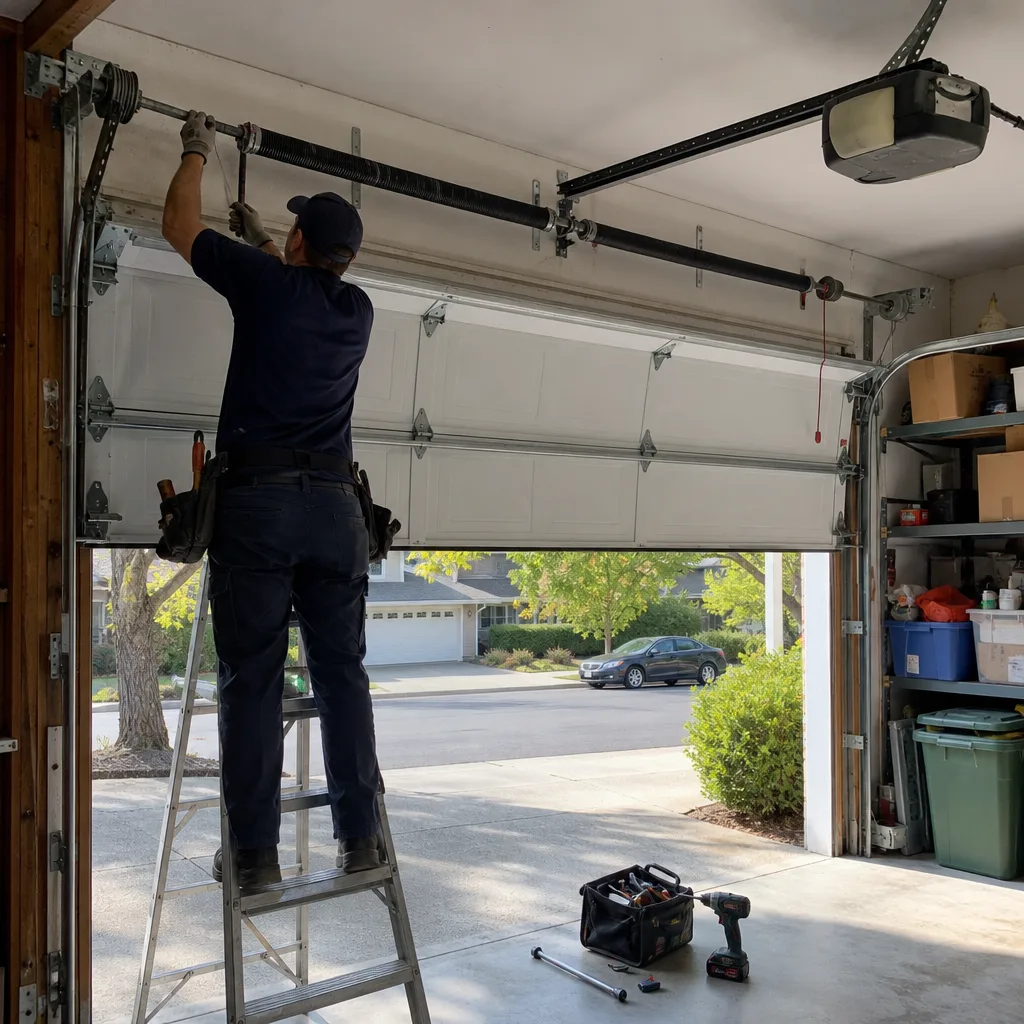
Not everything on a garage door is behind the stored-energy line. Several maintenance and repair tasks are well within the capability of a careful homeowner with basic tools. We’ve rated these based on what we observe in the field across Walnut Creek’s housing stock, from the ranch-style homes in Rancho San Miguel to the newer construction in Arbolado.
Weather Seal Replacement - Difficulty: 2/10
The rubber or vinyl seal at the bottom of the door slides into a retainer channel. Remove the old seal (it often pulls out by hand or with pliers), measure the width of the door, and purchase replacement seal by the foot from any hardware supplier. In Walnut Creek, Ace Hardware on North Main Street and Home Depot on Ygnacio Valley Road both carry common profiles. Slide the new seal in from one end; a little dish soap helps. No tools beyond scissors and maybe a flathead screwdriver. Time: 20-30 minutes.
Photo-Eye Alignment and Cleaning - Difficulty: 2/10
The photo eyes are the small sensors mounted 4-6 inches above the floor on each side of the track. They transmit an invisible beam; if it’s interrupted, the door reverses. Misalignment or dirt is the cause of roughly 30% of “my door won’t close” calls we receive. Clean the lenses with a soft cloth, check that both LED indicators are solid (not blinking), and adjust the brackets by hand until they face each other directly. A laser level or even a piece of string helps, but eyeballing usually suffices. Time: 10-15 minutes.
Limit Switch Adjustment - Difficulty: 3/10
The limit switch tells the opener how far to travel before stopping. On a LiftMaster or Chamberlain chain-drive unit, this is typically two white plastic screws on the side or back of the motor housing, labeled “up” and “down.” Turn the appropriate screw in quarter-turn increments, testing between each. The door should stop fully closed without slamming, and fully open without hitting the stop bolt. Consult your opener manual for the specific location; brands vary. Time: 15-20 minutes.
Roller Replacement (Spring Disconnected, Cable Slack) - Difficulty: 5/10
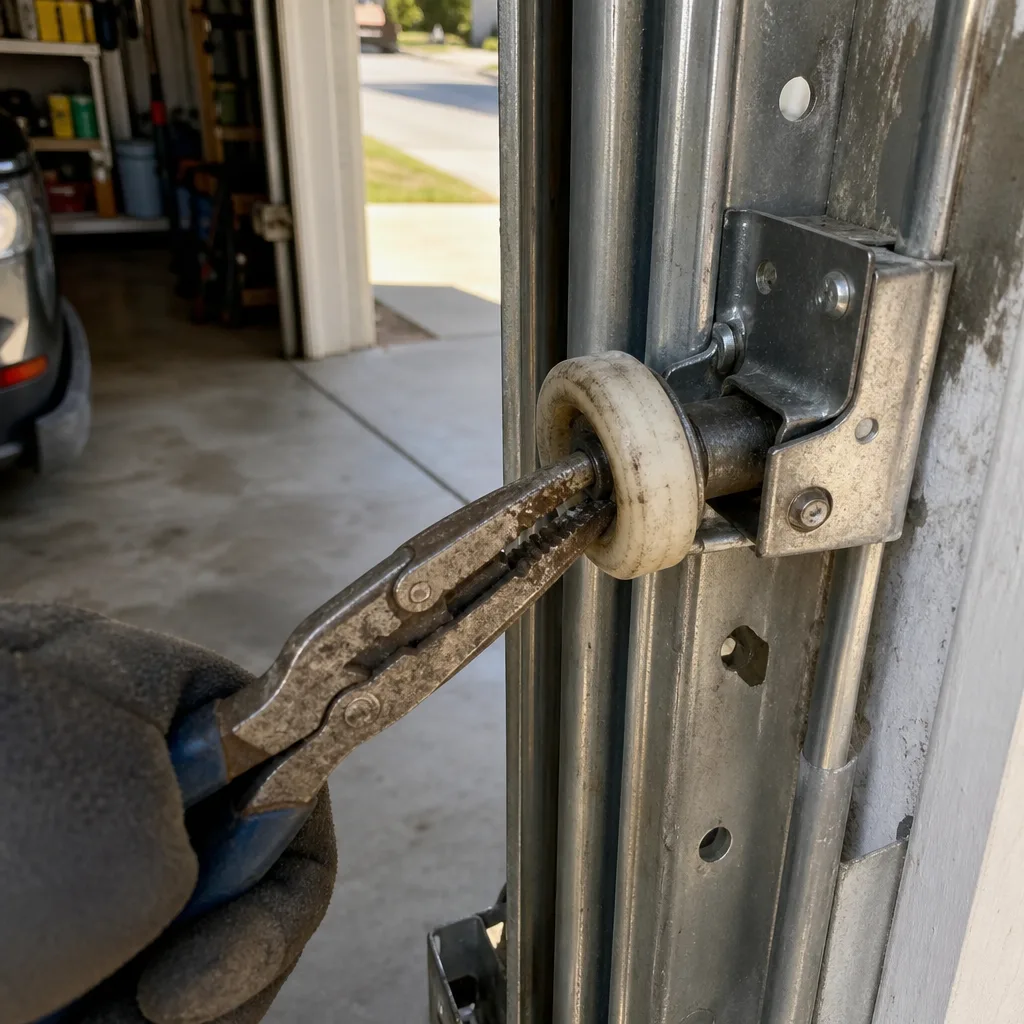
This is the most complex task we’d classify as reasonable DIY, and it comes with a critical precondition: the door must be in the open position, the opener disconnected from the trolley, and the spring must be fully unwound with the cables visibly slack. If you cannot confirm all three conditions, stop. With the door secured open (locking pliers on the track below the bottom roller), you can pop out old rollers and insert new nylon or steel rollers by angling the stem into the track. The door will shift slightly as you work; never work alone. Time: 45-90 minutes for a full set.
Remote and Keypad Programming - Difficulty: 1/10
Modern Craftsman, Raynor, and LiftMaster openers use a simple learn-button process. Press the learn button on the motor housing, then press the button on your remote within 30 seconds. For keypads, enter your desired code and press the learn button. The manual is usually available online by model number if the original is lost. Time: 5 minutes.
Tools, Parts, and Sourcing Reality in Walnut Creek
One reason DIY garage door work fails is that homeowners discover too late that the parts they need aren’t available at retail, or that the retail versions are undersized for their application. Here’s what the sourcing landscape actually looks like in Walnut Creek.
What’s readily available: Weather seal, photo-eye sets, remotes, keypads, and standard nylon rollers are stocked at Home Depot on Ygnacio Valley Road, Lowe’s on Contra Costa Boulevard, and Ace Hardware on North Main. These are consumer-grade products, adequate for standard 7-foot doors under 150 pounds. If your door is 8 feet tall, insulated, or clad in wood, the standard rollers may be rated for lighter load than your door imposes.
What requires a trade account or special order: Torsion springs are sized by wire diameter, inside diameter, and length to the nearest quarter-inch, matched to the door’s weight and track radius. A spring that’s close isn’t close enough; an undersized spring works the opener harder and fails prematurely, while an oversized spring applies excess force to the cables and drums. We source springs from suppliers who require a contractor account and who will not sell to homeowners, a policy that exists precisely because incorrect sizing is dangerous. Cable drums, torsion tubes, and high-cycle springs (rated for 25,000+ cycles versus the standard 10,000) fall in the same category.
The consumer spring kit problem: Several online retailers sell “universal” torsion spring kits with vague weight ranges. We’ve encountered these in Walnut Creek homes, particularly in the Pleasant Hill Road corridor where Amazon same-day delivery is common. The kits typically include springs at the low end of the weight range for a given door size, meaning they operate at higher stress and fail sooner. They also rarely include the correct winding bars, substituting hollow pipe or recommending adjustable wrenches. This is equipment that touches a component storing the energy of a moving car. The correct tool is a solid steel bar of precise diameter, period.
Tool checklist for legitimate DIY tasks:
- 4-foot level (for photo-eye and track visual alignment)
- Locking pliers (to secure the door when working on rollers)
- Socket set with 3/8- and 7/16-inch sockets (common track bolt sizes)
- Step ladder rated for your weight plus tools
- Safety glasses
Notice what’s not on this list: winding bars, cable pullers, or torsion spring winding cones. Those are professional tools for professional tasks.
The True Cost Comparison: DIY vs. Professional
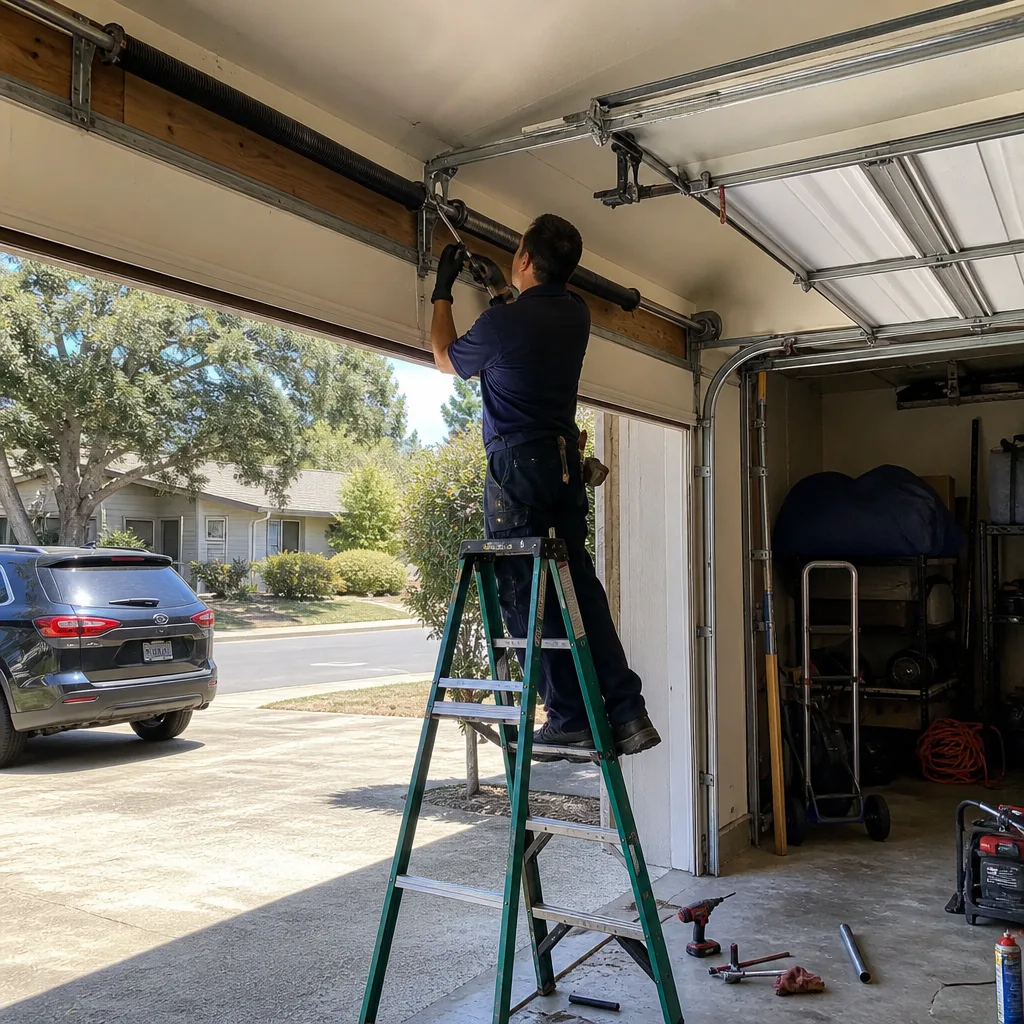
Homeowners often frame the DIY vs. professional question as labor cost avoidance. The more accurate frame is total cost of completion, including the probability and cost of a second attempt. Here’s how the math actually works for common scenarios in the Walnut Creek market.
Scenario: Broken Torsion Spring
| Approach | Parts Cost | Tools Needed | Labor (Your Time) | Risk-Adjusted Total |
|---|---|---|---|---|
| DIY with online kit | $80-$140 | Winding bars, sockets, ladder ($60-$100 if buying) | 3-5 hours first attempt | $140-$240 + injury risk + probable second attempt |
| DIY with trade-quality parts (if sourced) | $120-$180 | Same as above | 3-5 hours | $180-$280 + injury risk |
| Professional flat rate | Included | None | None | $180-$340 (Walnut Creek typical range, single spring) |
The professional rate includes correct spring sizing, installation, balance testing, and warranty. At Servo Garage Doors Walnut Creek home, it’s also backed by Clause 1 of The Haven Standard: a flat, written price agreed before any work starts. The DIY kit price does not include the cost of calling us after a failed attempt, which is priced at full rate, not a discount. We don’t reduce our price because someone else started the job.
Scenario: Full Roller Replacement (10 rollers, standard door)
| Approach | Parts Cost | Labor | Notes |
|---|---|---|---|
| DIY, consumer-grade nylon rollers | $30-$50 | 2-3 hours | Requires spring disconnection knowledge; door must be secured open |
| DIY, professional-grade sealed bearing rollers | $60-$90 | 2-3 hours | Longer lifespan, quieter operation; trade account typically required |
| Professional flat rate | Included | 1-1.5 hours | Includes spring disconnection/reconnection, balance check, lubrication of hardware |
The professional advantage here is speed and completeness. A technician disconnects the spring safely, replaces all rollers, reconnects and tests balance, and lubricates the track and hinges. The homeowner saves roughly one hour of billable labor if they’ve already cleared the garage and removed vehicles, but the spring work remains professional territory.
The Second-Attempt Penalty
This is the cost competitors rarely discuss. When a DIY spring replacement fails, whether from incorrect sizing, improper winding, or a dropped door, the subsequent professional call is more complex than a standard replacement. We must first assess what was altered, then often correct the setup before proceeding with our normal scope. This is not a “finish what you started” discount scenario. The flat rate applies. In our experience serving Walnut Creek since 2015, roughly one in four DIY spring attempts we encounter requires additional labor to correct the initial work, pushing the effective total above what professional service would have cost from the start.
The Hybrid Approach: Splitting the Job Intelligently
There is a middle path that respects the stored-energy line while reducing professional labor costs. We call it the hybrid approach, and it’s particularly useful for Walnut Creek homeowners with larger doors or multiple garage bays where labor constitutes a significant portion of the bill.
What the homeowner can do before the technician arrives:
- Clear the garage. Move vehicles, storage, and anything within 8 feet of the door opening. This is the single biggest time-saver; technicians spend surprising amounts of time waiting for space to work.
- Remove old weather seal. If you’re replacing the bottom seal, pull the old one out and clean the retainer channel. The technician can verify fit and slide the new seal in minutes rather than twenty minutes of wrestling with brittle rubber.
- Document the problem. Photograph the failed component, the opener model number (usually on the motor housing), and any stickers on the door itself indicating manufacturer and size. This accelerates parts identification and reduces return trips.
- Test and describe symptoms precisely. Note whether the door reverses at a specific point, whether the opener motor runs without door movement, whether the issue is intermittent or constant. “It makes a grinding noise at 3 feet from the floor” is more useful than “it’s broken.”
What the homeowner can do after the technician completes spring or cable work:
- Paint or finish any touch-up. If track brackets were relocated and wall paint disturbed, handle cosmetic repair yourself.
- Reinstall storage or shelving. Technicians will not remount your bike hooks or shelving units.
- Program remotes and keypads. If the opener was replaced or reset, you can handle the button-pressing sequence yourself with the manual.
The hybrid approach can reduce a 2.5-hour billable job to 1.5-2 hours without the homeowner ever touching a winding bar. For a double-spring replacement on a heavy insulated door in the Arbolado or Diablo Hills areas, that’s a meaningful savings without meaningful risk.
Walnut Creek-Specific Factors: Climate, Codes, and Common Door Types
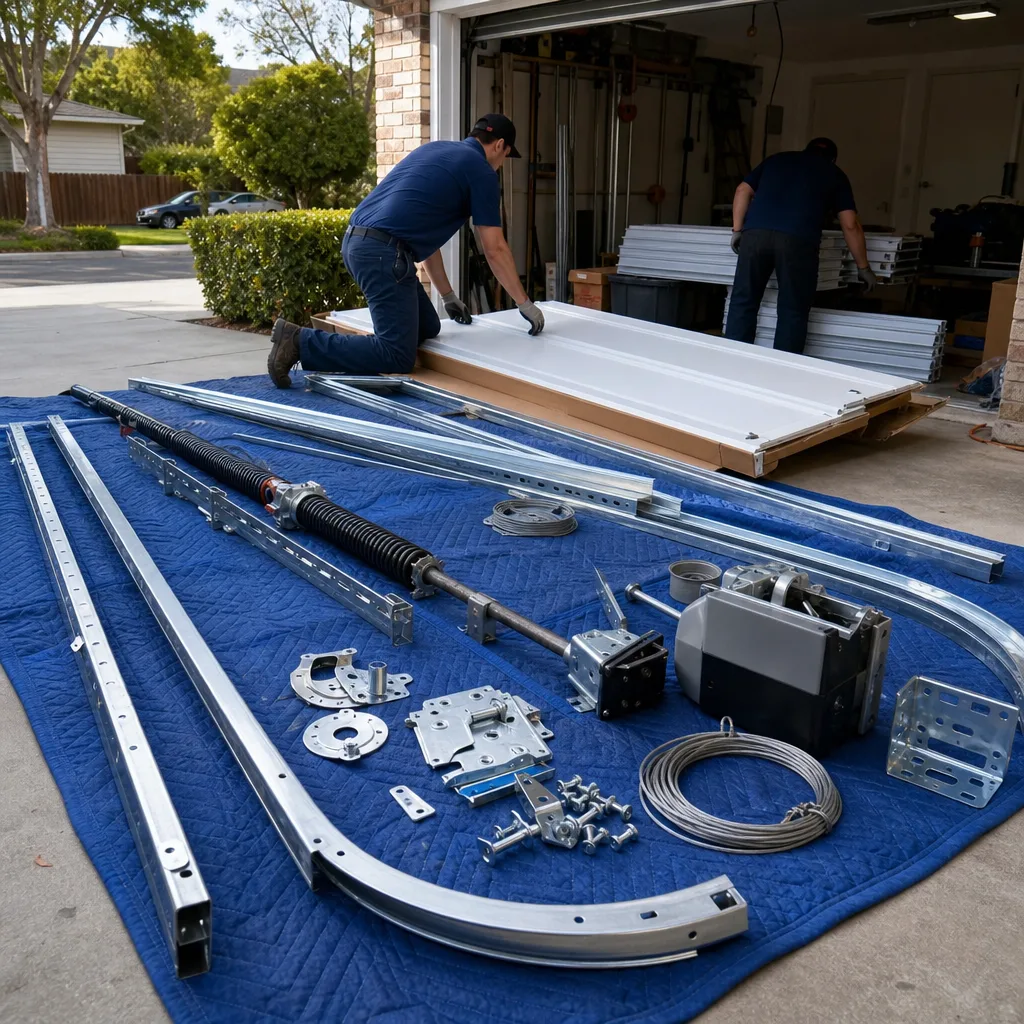
The Walnut Creek market has characteristics that affect both DIY feasibility and professional service patterns. Understanding them helps homeowners make better decisions about timing and approach.
Climate and hardware lifespan: Walnut Creek’s Mediterranean climate means wet winters and dry, hot summers. The temperature swing from January lows in the high 30s to August days above 90 degrees causes thermal expansion and contraction in steel components. Torsion springs fatigue faster in climates with wide temperature variation because the steel undergoes more stress cycles. We typically see spring replacements cluster in late fall and early spring, when the accumulated fatigue meets the seasonal stress. If you’re considering DIY spring work, the worst possible timing is during a weather transition when the metal is already stressed.
Common door types and their implications: The housing stock in neighborhoods like Rancho San Miguel, Lakewood, and parts of Heather Farm includes many 16-foot wide, non-insulated steel doors from the 1980s and 1990s. These doors are lighter than modern insulated equivalents, which might seem to make spring work easier. The opposite is true: the springs were often specified at minimum cycle life to save cost during original construction, meaning they fail more frequently and closer to their rated limit. A spring that’s near its rated cycle count is more dangerous to remove because the steel is more brittle.
Permit and code considerations: Walnut Creek requires permits for new garage door installations but not for like-for-like repairs; see Garage Door Permits, Codes & Inspections in CA: What You Need to Know for full details. However, if a DIY installation or significant modification triggers an inspection issue during a future home sale, the correction falls to the homeowner. Professional installation from a licensed contractor includes compliance with current code, including wind-load requirements that have tightened since many local homes were built.
Local supplier access: Same-day parts availability is limited for trade-quality components. Home Depot and Lowe’s stock consumer-grade items; professional spring suppliers are in Concord, Hayward, or San Leandro, with counter hours that don’t extend to evenings or weekends. If a DIY project stalls on a Saturday afternoon, the door may remain inoperable until Monday. Our 24/7 live phone coverage exists partly because we recognize that garage door failures don’t observe business hours.
Common Mistakes to Avoid
- Using the wrong winding bar diameter. A 3/8-inch bar in a 1/2-inch winding cone slips. A hollow pipe flexes under load. We’ve found cheater bars and adjustable wrenches embedded in Walnut Creek garage ceilings where they were launched by slipping tools.
- Replacing only one spring on a two-spring door. The new spring has different tension characteristics than the fatigued remaining spring. The door lifts unevenly, cables slip, and the new spring fails prematurely. Always replace springs in matched pairs.
- Ignoring the cable condition. Cables fray from the inside out. A cable that looks acceptable externally may have 30% of its strands failed internally. Replacing a spring without inspecting cables is like replacing brake pads without checking rotors.
- Overtightening track bolts. The vertical track must allow slight adjustment for door travel. Bolts tightened to maximum torque prevent this and can distort the track. Snug, then back off a quarter turn.
- Disconnecting the opener without securing the door. The opener’s trolley carriage holds the door when open. Pulling the emergency release cord without clamping the track or having the door fully closed allows the door to drop if the spring is weak or broken.
- Buying parts by door size instead of door weight. A 16×7 door can weigh 150 pounds or 350 pounds depending on insulation, windows, and material. Springs are sized by weight and track radius, not dimensions alone. The sticker inside the door or on the end stile usually lists actual weight.
- Working alone. Even on tasks below the stored-energy line, a second person provides stability, tool handoff, and emergency response. We’ve responded to calls where a homeowner was trapped under a partially disassembled door for hours because no one else was home.
When to Call a Professional
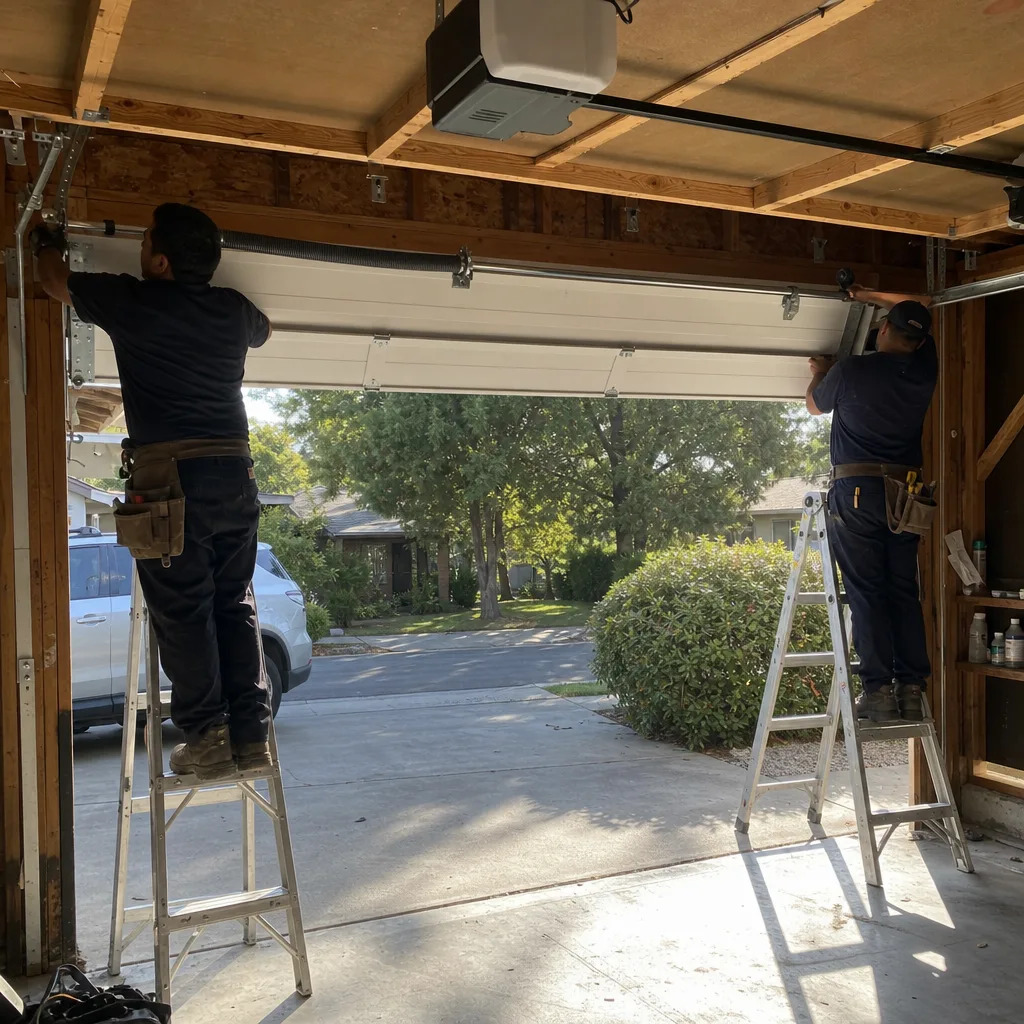
Call a professional when the task involves torsion spring winding or unwinding, cable adjustment under load, track realignment with the spring engaged, or any situation where you cannot verify that all stored energy has been released. Also call when the door is off its tracks, when cables are visibly frayed or detached, when the door has fallen partially open and you cannot secure it, or when you’ve begun a DIY repair and reached a point where you’re unsure of the next step. Uncertainty with these components is itself a stop signal. Servo Garage Doors Walnut Creek offers free estimates in Walnut Creek, and our 24/7 live phone coverage means you’ll speak to a real person, not a recording, when you call (510) 390-9102. Every estimate includes a flat, written price before any work starts, per Clause 1 of The Haven Standard.
Frequently Asked Questions
Single torsion spring replacement in Walnut Creek typically runs $180-$340, and double-spring replacement on heavier or wider doors ranges from $280-$520. The price depends on spring size, cycle rating, and whether cables or other hardware need replacement. We quote a flat, written price before any work starts. Call (510) 390-9102 for an exact quote; estimates are free.
Opener replacement is mechanically straightforward but electrically and structurally demanding. You’ll need to secure a header bracket to framing above the door, wire the unit to a dedicated outlet or hardwired connection, and program travel limits and force settings. If you’re comfortable with ladder work, basic electrical connections, and following a manual precisely, it’s reasonable DIY. The stored-energy line doesn’t apply, but improper header bracket installation can pull out of drywall or weak framing. For Garage Door Opener Repair & Installation in Walnut Creek, we include structural assessment and correct fastening as standard.
Attempting torsion spring replacement with inadequate or improvised winding bars, by a significant margin. The second most common is working on a door with a broken spring while the opener is still connected, causing the opener to strain, overheat, and fail. In the Castle Rock and Parkmead neighborhoods, where many homes have original hardware approaching 30 years of age, we see both patterns frequently.
A broken torsion spring is usually obvious: a visible gap in the coil, a loud bang when it failed, or a door that feels extremely heavy to lift manually and won’t stay open more than a few feet. On a two-spring door, one broken spring may still allow partial operation with opener strain. Never test by disconnecting the opener and lifting unless you have confirmed the door will not drop. If unsure, treat it as broken and call for assessment.
Our 365-Day Done Right Promise means that if a repair is not right, we make it right. This applies to parts and labor, and it’s documented in writing, not offered as a verbal assurance. The specific terms are available on our terms page, referenced in every invoice. For new Garage Door Installation in Walnut Creek, manufacturer warranties on Clopay, Amarr, or Wayne Dalton doors apply in addition to our installation guarantee.
We don’t install customer-supplied springs or cables because we cannot verify their specifications or warranty their performance. For non-critical items like remotes, keypads, or weather seal, we’re happy to install customer-supplied parts with a labor-only rate. The risk and warranty limitations will be noted in writing. In most cases, our parts pricing is competitive with retail because we buy at trade volume, and the total cost with our parts and labor is comparable to retail parts plus our labor rate.
The Bottom Line
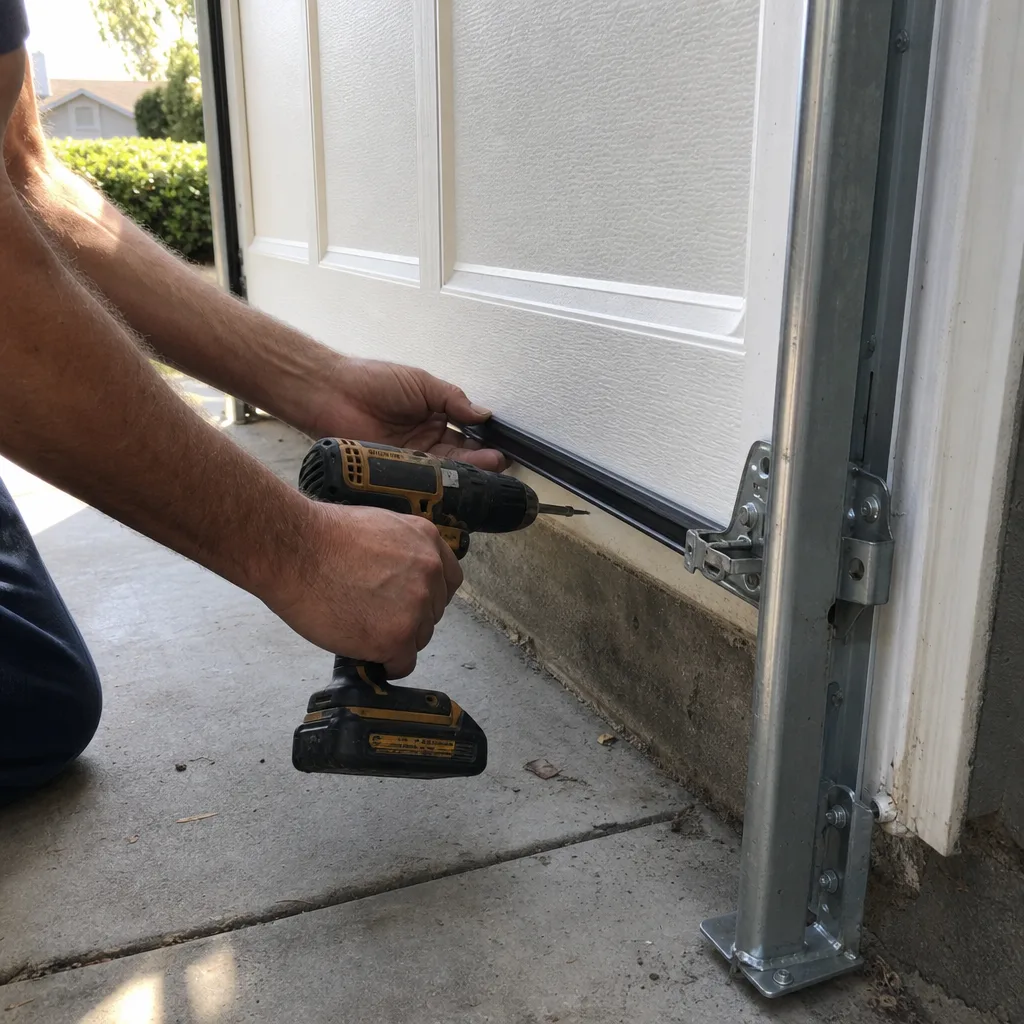
The DIY vs. professional question for garage doors is not a test of your general handiness. It’s a specific calculation about stored mechanical energy and the consequences of error. Weather seals, photo eyes, remote programming, and roller replacement on a properly secured door are reasonable homeowner work. Torsion spring winding, cable adjustment, and track work under tension are not. The hybrid approach, prep work and cleanup by the homeowner with professional handling of the dangerous components, saves money without crossing the line. In Walnut Creek’s climate, with its wide temperature swings and aging housing stock, the margin for error on spring work is thinner than many homeowners realize. When in doubt, the cost of a free estimate is zero, and the cost of a mistake can be measured in emergency room bills or worse. We’ve completed over 18,000 garage door jobs since 2015. For more guides & resources, visit our blog.e with a written price before work started and a documented photo record when we left. That’s the standard we work to, and it’s available to any Walnut Creek homeowner who calls.
Written by Marcus Deller, Owner at Servo Garage Doors Walnut Creek, serving Walnut Creek since 2015.