
Last updated September 21, 2026
Full 25-point door and opener safety check with every visit - springs, cables, rollers, tracks, and your LiftMaster or Chamberlain opener included
You get a price before we start. It does not change when the truck arrives.
 Before
 After
After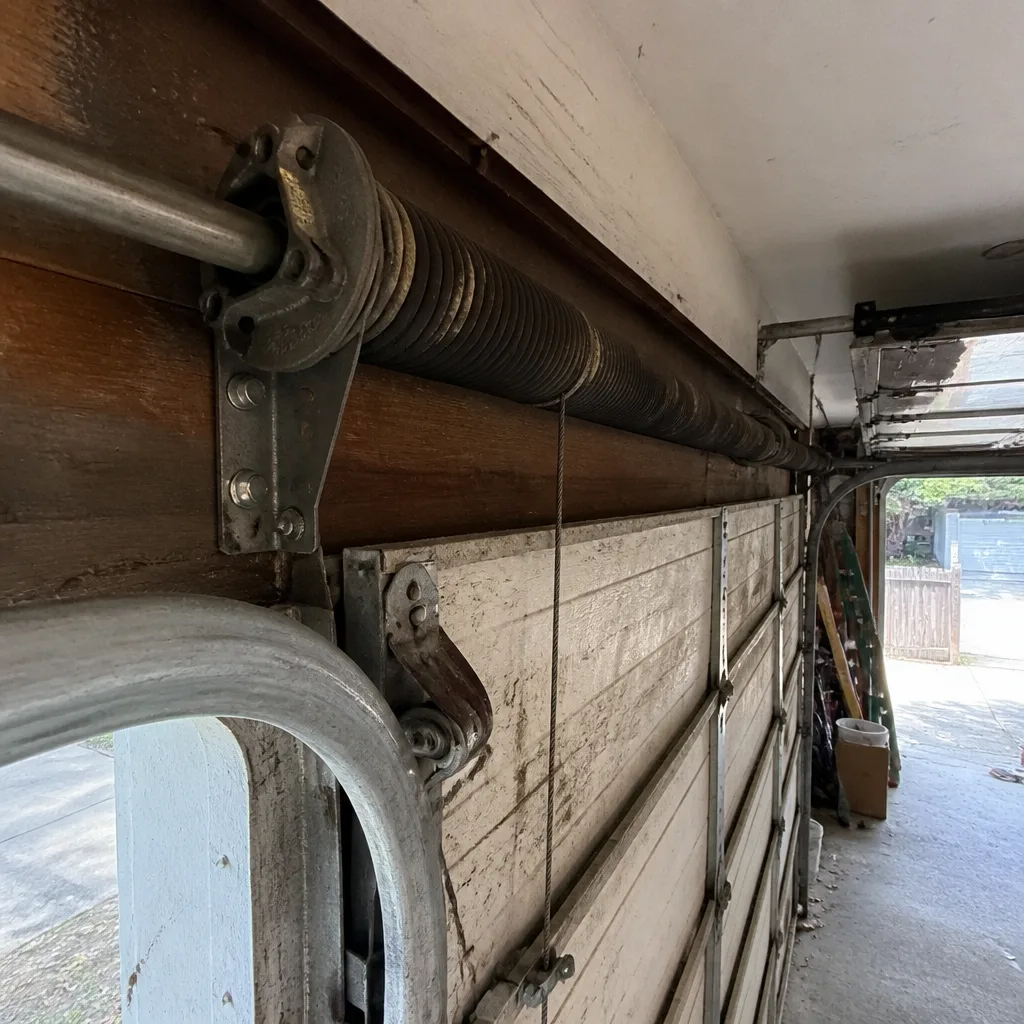 Before
 After
After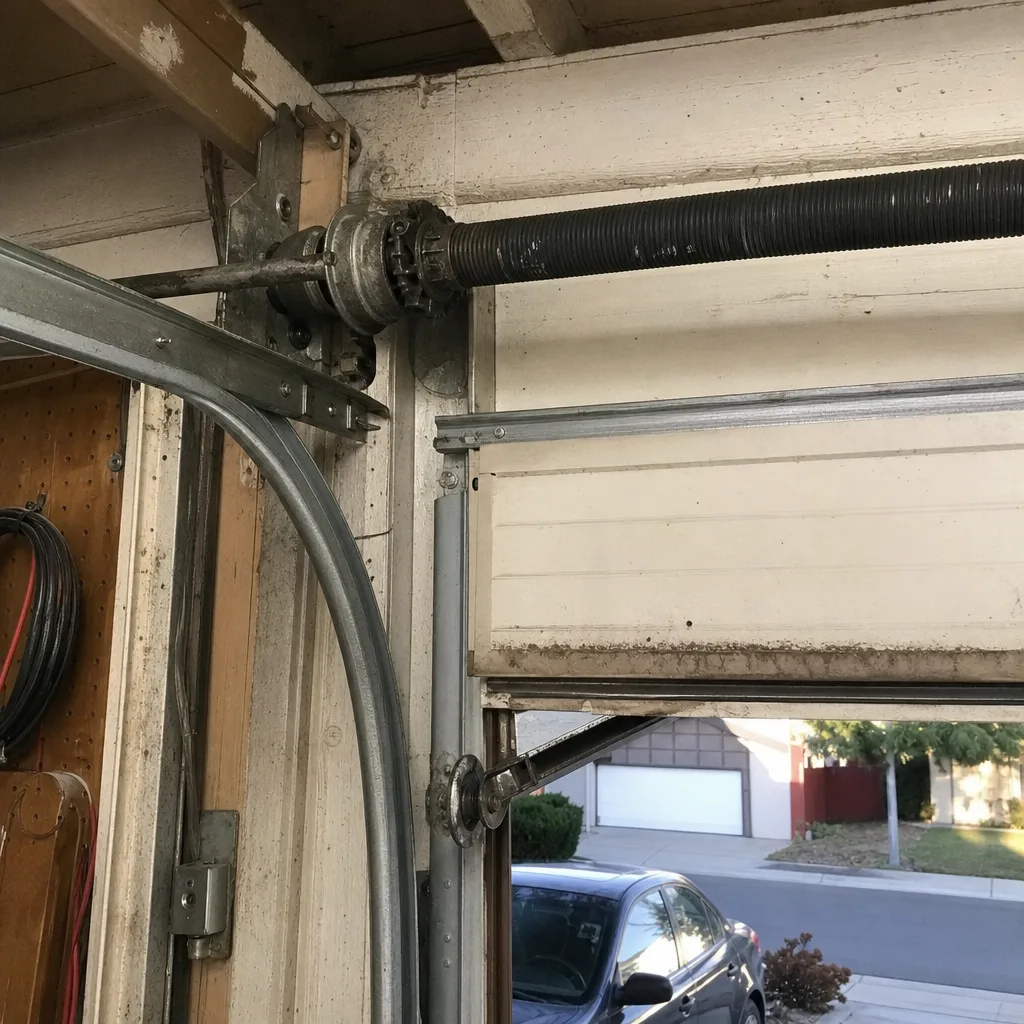 Before
 After
AfterGarage Door Cost Breakdown: The Walnut Creek Homeowner’s Reference for 2026
Most garage door cost guides published online quote ranges so wide they’re functionally useless. A homeowner in Walnut Creek searching for replacement pricing sees “$400 to $4,000” and learns nothing about what their specific job should cost. The single largest price variable in a garage door project isn’t the panel material or the opener brand - it’s whether the existing spring system is properly sized for the door weight. A mismatched torsion spring on an otherwise correct install typically adds one to three service calls in the first two years, each billed separately, because the door cycles unevenly and burns out the opener trolley carriage prematurely. This guide works backwards from the actual variables - door size, spring type, panel material, opener class, and labor tier - to build a price architecture you can test any Walnut Creek quote against.
Quick Answer
In the Walnut Creek market for 2026, a complete garage door replacement typically runs $1,400-$3,800 installed, while component repairs range from $180 for a single torsion spring replacement to $650 for an opener upgrade with smart connectivity. The exact price depends on four variables measured in this order: spring system sizing, panel material and insulation value, opener drive type and horsepower, and whether the job is new installation or replacement of existing equipment. Every quote should arrive as a flat, written, itemized scope before any work begins.
Table of Contents
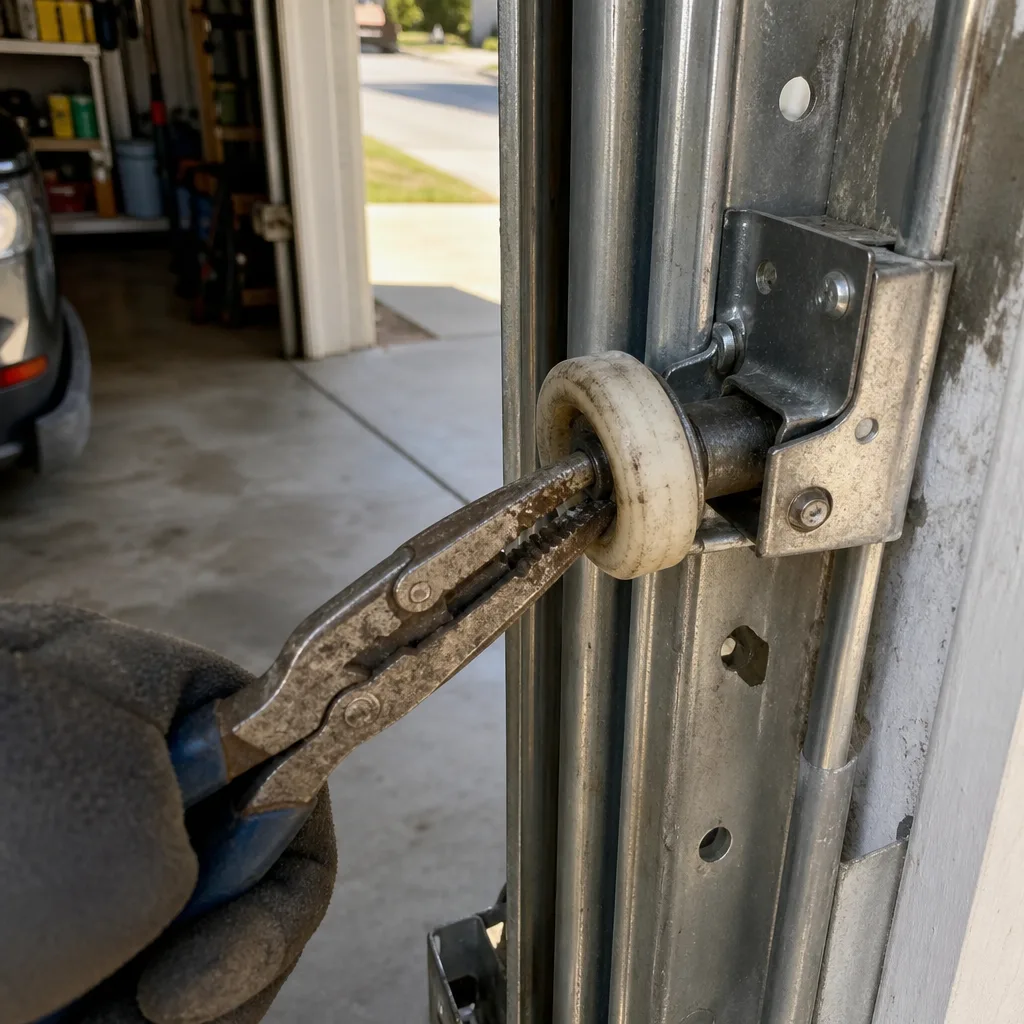
- Panel Costs by Material Tier: Walnut Creek 2026 Pricing
- Spring System Cost Breakdown: The Hidden Price Driver
- Opener Costs by Drive Type and Horsepower Class
- Labor Cost Variables: What Distinguishes a Fair Quote
- How to Read an Itemized Quote Like a Benchmark
- Walnut Creek-Specific Cost Factors: Climate, Code, and Market
- Common Mistakes to Avoid
- When to Call a Professional
- Frequently Asked Questions
- The Bottom Line
 Before
 After
AfterPanel Costs by Material Tier: Walnut Creek 2026 Pricing
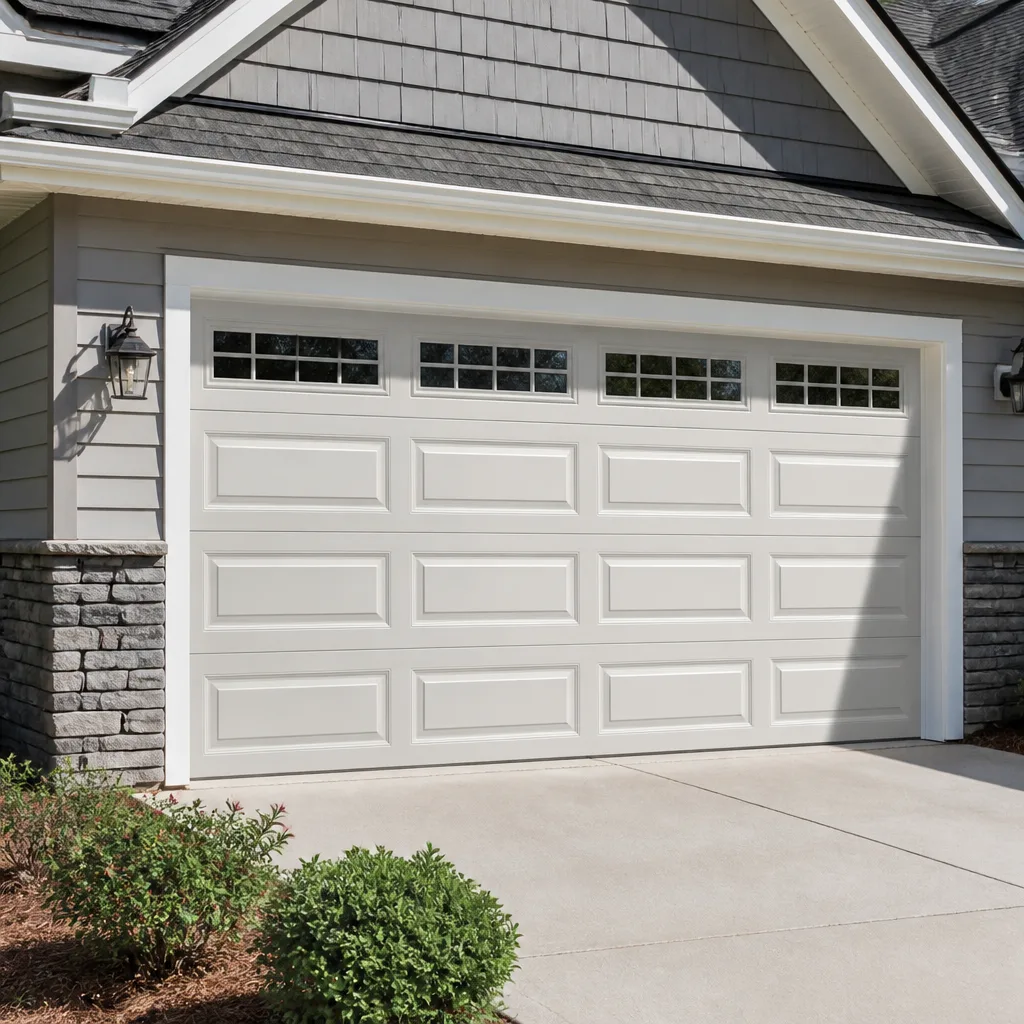
Panel pricing in the Walnut Creek market follows a clear per-square-foot structure that scales with door dimensions. For a standard 16-foot by 7-foot double-car opening - the most common replacement size we measure in neighborhoods like Garage Door Installation in Walnut Creek - here’s how the four material tiers break down for the panel alone, before hardware, springs, or labor.
| Material Tier | Description | Cost per Sq. Ft. | Total for 16×7 Door |
|---|---|---|---|
| Single-layer steel | 24- or 25-gauge steel, no insulation | $8-$12 | $900-$1,350 |
| Sandwiched steel with polystyrene | Steel-poly-steel sandwich, R-value ~6.5 | $14-$19 | $1,575-$2,135 |
| Steel with polyurethane | Injected foam core, R-value ~12-18 | $20-$28 | $2,250-$3,150 |
| Wood composite | Overlay or flush panel, stain-grade or paint-ready | $32-$48 | $3,600-$5,400 |
Single-layer steel dominates the replacement market in Walnut Creek’s older subdivisions - think the homes built around Rudgear Park and the original Broadway Plaza-adjacent neighborhoods from the 1960s through 1980s. These doors are lightweight, which means they pair with lighter spring systems and standard 1/2-horsepower openers. The trade-off is noise transmission and thermal performance. In summer, an uninsulated steel door on a west-facing garage in Walnut Creek can reach surface temperatures above 140°F, transferring that heat into the garage and any adjacent living space.
Sandwiched steel with polystyrene represents the minimum we recommend for any Walnut Creek home with a garage under bedrooms or home offices, which describes most construction from the 1990s forward in areas like Arbolado and Parkmead. The polystyrene core deadens sound and provides modest thermal resistance. It’s the tier where price competition is fiercest among suppliers, so panel quality varies significantly by manufacturer. We specify Clopay or Amarr for this tier because both publish actual R-value testing rather than calculated estimates.
Polyurethane-injected doors cost 40-60% more than polystyrene equivalents but deliver roughly double the thermal performance and substantially better structural rigidity. For Walnut Creek homeowners with conditioned garage space - converted workshops, gym setups, or ADU-adjacent storage - this tier pays back through reduced HVAC load. The injected foam also bonds the steel skins together, reducing the oil-canning flex that makes cheaper doors noisy in wind.
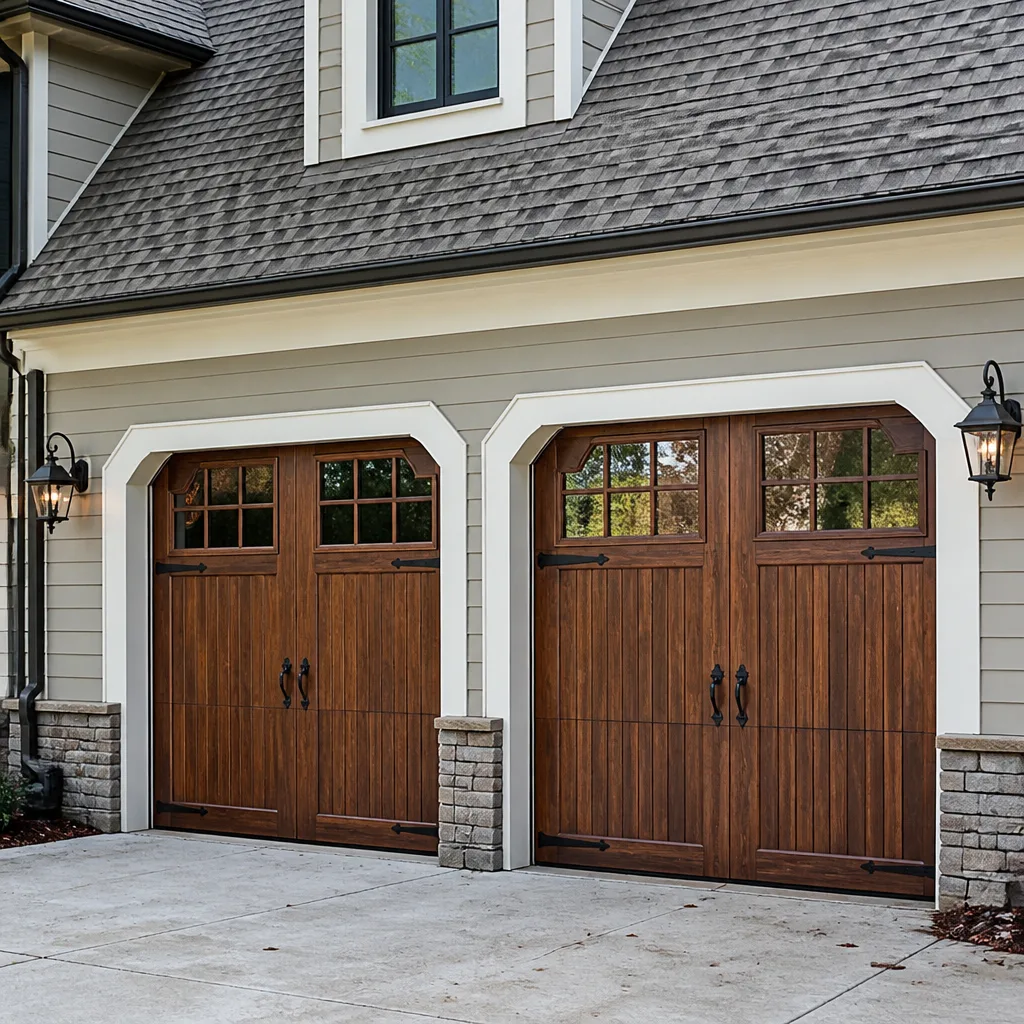
Wood composite panels are specified primarily for architectural compliance in Walnut Creek’s design-review districts and for homeowners matching specific exterior aesthetics. The cost variance is wide because “wood composite” covers everything from vinyl-wrapped MDF overlays to solid-core stain-grade cedar. These doors are heavy - often 150-200 pounds for a 16×7 - which mandates heavier spring systems and 3/4-horsepower openers. The hardware upgrade cost is frequently overlooked in wood panel quotes.
Spring System Cost Breakdown: The Hidden Price Driver
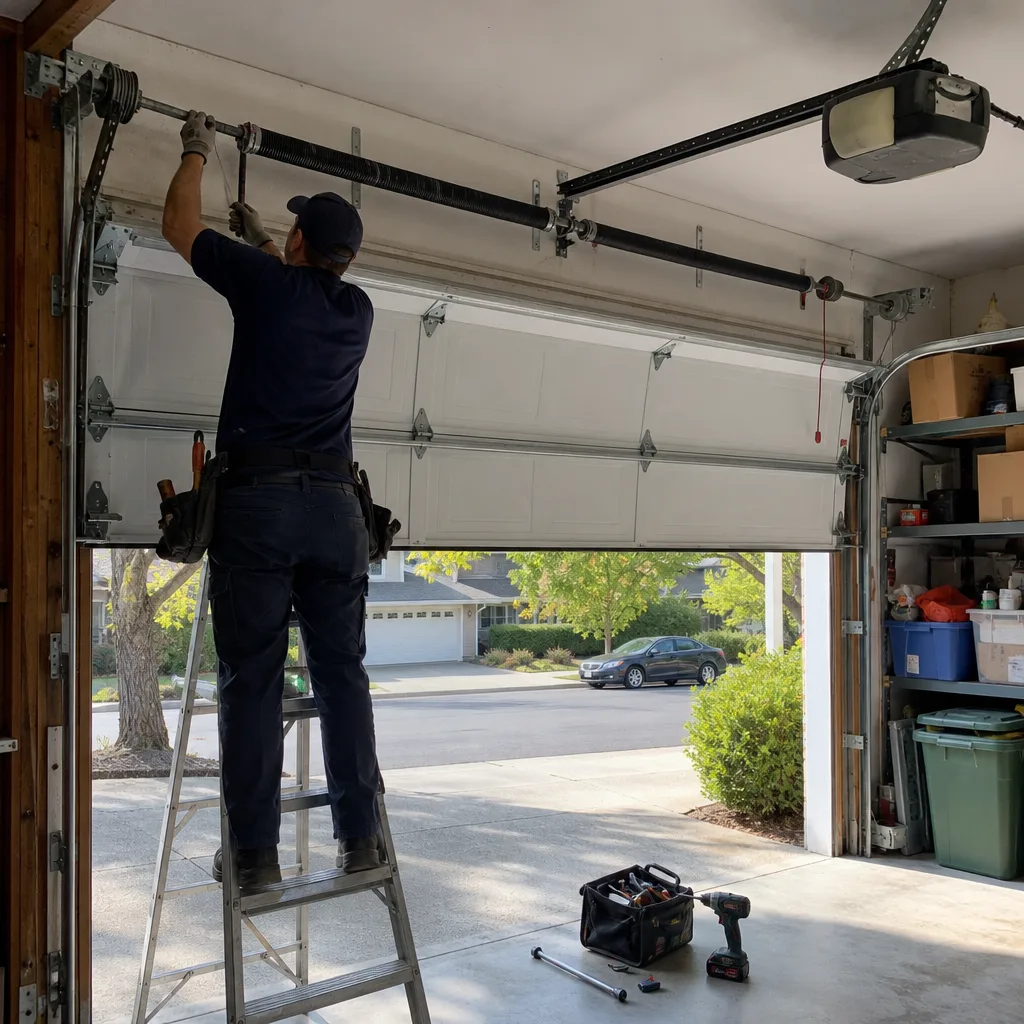
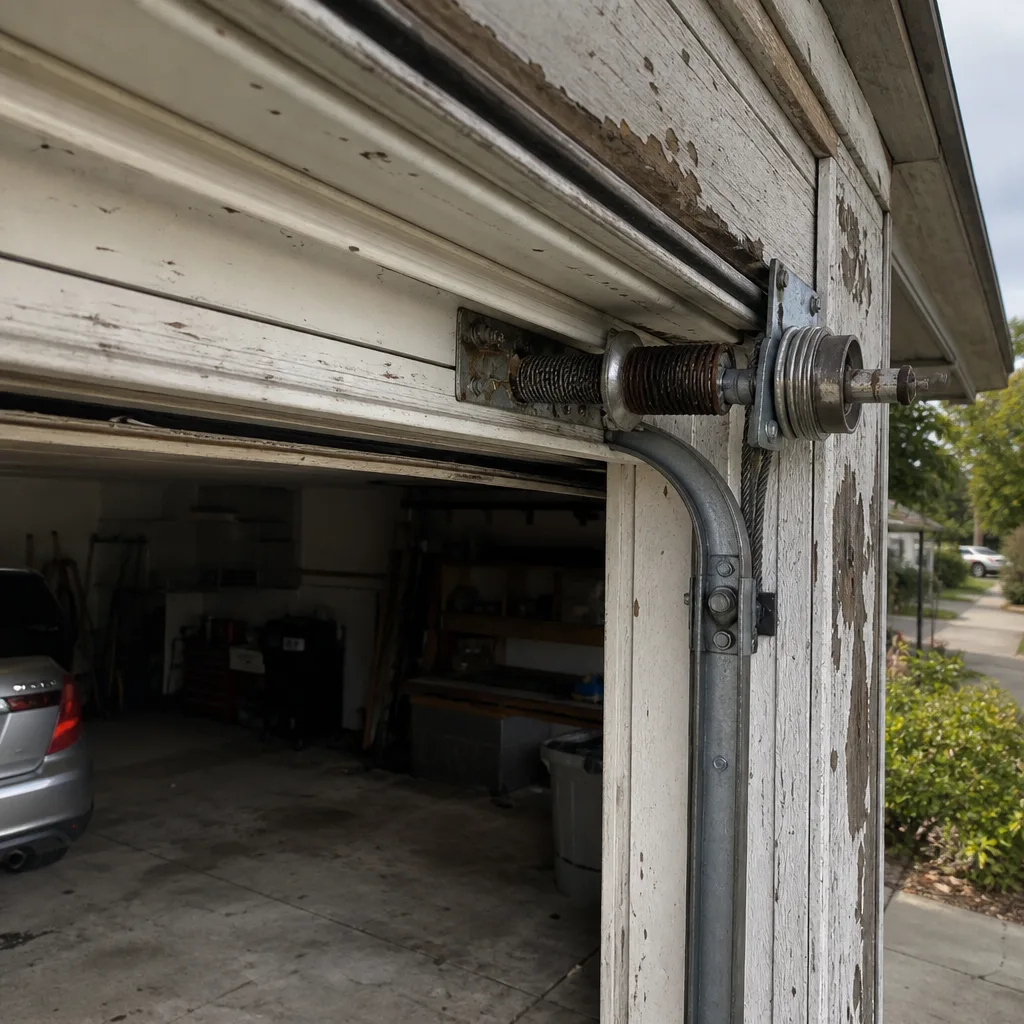
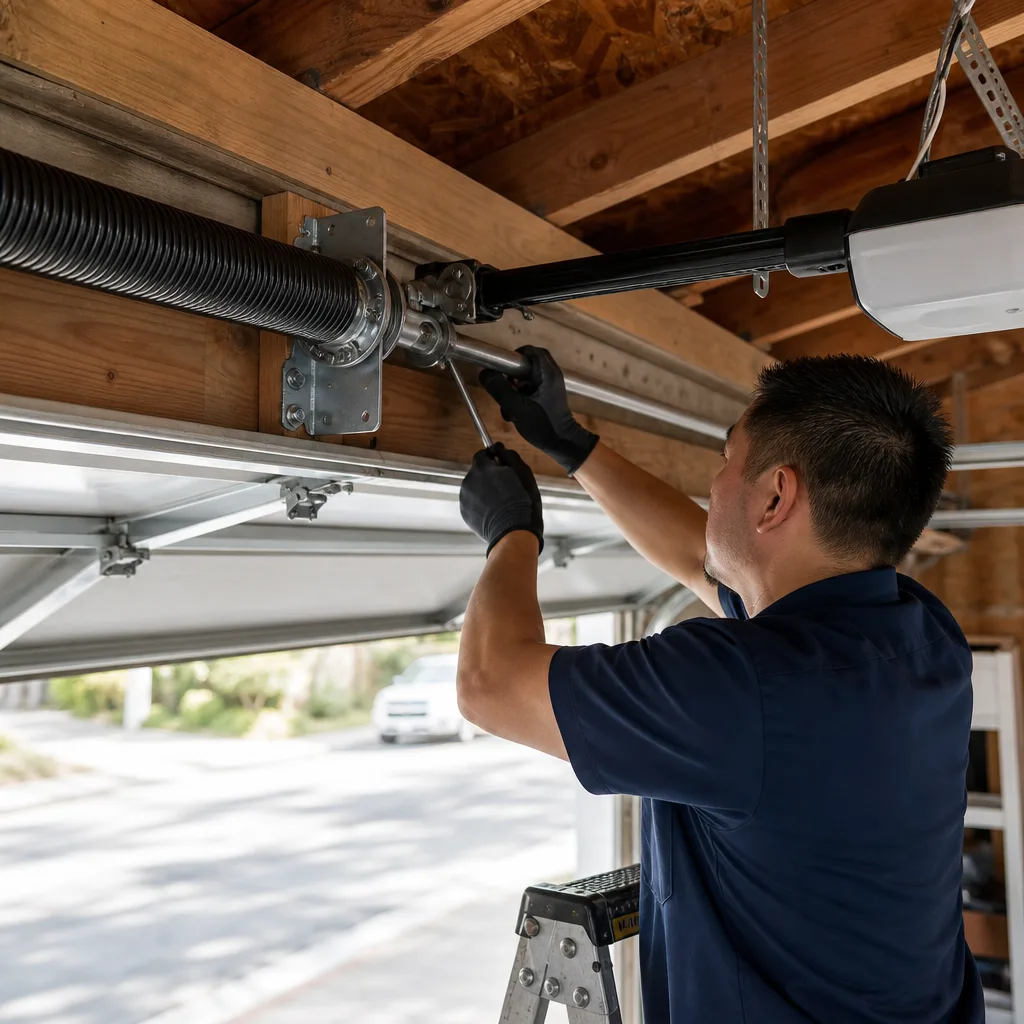
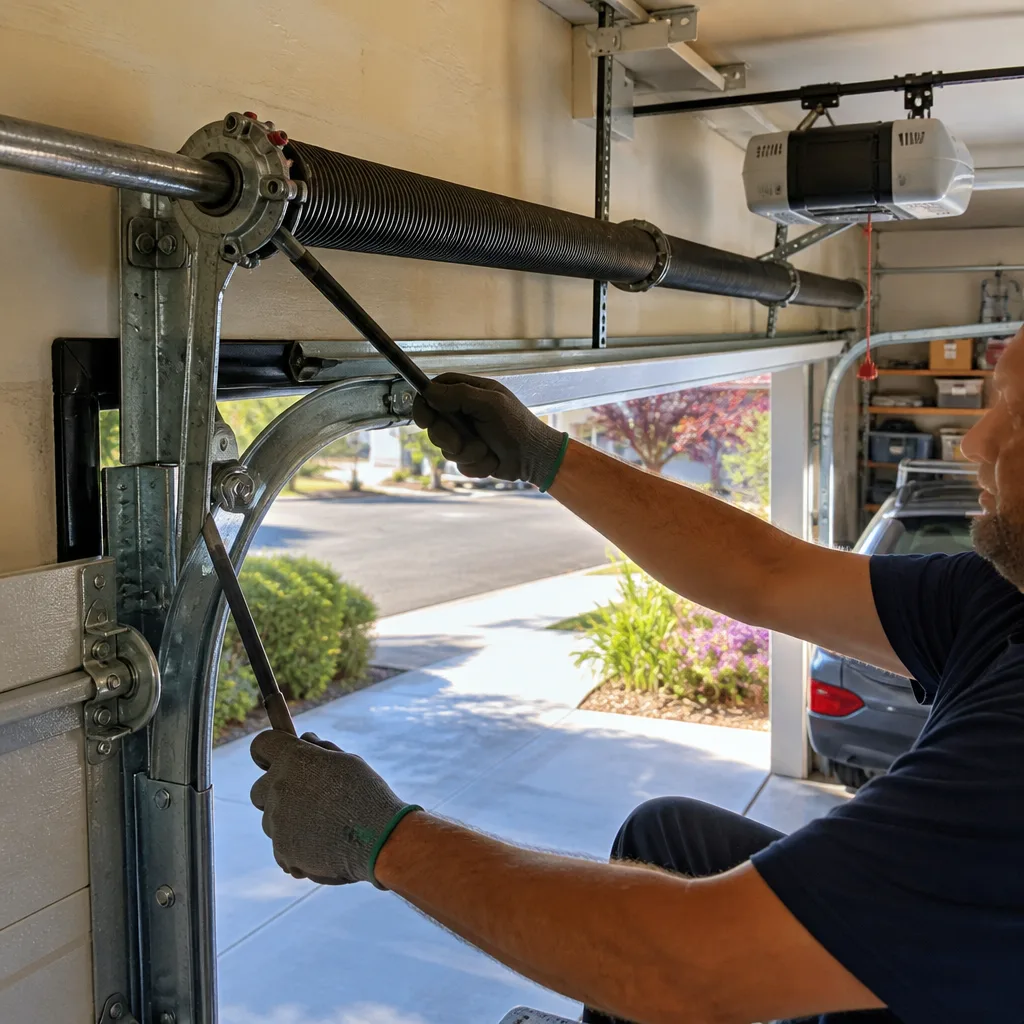
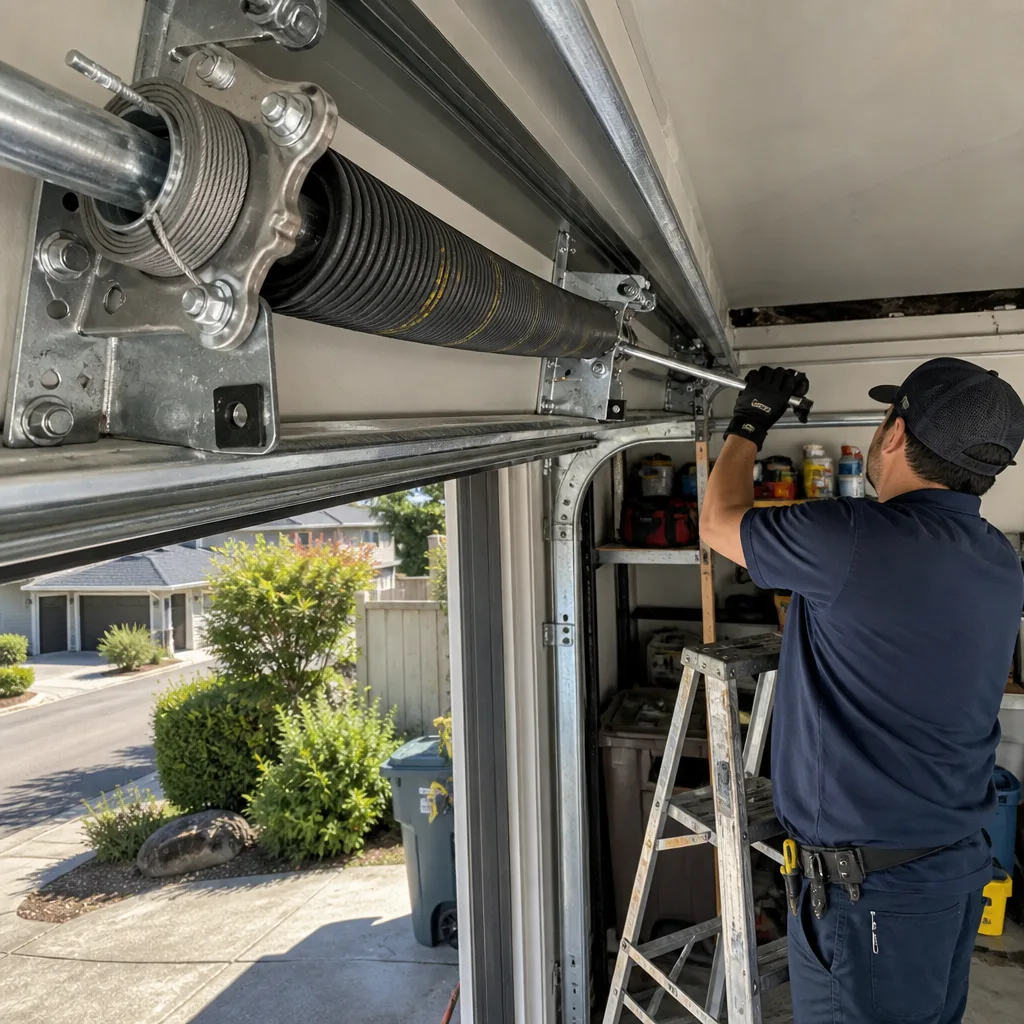
The spring system is where most Walnut Creek homeowners are under-quoted and later over-billed. Torsion springs - the coiled steel components mounted above the door on a steel shaft - do the actual lifting. Every time you press the remote, the opener moves the door a few inches until the springs take over. An undersized or mismatched spring forces the opener to work continuously, burning out the motor and logic board prematurely.
Here’s the 2026 Walnut Creek pricing structure for spring replacement, which is the most common repair we handle through Garage Door Repair in Walnut Creek:
| Spring Configuration | Typical Door Weight | Parts & Labor | Lifespan (Cycles) |
|---|---|---|---|
| Single torsion spring | Under 150 lbs | $180-$260 | 10,000-15,000 |
| Double torsion spring (standard) | 150-250 lbs | $320-$440 | 20,000-30,000 |
| Double torsion spring (high-cycle) | 150-250 lbs | $480-$620 | 50,000-100,000 |
A single spring system is appropriate only for lightweight single-layer steel doors on single-car openings. We see these misapplied to double-car doors regularly in Walnut Creek, particularly on quick-flip investment properties where the previous owner minimized upfront cost. The failure pattern is predictable: the single spring fatigues in 3-5 years instead of 8-12, and when it breaks, the door slams shut uncontrolled because there’s no secondary spring to manage descent.
Double-spring systems cost 30-40% more upfront but reduce per-cycle failure risk by roughly half through load distribution. Each spring carries half the door weight, so individual fatigue accumulates more slowly. More importantly, when one spring eventually breaks, the second spring prevents the door from crashing and allows controlled manual operation until repair. For a typical Walnut Creek household cycling the door 4-6 times daily, a standard double-spring system lasts 8-12 years; high-cycle springs extend this to 15-20 years.
The critical specification most competitors omit is the spring’s wire diameter and inside diameter, which must be matched to the door weight precisely. We measure both and record them in the written scope per Clause 4 of The Haven Standard. A 0.234-inch wire spring swapped for a 0.250-inch spring on the same door changes the torque curve enough to cause opener strain within 18 months. This is why we photograph the failed spring and its specifications before quoting replacement - the customer sees the evidence before anyone names a price.
Opener Costs by Drive Type and Horsepower Class
Opener selection in Walnut Creek has shifted significantly in the past three years. Smart connectivity is now standard above the entry tier, and noise level has become the primary decision driver for homes with garage-adjacent bedrooms. Here’s how the four drive types compare for 2026:
| Drive Type | Horsepower Range | Installed Cost | Noise Level | Maintenance Interval |
|---|---|---|---|---|
| Chain drive | 1/2-3/4 HP | $350-$550 | High | Annual lubrication |
| Belt drive | 1/2-1-1/4 HP | $450-$750 | Low | Biennial inspection |
| Screw drive | 1/2-3/4 HP | $400-$600 | Moderate | Annual lubrication |
| Direct drive (jackshaft) | 3/4-1-1/4 HP | $650-$950 | Very low | Biennial inspection |
Chain drives remain the default for detached garages and budget replacements. The metal-on-metal contact produces audible clatter that transmits through ceiling joists into living space. In Walnut Creek’s hillside homes with garages built into the foundation - common in the Saranap and Tice Valley areas - this noise amplifies through structural contact with the main floor. We specify chain drives only when the garage is structurally isolated or when the homeowner explicitly prioritizes cost over acoustic performance.
Belt drives with fiberglass-reinforced polyurethane belts have become our standard recommendation for attached garages. The LiftMaster and Chamberlain belt-drive lines we install carry 10-year belt warranties and integrate with myQ smart home systems for remote monitoring and delivery access. The 1-1/4 horsepower variant is specified for solid-core wood doors or any door over 200 pounds; the 1/2-horsepower unit suffices for single-layer steel under 150 pounds.
Screw drives occupy a narrowing niche. The threaded steel rod requires lithium grease maintenance that most homeowners defer, leading to stripped drive segments at 5-7 years. We see fewer screw drive installations in Walnut Creek each year and generally recommend belt or direct drive for new purchases.
Direct drive jackshaft openers mount on the wall beside the door rather than overhead, freeing ceiling space for storage lifts - increasingly popular in Walnut Creek’s newer construction with higher garage ceilings. The motor travels along a stationary chain, eliminating the rail vibration that transmits noise in traditional designs. These units require a torsion spring shaft with sufficient exposed length for mounting, which isn’t present on all existing doors. We verify shaft clearance during our free measure before quoting.
Smart connectivity features - Wi-Fi bridge, smartphone app, camera integration, automatic delivery access - add $80-$150 to any opener tier. We configure these during installation and document the network setup in the photo record delivered at job completion.
Labor Cost Variables: What Distinguishes a Fair Quote
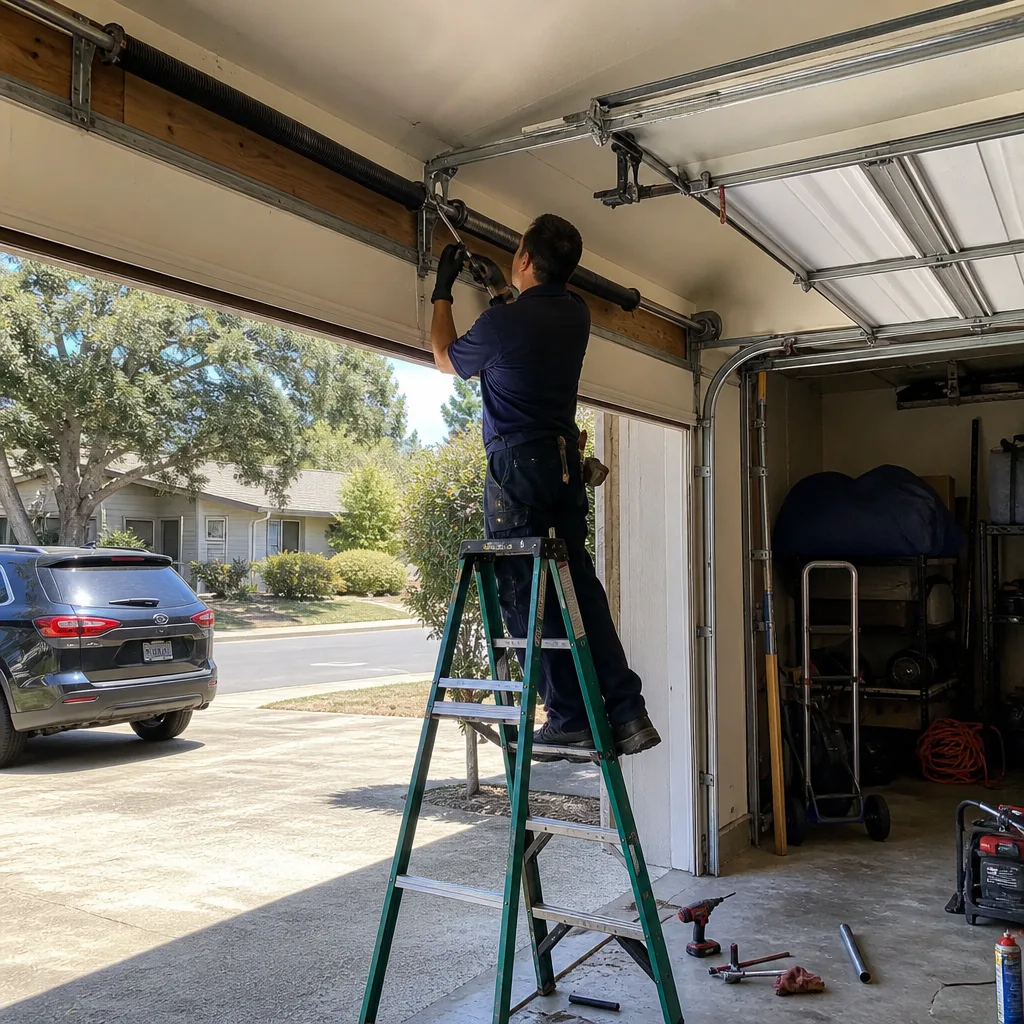
Labor pricing in the Walnut Creek market separates transparent operators from those who bury margin in ambiguous line items. Here’s how to read the labor component of any garage door quote.
New installation versus replacement. New construction installation - door, track, springs, and opener on a raw opening - typically runs $400-$600 in labor because the crew works with level framing, new electrical, and no demolition. Replacement labor on an existing door runs $300-$500 but should include haul-away of the old door and disposal. If haul-away appears as a separate line item above $75, ask whether the company is subcontracting disposal rather than handling it directly. We include haul-away in our flat labor rate; Clause 1 of The Haven Standard prohibits separating it as a surprise add-on.
Track alignment and hardware transfer. Reusing existing track on a replacement saves $80-$150 in material but rarely saves labor because track alignment must be verified and adjusted for the new door’s weight distribution. We measure track plumb and level before quoting; if the existing vertical track is out of tolerance by more than 1/4 inch, we specify replacement in the written scope rather than discovering the mismatch mid-installation.
Second-trip charges. The most common hidden cost in garage door pricing is the return visit for parts not stocked on the initial call. A company that doesn’t carry the correct spring wire diameter or opener logic board for your specific model schedules a second trip, often with a separate trip fee of $75-$125. Our trucks carry a complete spring inventory and opener parts for LiftMaster, Chamberlain, Genie, and Raynor systems - the four brands representing roughly 85% of installed base in Walnut Creek. When we quote same-day completion, we mean it. A second-trip charge that should have been zeroed out in planning is a failure of preparation, not an acceptable cost of business.
Electrical work for opener installation. New opener locations without existing outlet access require licensed electrical work. In Walnut Creek, this means a permit for any new circuit or outlet installation per Contra Costa County electrical code. We coordinate this work or refer to a licensed electrician we document in our records; we do not perform unpermitted electrical modifications. The permit and electrical labor typically add $200-$400 to the project.
How to Read an Itemized Quote Like a Benchmark
An itemized quote is a diagnostic tool, not just a price. Here’s how to classify each line item and identify whether the total reflects actual costs or padded ambiguity.
- Fixed material costs: Panel, springs, opener unit, track sections, and weatherstripping. These should match or closely approximate retail pricing you can verify online. A 20% markup over retail is standard for contractor procurement and warranty handling; 40% or more suggests the company is using material margin to subsidize artificially low labor rates.
- Negotiable labor variables: Installation time estimate, haul-away inclusion, and travel charge. In Walnut Creek, travel charges within city limits should be minimal or absent; companies based in Concord or Pleasant Hill sometimes add $35-$50 for Walnut Creek calls. This is legitimate if disclosed, not if buried.
- Padding that documented quotes eliminate: “Miscellaneous hardware,” “shop supplies,” or “fuel surcharge” without dollar specificity. These are holding accounts for unspecified margin. The Haven Standard prohibits them; every dollar in our quotes maps to a named part or documented labor hour.
- Warranty as a cost indicator: A one-year parts-and-labor warranty on a spring replacement suggests the company expects callbacks; it’s priced into their margin or they’re planning to charge for the return visit. Our 365-Day Done Right Promise covers any repair that doesn’t hold, and spring installations carry a 3-year parts warranty because we size them correctly the first time.
- Photo documentation as proof of scope: The quote should describe what the technician observed, not just what they’ll install. “Replace broken torsion spring” is incomplete. “Replace 0.250 x 2.00 x 29 left-wound torsion spring, photograph shaft and cable condition, test door balance to within 2 inches of floor” is a scope you can verify was completed. This is Clause 4 in practice.
The test of any quote is whether you could hand it to a second company and receive an apples-to-apples comparison. If line items are vague - “opener installation: $550” with no drive type, horsepower, or brand specified - the quote is designed to prevent comparison, not enable it.
Walnut Creek-Specific Cost Factors: Climate, Code, and Market
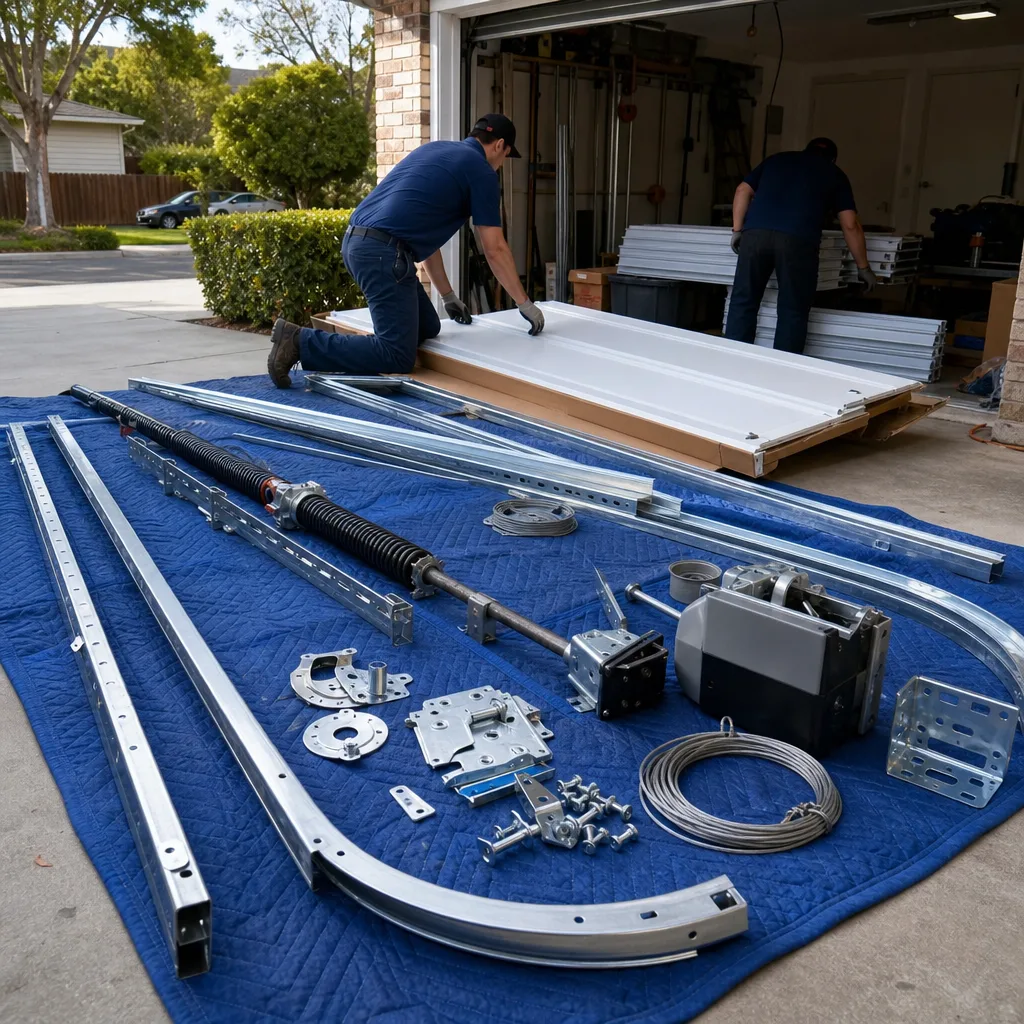
Several local variables affect garage door pricing in ways that generic national guides miss entirely.
Climate and thermal performance requirements. Walnut Creek’s summer temperature swings - morning fog giving way to 90°F afternoons in July and August - create expansion-contraction cycles that stress door seals and opener limit switches. West-facing garages in the Rudgear Hills or Tice Valley areas experience the most severe thermal loading. We specify vinyl-backed weatherstripping with UV stabilizers for these exposures; standard rubber degrades to cracking within 18 months. The upgrade adds $40-$60 to a replacement but eliminates the air infiltration that drives summer cooling costs.
Wind load and hillside exposure. Walnut Creek’s canyon corridors, particularly along the edges of Lime Ridge Open Space and the hills above Arbolado, experience sustained winds that test door structural integrity. Standard 24-gauge steel doors flex audibly in 25-mph gusts; 25-gauge or reinforced strut backing eliminates this but adds $150-$250 to panel cost. We assess wind exposure during our site measure and specify accordingly.
Permit requirements for structural modification. Contra Costa County requires a building permit for any garage door opening modification - width, height, or header structural changes - but not for like-for-like replacement on existing framing. See our guide to Garage Door Permits, Codes & Inspections in CA: What You Need to Know for full details. If your project involves converting a single-car opening to double-car, or raising the header for a taller door, permit costs run $350-$550 and inspection scheduling adds 1-2 weeks to the timeline. We handle permit submission as part of our project management for structural modifications.
Neighborhood architectural review. Several Walnut Creek neighborhoods, including specific phases of Parkmead and certain streets in the Broadway Plaza corridor, operate under design covenants that restrict visible door materials and colors. Wood composite or custom-painted steel may be mandated where standard white or almond panels are prohibited. We verify covenant requirements before quoting to avoid installation of a non-compliant door; the cost of correcting a covenant violation falls on the homeowner, not the installer.
Market labor rates and technician availability. The East Bay construction labor market has tightened since 2022, and experienced garage door technicians command $35-$50 hourly in Walnut Creek. Companies advertising significantly lower labor rates are typically using less-experienced installers or subcontracting to 1099 workers without workers’ compensation coverage. Our technicians are W-2 employees, background-checked, and uniformed; their wage structure is reflected in our labor rates and protects the homeowner from liability exposure.
Common Mistakes to Avoid
- Accepting a phone quote without site measurement. Spring length, shaft diameter, and headroom clearance cannot be determined from a description. A quote given over the phone before inspection is a guess, not a commitment, and almost always revises upward on arrival.
- Ignoring spring-door weight matching. A company that quotes panel replacement without assessing spring adequacy is setting up a callback. The new door’s weight may exceed the old spring system’s capacity, leading to opener failure within months. We weigh every replacement door and specify springs accordingly; this is non-negotiable in our process.
- Choosing the cheapest panel without calculating lifetime cost. A single-layer steel door saved $800 upfront but costs $200-$300 more annually in HVAC load for a conditioned garage. Over 10 years, the “cheaper” door is more expensive. We run this calculation for any Walnut Creek homeowner with garage-adjacent living space or climate-controlled storage.
- Assuming all “insulated” doors are equivalent. Polystyrene sandwich and polyurethane injection are not interchangeable. The R-value difference matters for thermal performance, and the structural bonding of polyurethane reduces long-term maintenance. We specify which core type we’re quoting and why.
- Neglecting opener horsepower upgrade with heavier doors. Wood composite or insulated steel doors often require 3/4 HP where 1/2 HP previously sufficed. A company that installs the old opener on a new, heavier door without torque verification is creating a failure point. We test opener draw under load and specify upgrade when measured demand exceeds 80% of motor capacity.
- Failing to get competing quotes in writing. Verbal estimates, even from established companies, cannot be compared or enforced. Our Free Second Opinion applies to any written estimate from another company - bring the paperwork and we’ll itemize where our assessment differs and why.
- Overlooking warranty transferability on home sale. If you’re replacing a door before listing a Walnut Creek property, confirm whether the warranty transfers to the buyer. Our 365-Day Done Right Promise and component warranties transfer with the property; some competitors’ warranties terminate on ownership change.
When to Call a Professional
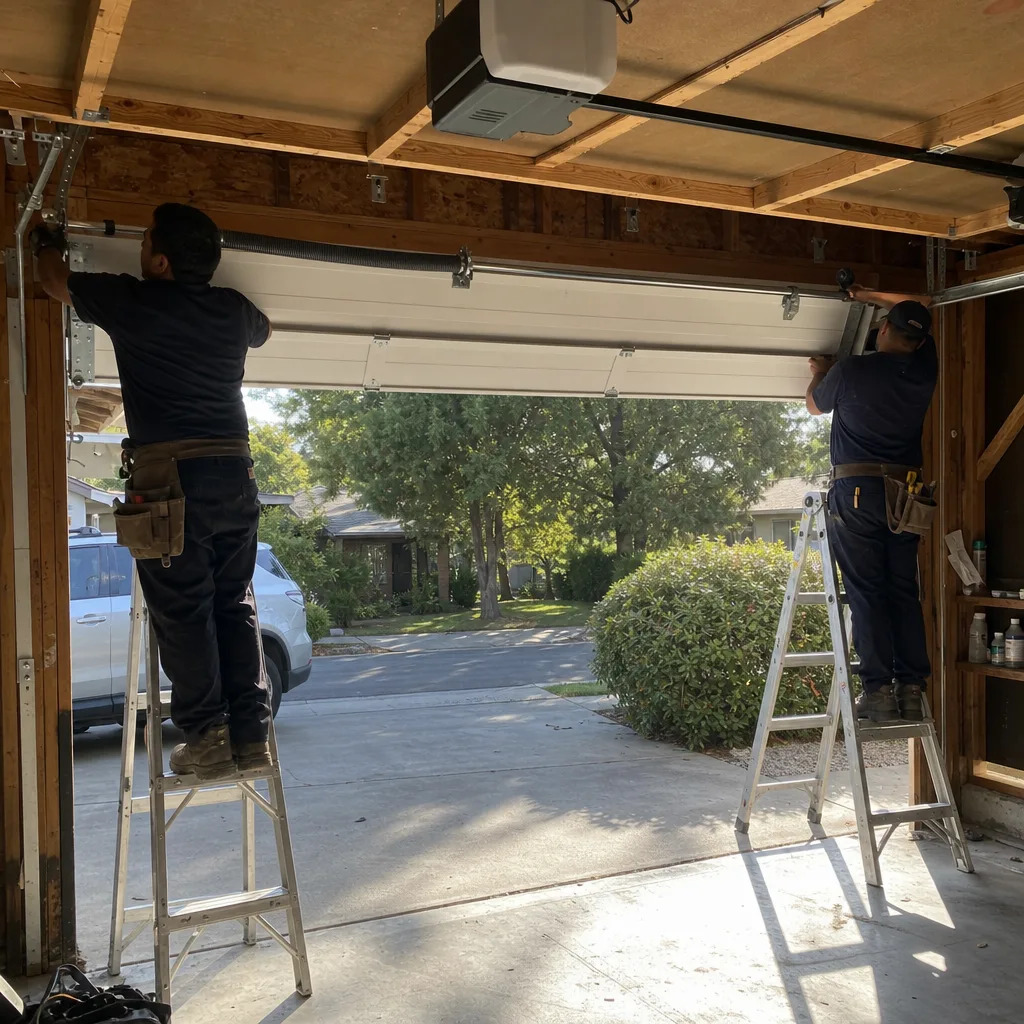
Garage door systems involve stored mechanical energy in torsion springs that can cause serious injury if released improperly. Do not attempt spring replacement, cable adjustment, or track realignment without proper winding bars and training. The torsion spring on a standard double-car door stores enough energy to lift 200 pounds; an uncontrolled release can break bones or cause head trauma.
Call for professional assessment when: the door reverses before fully closing and sensor alignment doesn’t resolve it; the opener motor runs but the door doesn’t move, indicating trolley or carriage failure; a spring shows visible coil separation or the door feels significantly heavier to lift manually; or the door hangs crooked in the opening, suggesting cable imbalance or track damage. For a complete diagnostic reference, see Garage Door Warning Signs: A Walnut Creek Homeowner’s Reference Guide.
Servo Garage Doors Walnut Creek home offers free estimates throughout Walnut Creek - from the flatlands near Treat Boulevard to the hillside properties above Geary Road. Every estimate includes a written, itemized scope with flat pricing before any work starts, and every visit closes with a documented photo record of findings and completed work. Call (510) 390-9102 to schedule.
Frequently Asked Questions
A complete replacement for a standard 16×7 double-car door in Walnut Creek typically ranges from $1,400 for single-layer steel with a chain-drive opener to $3,800 for polyurethane-insulated steel with a belt-drive opener and smart connectivity. Wood composite doors with hardware upgrades can extend to $5,500. The exact price depends on spring system sizing, panel material, opener specifications, and whether electrical work is required. Call (510) 390-9102 for a free written estimate with itemized scope.
The $400 quote typically covers a single torsion spring replacement on a lightweight door with no additional hardware issues identified. The $2,000 quote may include a double-spring system, cable replacement, roller upgrade, and opener torque verification - or it may reflect a company that bundles margin across vague line items. The only valid comparison uses identical scopes in writing. Our Free Second Opinion service reviews any competitor’s written estimate against our itemized assessment at no charge.
A properly sized standard-cycle torsion spring lasts 8-12 years for a typical Walnut Creek household cycling the door 4-6 times daily. The thermal expansion from morning fog to afternoon heat in summer months accelerates metal fatigue slightly compared to more stable climates, but the effect is minor compared to the impact of incorrect sizing. A spring that’s undersized for the door weight fails in 3-5 years regardless of climate. We specify cycle rating and expected lifespan in every written scope.
Individual panel replacement is possible only when the manufacturer still produces the exact panel style and color, and when the damage is limited to one or two sections without track or frame distortion. For doors over 10 years old, matching panels are often discontinued, and partial replacement creates visible color variation where the new panel hasn’t weathered. We assess panel availability during our site visit and quote both options when feasible. Most Walnut Creek homeowners find full replacement more cost-effective when panel matching is uncertain.
Our price does not change. The written scope we provide after inspection and before work begins is the price you pay. The only exception is if you request additional work not in the original scope - upgrading from a standard to high-cycle spring, for example, after seeing the options. Clause 1 of The Haven Standard requires flat, written pricing before any work starts; we do not operate on time-and-materials or open-ended estimates. If a company routinely “discovers” additional costs on arrival, their initial quote was incomplete, not their discovery.
Yes. Our service trucks carry a complete inventory of torsion springs in standard wire diameters, cable assemblies, roller sets, weatherstripping, and opener components for LiftMaster, Chamberlain, Genie, and Raynor systems. For Walnut Creek calls, we complete roughly 90% of repairs on the initial visit. The exceptions are specialty wood door hardware, custom-color panels, or specific opener models discontinued more than 10 years ago. If we cannot complete same-day, we schedule the return visit at no additional trip charge and confirm parts availability before leaving.
The Bottom Line
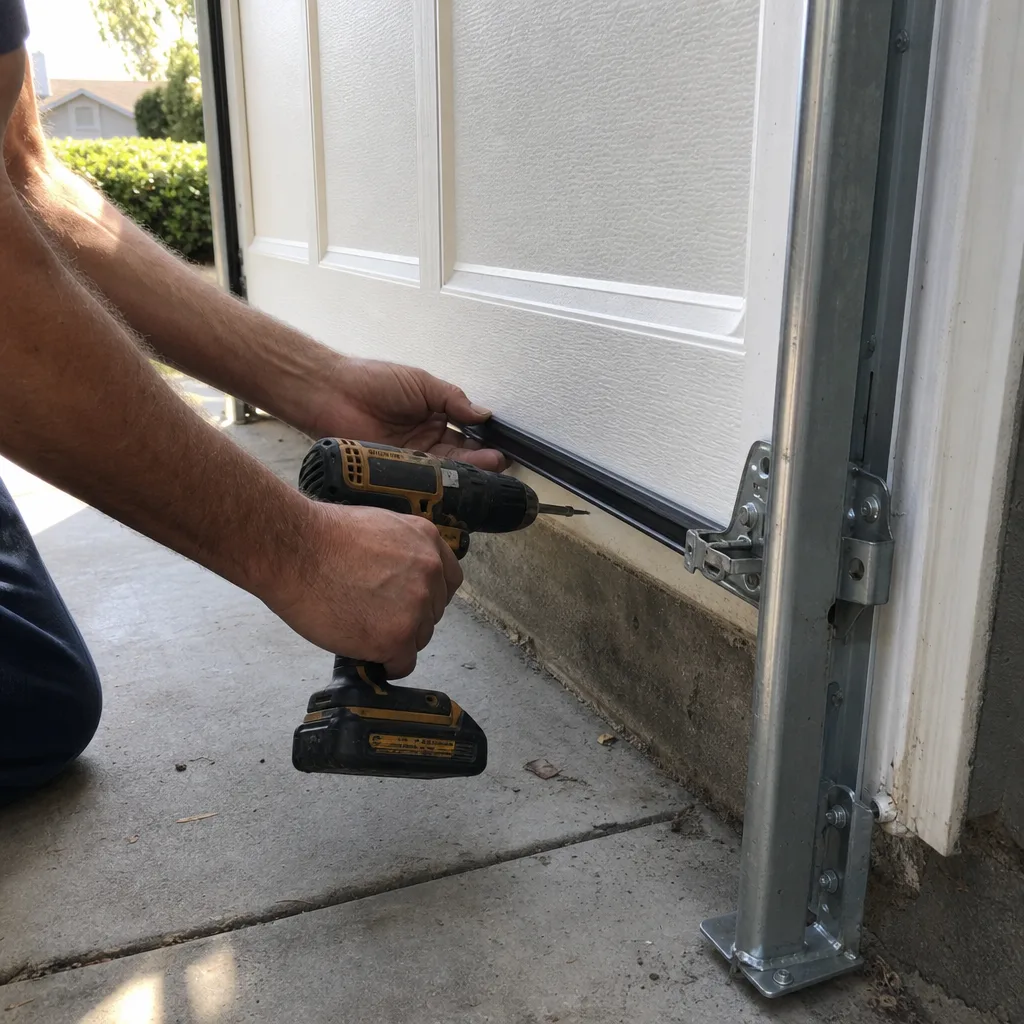
Garage door pricing becomes predictable when you understand the variable structure: springs sized to door weight, panels selected for thermal and acoustic performance, openers matched to load and noise requirements, and labor quoted as a complete scope with no second-trip surprises. Our Garage Door Repair Maintenance Checklist for Walnut Creek Homeowners covers the seasonal checks that prevent most emergency calls. The Walnut Creek market in 2026 offers clear pricing tiers for each component, and any quote that obscures these line items is designed to prevent comparison. Ask for written specificity, verify spring sizing against door weight, and demand photo documentation of what was found and what was done. The price you agree to before work starts should be the price on the invoice after completion.
Written by Marcus Deller, Owner at Servo Garage Doors Walnut Creek, serving Walnut Creek since 2015. Browse more guides & resources on garage door selection, maintenance, and repair.